DRDO chip push puts defence semiconductors in focus
Synopsis
DRDO showcased defence semiconductor components, infrared sensors and quantum prototypes at a New Delhi conclave, as a report highlighted efforts to bring indigenous research closer to industrial use.
Key Takeaways
DRDO led a session on semiconductors and next-generation chips at ESTIC 2026 in New Delhi , according to a report.
The conclave took place at Bharat Mandapam from 27 October to 29 October 2026 .
DRDO’s Solid State Physics Laboratory developed the displayed microwave circuits, Multi-Chip Modules and infrared focal plane arrays.
DRDO also showcased neuromorphic accelerators, quantum random number generators and photonic integrated circuits.
The report did not specify a production timetable or manufacturing agreements resulting from the discussions.
The Defence Research and Development Organisation (DRDO) is stepping up efforts to connect indigenous chip development, artificial intelligence and other advanced research with industrial applications, according to a report. The effort was highlighted at a technology conclave in New Delhi, where the organisation presented semiconductor components and other technologies developed across its laboratories.
The report links the push to national security and technological self-reliance, as well as India’s ambition of becoming a developed economy by 2047. It describes semiconductors as strategically important to fields ranging from defence and telecommunications to navigation, surveillance and aerospace.
DRDO session at New Delhi conclave
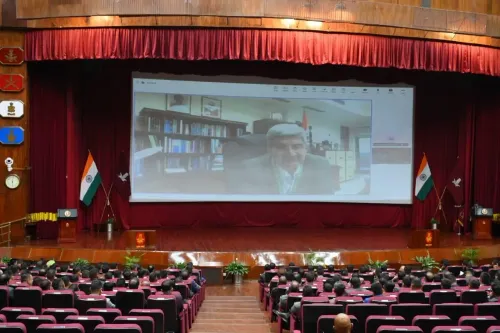
At the Emerging Science, Technology and Innovation Conclave (ESTIC) 2026, held at Bharat Mandapam from 27 October to 29 October 2026, DRDO led a dedicated session on semiconductors and next-generation chips, according to the report.
Industry representatives, researchers, academics and indigenous chip-development organisations took part in discussions on opportunities in advanced semiconductor design and manufacturing. The report describes the session and displays as part of an effort to bring research closer to industrial use, but does not specify any resulting manufacturing agreements.
Defence chips and infrared sensors
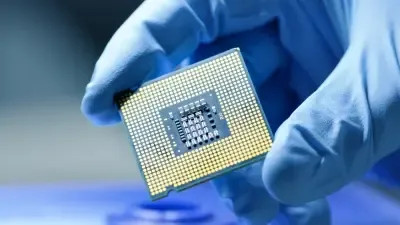
Among the exhibits were Gallium Arsenide (GaAs) and Gallium Nitride (GaN)-based Monolithic Microwave Integrated Circuits (MMICs), Multi-Chip Modules and Infrared Focal Plane Arrays (IRFPAs). These were developed by DRDO’s Solid State Physics Laboratory in Delhi.
Such components have applications in advanced radar, electronic warfare and missile technology. MMICs support high-frequency and high-power electronic systems, while infrared focal plane arrays can enable imaging systems in tactical missiles to detect and track targets during the terminal phase of flight.
The displays also covered Short-Wave Infrared, Mid-Wave Infrared and Long-Wave Infrared technologies. Together, the exhibits illustrated areas of domestic work in infrared sensing and defence electronics, according to the report.
AI, quantum and other technologies
Beyond conventional microelectronics, DRDO showcased scramjet engine technology, neuromorphic accelerators, photonic integrated circuits, quantum random number generators and laser proximity sensors. Its displays also included advanced communication systems, quantum technology prototypes, energy management systems and protective equipment for military personnel.
Neuromorphic accelerators draw inspiration from the way the human brain processes information. They are being explored for more efficient computing, pattern recognition and real-time artificial intelligence applications.
Photonic integrated circuits and quantum technologies are also emerging areas with potential uses in communications, sensing and computing, the report said. Their presence alongside defence semiconductor exhibits shows the range of research discussed at the conclave, rather than establishing that each technology is ready for deployment.
Industrial application and what comes next
The distinction between a laboratory display and industrial application matters for the technologies presented. The report identifies discussions on semiconductor design and manufacturing, but does not provide a production timetable, investment figure or details of commercial deployment.
For the researchers, industry representatives and chip-development organisations involved, the next stage will be whether the opportunities discussed at the conclave translate into further development and practical use.
Point of View
But gives no production timetable or details of manufacturing agreements. Clear milestones for development and deployment would make it easier to assess progress without confusing prototypes with operational capability.
NationPress
24 Nov 2026
Frequently Asked Questions
What is DRDO doing on indigenous chip development?
DRDO is working to bring indigenous chip research and other advanced technologies closer to industrial application, according to a report. It led a semiconductor session and displayed laboratory-developed components at ESTIC 2026.
Which defence semiconductor technologies did DRDO display?
DRDO displayed Gallium Arsenide and Gallium Nitride-based microwave integrated circuits, Multi-Chip Modules and infrared focal plane arrays. Its Solid State Physics Laboratory in Delhi developed the components.
Why do the DRDO semiconductor technologies matter?
The components have applications in radar, electronic warfare and missile technology. Infrared focal plane arrays can help tactical missile imaging systems detect and track targets during the terminal phase of flight.
What AI and quantum technologies did DRDO showcase?
DRDO showcased neuromorphic accelerators, photonic integrated circuits and quantum random number generators, among other technologies. The report said such emerging fields have potential applications in computing, communications and sensing.
When will the DRDO technologies enter production?
The report does not provide a production timetable for the displayed technologies. It also does not specify manufacturing agreements arising from the conclave discussions.