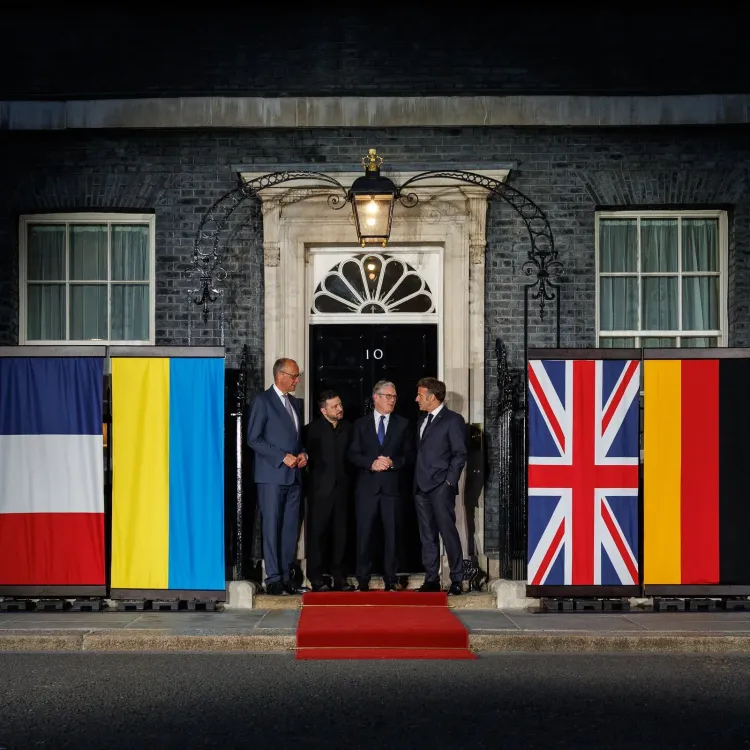
E3 leaders back Ukraine-Russia direct talks, demand immediate ceasefire
Synopsis
Britain, France, and Germany have thrown their collective weight behind direct Ukraine-Russia talks — a notable shift from Europe's traditionally cautious stance. With Zelensky proposing a face-to-face meeting with Putin and Moscow leaving the door ajar, the diplomatic window may be narrower and more consequential than it first appears.
Key Takeaways
The E3 — Britain , France , and Germany — backed direct Ukraine-Russia dialogue after a London summit on 8 June .
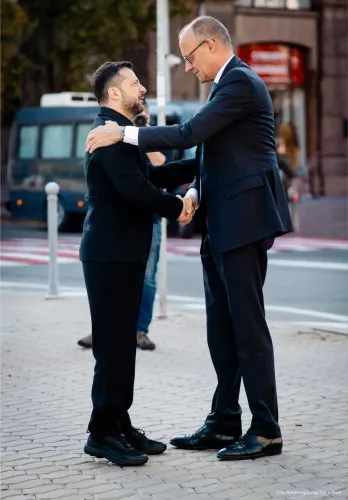
Keir Starmer , Emmanuel Macron , Friedrich Merz , and Volodymyr Zelensky jointly called for an immediate and complete ceasefire.
The current line of contact was identified as the starting point for any ceasefire negotiations.
Zelensky proposed a direct face-to-face meeting with Vladimir Putin ; Kremlin spokesman Dmitry Peskov said Zelensky could come to Moscow 'any time'.
Switzerland , Turkey , and Arab countries have offered to host potential talks.
Any agreement touching NATO or EU matters would require consent from respective member states, the statement noted.
The leaders of Britain, France, and Germany — collectively known as the E3 — voiced support on Sunday, 8 June for direct dialogue between Ukraine and Russia, calling for an immediate and complete ceasefire following a summit with Ukrainian President Volodymyr Zelensky in London. The joint statement marks one of the most coordinated European diplomatic pushes since the conflict escalated.
Key Developments from the London Summit
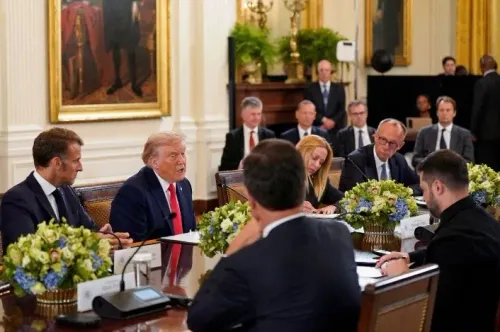
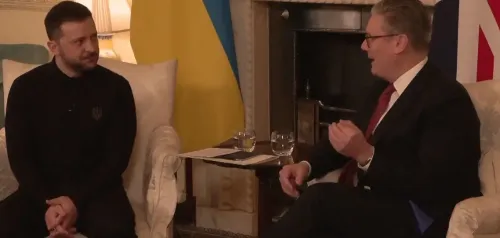
British Prime Minister Keir Starmer, French President Emmanuel Macron, and German Chancellor Friedrich Merz issued a joint statement alongside Zelensky after the London meeting, endorsing direct Ukraine-Russia negotiations with the active participation of both the United States and Europe. The four leaders agreed that the current line of contact should serve as the starting point for any ceasefire negotiations.
The statement underscored that Europe must play a central role in the peace process, with all efforts conducted in close coordination with Ukraine, European partners, and Washington. Notably, the leaders stressed that any post-ceasefire security arrangements must safeguard European security interests, and that matters relating to the European Union and NATO would require the explicit consent of their respective member states.
Zelensky's Open Letter and Moscow's Response
The London summit followed a significant diplomatic exchange earlier in the week. On Thursday, Zelensky published an open letter proposing a face-to-face meeting with Russian President Vladimir Putin to discuss the peace process directly. 'Ukraine proposes ending this war through direct engagement between us — and you. I am proposing a meeting,' Zelensky wrote, suggesting that Europe and the United States be involved in the process.
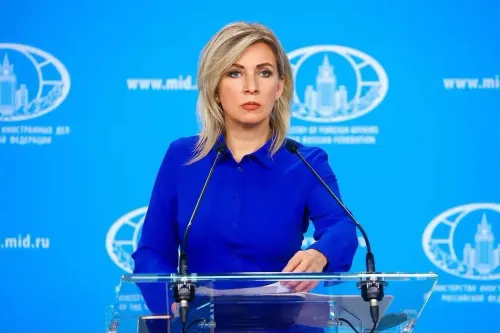
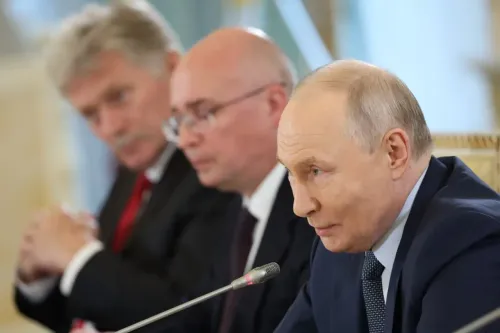
Kremlin spokesman Dmitry Peskov responded the same day, saying Zelensky 'can come to Moscow any time' if he wishes to hold talks with Putin — a response widely interpreted as non-committal but not a flat rejection. Zelensky also called for setting a clear date for the meeting and confirmed that Ukraine was prepared to implement a full ceasefire for the duration of negotiations.
Proposed Venues and Neutral Hosts
According to Zelensky's letter, Switzerland, Turkey, and several Arab countries have expressed readiness to host potential talks. The willingness of multiple neutral parties to provide a venue reflects growing international urgency around the conflict, which has now stretched into its third year with no formal peace framework in place.
Zelensky also cautioned against waiting for the United States to refocus attention on the Russia-Ukraine conflict, noting that Washington is currently focused on its confrontation with Iran — a pointed acknowledgement of competing geopolitical pressures on the primary Western backer of Kyiv.
What the E3 Statement Signals
This comes amid broader Western efforts to consolidate a unified position ahead of any formal negotiations. The E3's explicit endorsement of direct talks — rather than a mediated process alone — represents a shift toward accepting bilateral engagement as a necessary step. European leaders have historically been cautious about direct Ukraine-Russia dialogue without robust security guarantees for Kyiv.
The insistence that NATO and EU matters require member-state consent is a quiet but firm signal to Moscow that any settlement cannot unilaterally redraw the European security architecture. How Russia formally responds to both the E3 statement and Zelensky's letter will be closely watched in the days ahead.
Point of View
Starmer, and Merz are now publicly backing such engagement suggests the calculus has shifted: prolonged stalemate is seen as more dangerous than an imperfect negotiation. Zelensky's open letter to Putin, meanwhile, is as much a message to Washington as to Moscow — a signal that Kyiv will not wait indefinitely for US attention to return from the Iran file. The Kremlin's non-rejection is notable but thin; Peskov's 'any time' framing places the onus back on Ukraine without committing Russia to any framework. The real test is whether this diplomatic choreography produces a credible ceasefire mechanism or merely resets the blame game for the next phase of the war.
NationPress
26 Oct 2026
Frequently Asked Questions
What did the E3 leaders agree on at the London summit?
The E3 leaders — British Prime Minister Keir Starmer, French President Emmanuel Macron, and German Chancellor Friedrich Merz — jointly backed direct Ukraine-Russia dialogue and called for an immediate and complete ceasefire. They agreed the current line of contact should be the starting point for negotiations, and that Europe and the US must be actively involved in the peace process.
What did Zelensky propose in his open letter to Putin?
Ukrainian President Volodymyr Zelensky proposed a direct face-to-face meeting with Russian President Vladimir Putin to discuss the peace process. He called for a clear date to be set, offered a full ceasefire for the duration of negotiations, and suggested Europe and the United States be involved.
How did the Kremlin respond to Zelensky's meeting proposal?
Kremlin spokesman Dmitry Peskov said Zelensky could come to Moscow 'any time' if he wished to hold talks with Putin. The response was widely seen as non-committal but stopped short of a direct refusal.
Which countries have offered to host Ukraine-Russia talks?
According to Zelensky's letter, Switzerland, Turkey, and several Arab countries have expressed readiness to host potential peace talks between Ukraine and Russia.
What security conditions did the E3 attach to any peace agreement?
The E3 statement specified that European security interests must be safeguarded in any agreement, and that matters relating to the EU and NATO would require the explicit consent of their respective member states — a condition designed to prevent any deal from unilaterally altering the European security architecture.