Jaishankar holds 9 key meetings at UNGA sidelines on 25 September
Synopsis
In a single day at UNGA 81, EAM Jaishankar held nine bilateral meetings spanning nine countries — from Panama and Maldives to Estonia and Singapore. The most revealing moment: Estonia's FM used the phrase 'Russia's aggression against Ukraine' while Jaishankar called it the 'ongoing Ukraine conflict' — a small but telling divergence that sums up India's carefully calibrated global posture.
Key Takeaways
Jaishankar held 9 bilateral meetings on the sidelines of UNGA 81 in New York on 25 September 2026 .
He met President José Raúl Mulino of Panama — the only head-of-state engagement in the day's schedule.
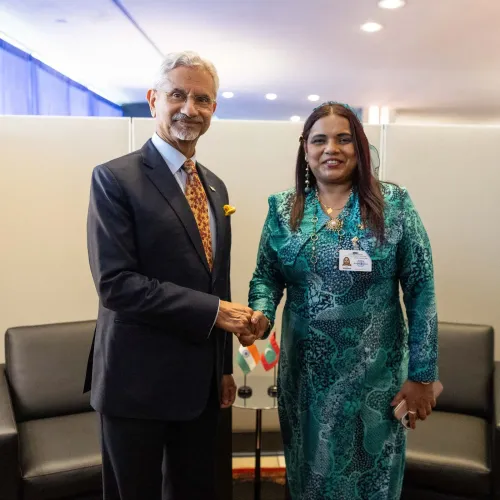
India-Maldives bilateral ties and multilateral cooperation were reviewed with FM Iruthisham Adam .
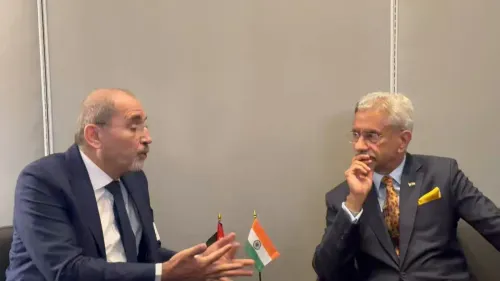
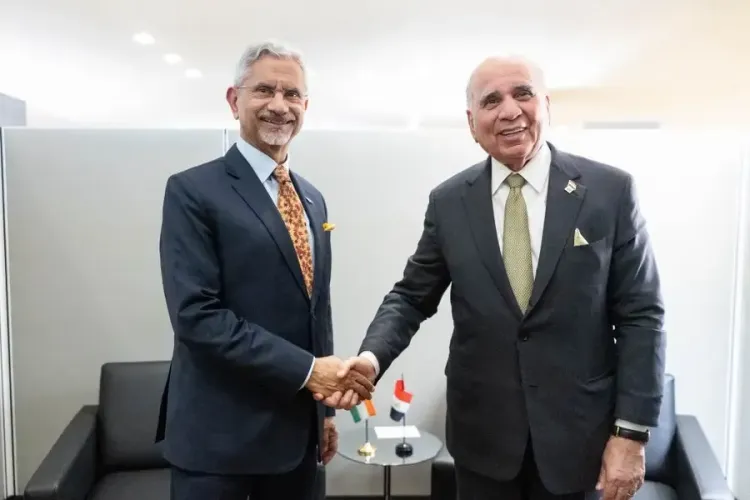
Economic and energy ties with Iraq were discussed with Deputy PM Fuad Hussein against the backdrop of West Asia tensions.
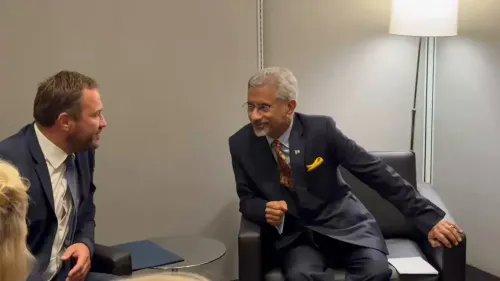
Estonia's FM Margus Tsahkna described a 'thorough discussion' on Ukraine and European security; Jaishankar used neutral language — 'ongoing Ukraine conflict' — reflecting India's non-aligned stance.
Food and energy challenges arising from global conflicts were discussed with UK Foreign Secretary Ed Miliband .
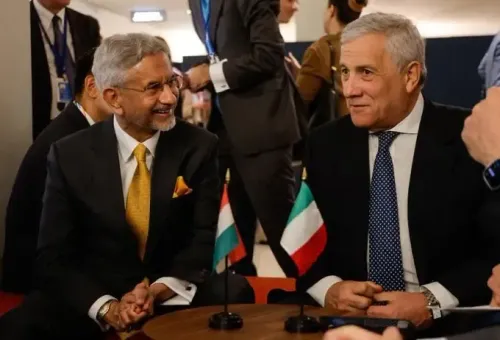
External Affairs Minister S. Jaishankar conducted a sweeping round of bilateral diplomacy on the sidelines of the 81st United Nations General Assembly (UNGA) in New York on 25 September 2026, meeting nine foreign leaders — including a head of state — to advance India's strategic and economic partnerships across multiple regions. The engagements spanned Latin America, South Asia, West Asia, Europe, Africa, Central Asia, and Southeast Asia, reflecting the breadth of India's foreign policy outreach.
Key Bilateral Meetings
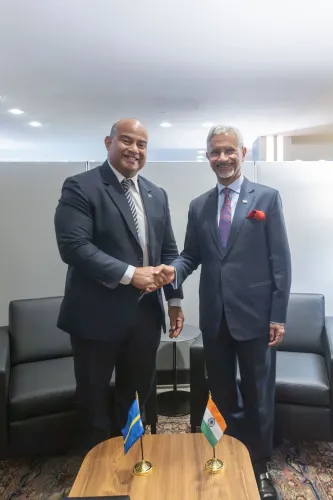
Jaishankar met President José Raúl Mulino of Panama, marking a notable leader-level engagement on the sidelines. He also reviewed bilateral ties and multilateral cooperation with Maldives Foreign Minister Iruthisham Adam. Adam said on X that the two sides 'explored avenues to strengthen the momentum in our bilateral and multilateral partnership,' signalling a continued reset in India-Maldives relations following a period of diplomatic friction.
With Iraq's Deputy Prime Minister Fuad Hussein, Jaishankar said they 'exchanged perspectives on developments in West Asia' and 'discussed our economic and energy ties' — an exchange that carries weight given India's significant oil imports from the Gulf region. This comes amid ongoing volatility in West Asia, making energy security a particularly live agenda item.
Ukraine Conflict on the Table
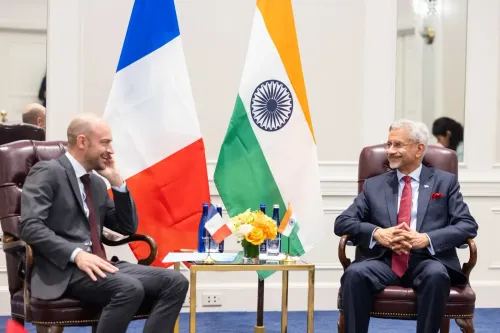
Estonia's Foreign Minister Margus Tsahkna described their meeting as a 'thorough discussion' that covered 'security in Europe, Russia's aggression against Ukraine and how Estonia and India can work together to address the challenges we face today.' Jaishankar, for his part, said they 'talked about the ongoing Ukraine conflict and its implications' and 'multilateral cooperation.' The framing difference is notable: Tsahkna used the phrase 'Russia's aggression', while Jaishankar employed the more neutral 'ongoing Ukraine conflict' — a linguistic distinction that reflects India's calibrated, non-aligned posture on the war.
Other Engagements
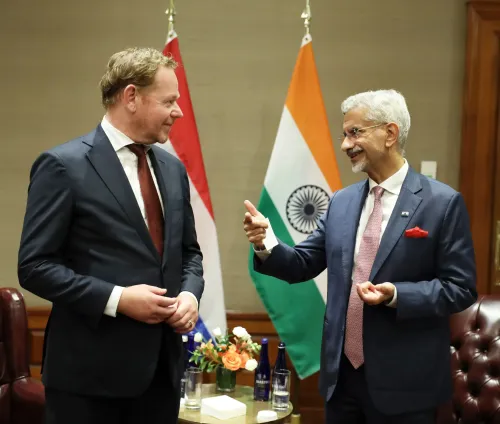
Jaishankar met Ghana's Foreign Minister Sam Okudzeto Ablakwa, with whom he 'discussed deepening ties' and 'talked about current regional and global issues.' With UK Foreign Secretary Ed Miliband, the conversation focused on 'global challenges, including in food and energy, resulting from conflicts' — a theme that resonates strongly with India's food security concerns and its position as a major importer of edible oils and energy.
A 'good discussion' on 'the region and our longstanding bilateral cooperation' was held with Tajikistan's Foreign Minister Sirojiddin Muhriddin, underscoring India's sustained engagement with Central Asia. Jaishankar also met the foreign ministers of Barbados (Christopher Peter Sinckler), Armenia (Ararat Mirzoyan), and Singapore (Vivian Balakrishnan).
The Bigger Picture
The nine meetings in a single day underscore India's increasingly active multilateral presence under the Jaishankar-led foreign policy framework. The UNGA sidelines have become a key venue for India to manage relationships simultaneously across geographies — from the Caribbean and West Africa to the Baltic and Southeast Asia. Notably, the Maldives engagement comes at a sensitive moment in the bilateral relationship, while the Iraq and UK discussions point to food and energy security as recurring concerns in India's diplomatic conversations. The full outcomes of these meetings, including any joint statements or follow-up mechanisms, are expected to emerge in the coming days.
Point of View
Same meeting, entirely different vocabularies on Ukraine. India's refusal to adopt Western framing on the war is not an oversight; it is the policy. The Maldives meeting, meanwhile, deserves more attention than it is getting — the bilateral reset is fragile, and every UNGA sidebar is doing real work to hold it together. The breadth of Jaishankar's schedule also raises a practical question mainstream coverage ignores: with meetings spanning the Caribbean, Baltic, Persian Gulf, West Africa, Central Asia, and Southeast Asia in a single afternoon, how much substantive progress is actually possible, versus optics management?
NationPress
25 Sept 2026
Frequently Asked Questions
Who did EAM Jaishankar meet at UNGA 81 on 25 September?
Jaishankar met nine leaders including President José Raúl Mulino of Panama, Maldives FM Iruthisham Adam, Iraq Deputy PM Fuad Hussein, Estonia FM Margus Tsahkna, Ghana FM Sam Okudzeto Ablakwa, UK Foreign Secretary Ed Miliband, Tajikistan FM Sirojiddin Muhriddin, and the foreign ministers of Barbados, Armenia, and Singapore.
What did Jaishankar and Estonia's FM discuss regarding Ukraine?
Estonia's FM Margus Tsahkna said they had a 'thorough discussion' on security in Europe, 'Russia's aggression against Ukraine,' and how the two countries can cooperate on current challenges. Jaishankar described the conversation as covering 'the ongoing Ukraine conflict and its implications' and multilateral cooperation — a notably more neutral framing than Tsahkna's.
What was discussed in Jaishankar's meeting with Iraq's Deputy PM?
Jaishankar said he and Iraq's Deputy Prime Minister Fuad Hussein 'exchanged perspectives on developments in West Asia' and 'discussed our economic and energy ties.' India is a major importer of Iraqi crude, making energy security a key item on the bilateral agenda.
Why is the India-Maldives UNGA meeting significant?
The meeting between Jaishankar and Maldives FM Iruthisham Adam comes during a sensitive phase in India-Maldives ties. Both sides said they reviewed bilateral relations and explored ways to strengthen multilateral cooperation, signalling continued efforts to stabilise a relationship that has faced diplomatic turbulence in recent years.
What did Jaishankar and UK Foreign Secretary Ed Miliband discuss?
The two discussed 'global challenges, including in food and energy, resulting from conflicts.' The conversation reflects shared concerns about the downstream economic impact of ongoing global conflicts on food supply chains and energy markets, both of which are critical issues for India.