Ecuador declares 60-day emergency in 10 provinces amid criminal violence surge
Synopsis
Ecuador's President Daniel Noboa has thrown a security net over 10 provinces and 3 municipalities with a sweeping 60-day emergency decree — suspending home-search protections and unleashing the military against organised crime. With killings, kidnappings, and drug trafficking cited as the trigger, this is one of the broadest emergency declarations in Ecuador's recent history, and a stark indicator that the country's security crisis is far from over.
Key Takeaways
President Daniel Noboa declared a 60-day state of emergency on 17 June covering 10 provinces and 3 municipalities in Ecuador.
Constitutional protections against home and correspondence searches have been suspended across all affected areas.
Security forces are authorised to conduct immediate searches for weapons, explosives, controlled substances , and members of organised armed groups.
The decree cites killings, extortion, kidnappings, robberies, and drug trafficking as the primary threats driving the emergency.
Affected provinces include Guayas, Pichincha (Quito), Manabí, Esmeraldas, Sucumbíos , and five others, spanning coastal, central, and Amazon regions.
This is part of a pattern of emergency declarations under Noboa, who first declared an 'internal armed conflict' in January 2024 .
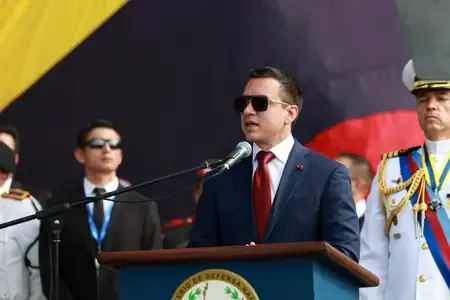
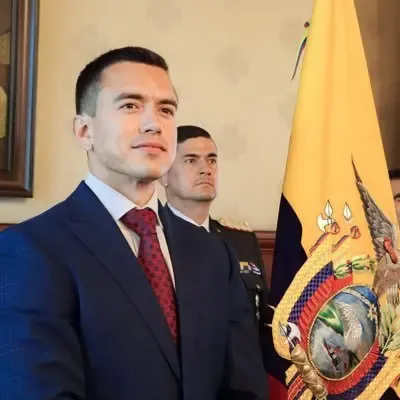
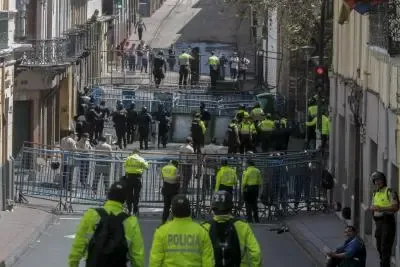
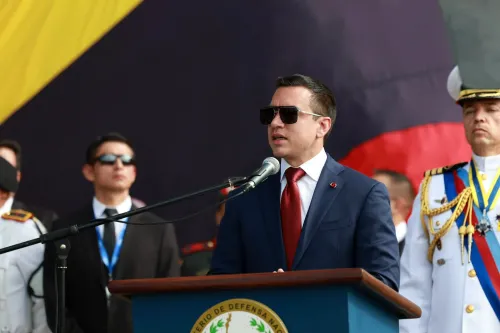
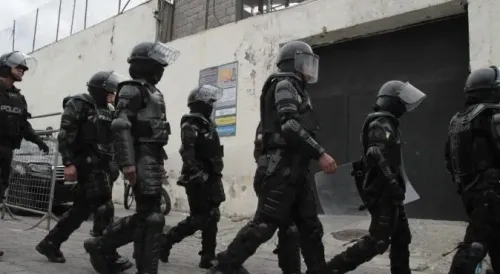
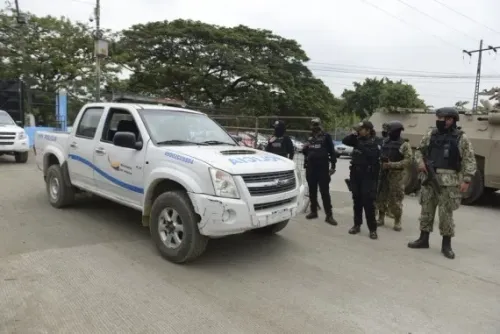
Ecuadorian President Daniel Noboa has declared a new 60-day state of emergency across 10 provinces and three municipalities, citing a sharp escalation in criminal violence and organised armed group activity, according to an executive decree issued on 17 June. The measure marks one of the broadest emergency declarations in Ecuador's recent history, covering both coastal and interior regions.
Provinces and Municipalities Covered
The emergency applies to six coastal provinces: Guayas, Manabí, Santa Elena, Los Ríos, El Oro, and Esmeraldas. It also extends to Pichincha — the north-central province that includes the capital, Quito — as well as Santo Domingo de los Tsáchilas, the northern Amazon province of Sucumbíos, and the southern province of Azuay.
The three municipalities brought under the decree are La Maná in Cotopaxi province, Las Naves in Bolívar province, and La Troncal in Cañar province.
What the Decree Suspends and Authorises
The state of emergency suspends constitutional protections against searches of homes and correspondence across the affected areas. Security forces are now authorised to conduct immediate searches where there are indications that members of organised armed groups or criminal organisations are concealed on a property, or where the presence of weapons, ammunition, explosives, or controlled substances is suspected.
The decree also empowers authorities to identify, analyse, and gather intelligence considered necessary to prevent or neutralise security threats. It further authorises the temporary requisition of illicit goods and services deemed strictly necessary to sustain security operations.
Why Noboa Acted Now
According to the decree, Ecuador has recently recorded a significant increase in violent incidents, armed attacks, and criminal activity attributed to organised armed groups. The document specifically cites killings, extortion, kidnappings, robberies, and drug trafficking as the primary drivers of social unrest, noting that these crimes have disrupted normal economic activity across the affected regions.
The decree states that intervention by the armed forces through exceptional measures was deemed necessary to help reduce public fear. This comes amid a prolonged security crisis in Ecuador, where gang violence — much of it linked to international drug trafficking networks — has surged dramatically over the past two years, pushing the country's homicide rate to among the highest in Latin America.
Broader Context
President Noboa, who took office in late 2023, has repeatedly invoked emergency powers as part of his administration's hardline security strategy. In January 2024, he declared an 'internal armed conflict,' deploying the military against criminal groups. The latest decree signals that the security situation remains far from stabilised, with organised crime continuing to challenge state authority in both urban centres and rural provinces.
Critics and human rights observers have previously raised concerns about the suspension of civil liberties under successive emergency declarations, arguing that prolonged restrictions risk normalising extrajudicial measures. The government, however, maintains that the scale of the threat justifies the response.
What Comes Next
The 60-day emergency is expected to see intensified military and police operations across the designated provinces and municipalities. How effectively the measures contain violence — and whether they are extended beyond the initial period — will be closely watched both domestically and by regional security analysts.
Point of View
From Colombia to El Salvador, suggests that durable security gains require dismantling trafficking networks at the financial level, not just the operational one. Ecuador's decree is silent on that front.
NationPress
15 Sept 2026
Frequently Asked Questions
What did Ecuador's state of emergency decree on 17 June involve?
President Daniel Noboa declared a 60-day state of emergency across 10 provinces and 3 municipalities, suspending constitutional protections against home and correspondence searches. The decree authorises security forces to conduct immediate searches and gather intelligence to combat organised armed groups and criminal organisations.
Which provinces are covered under Ecuador's emergency decree?
The 10 provinces are Guayas, Manabí, Santa Elena, Los Ríos, El Oro, Esmeraldas, Pichincha, Santo Domingo de los Tsáchilas, Sucumbíos, and Azuay. The municipalities of La Maná, Las Naves, and La Troncal are also included.
Why did President Noboa declare the state of emergency?
The decree cites a significant increase in violent incidents attributed to organised armed groups, including killings, extortion, kidnappings, robberies, and drug trafficking. The government stated that armed forces intervention through exceptional measures was necessary to reduce public fear and restore order.
What powers does the emergency decree grant to security forces?
Security forces can carry out immediate searches of properties where organised crime members are suspected to be hiding, or where weapons, ammunition, explosives, or controlled substances are believed to be present. Authorities can also requisition illicit goods and gather intelligence to prevent or neutralise threats.
Is this Ecuador's first emergency declaration under President Noboa?
No. President Noboa previously declared an 'internal armed conflict' in January 2024, deploying the military against criminal groups. The June 2024 decree is one of several emergency measures his administration has invoked as part of a hardline security strategy.