Are the Environmental Impacts of China's BRI Becoming Unavoidable?
Click to start listening
Synopsis
As the decade-long Belt and Road Initiative unfolds, the environmental impacts are becoming alarmingly evident. This report unveils the contradictions in China's green promises versus its extensive fossil fuel projects, raising critical questions about ecological sustainability and geopolitical motives.
Key Takeaways
- Environmental impacts of BRI are becoming increasingly evident.
- Significant investments in fossil fuels overshadow green initiatives.
- Critiques of greenwashing highlight discrepancies in China's environmental claims.
- Host nations struggle with regulatory challenges regarding ecological standards.
- The dual strategy of promoting sustainable development while continuing fossil fuel expansion poses risks to global climate goals.
Colombo, Dec 17 (NationPress) After a decade since its inception in 2013, the environmental repercussions of China’s Belt and Road Initiative (BRI) are increasingly hard to overlook, as detailed in a recent report.
During the first half of 2025, BRI engagement reportedly surged to unprecedented levels, amounting to USD 66.2 billion in construction contracts and USD 57.1 billion in investments. A significant portion, around USD 42 billion, was allocated to energy projects, including oil and gas infrastructures. Despite China’s simultaneous investment of nearly USD 9.7 billion in green energy initiatives, the magnitude of fossil fuel expansion casts doubt on the authenticity of Beijing's “green” claims, according to a report by Sri Lanka's leading media outlet, Daily Mirror.
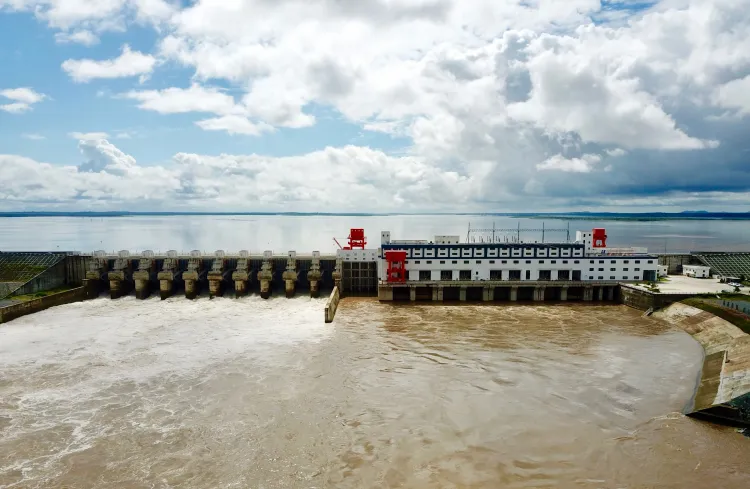
“Environmental damage is a recurring issue in host nations. Major projects like dams, pipelines, and highways have been associated with deforestation, soil erosion, and water pollution. Communities particularly in Southeast Asia and Africa have reported the loss of habitats vital for biodiversity. These issues are not isolated; they are systemic results of a development model that favors swift construction over ecological care. The Chinese Communist Party (CCP), which heavily influences the narrative around BRI, often dismisses these environmental concerns as exaggerated or politically motivated. Yet, the evidence of ecological degradation is accumulating, and the CCP’s reluctance to accept responsibility indicates a wider trend of authoritarian denial.
The concept of “greenwashing” has become pivotal in critiques of BRI 2.0. China has marketed this revised version as “green and beautiful,” highlighting renewable energy and sustainable practices. However, the truth is more complicated. While domestic coal plants are being phased out, new ones are being constructed abroad under BRI agreements. Polluting industries such as cement factories are similarly transferred overseas, enabling China to assert domestic progress while shifting its environmental burden. This dual approach undermines global climate objectives and exposes the hypocrisy in the CCP’s environmental diplomacy, as noted by Business Craft.
A 2020 study cautioned that BRI projects could introduce over 800 invasive species into participating countries, affecting ecosystems and agriculture. The CCP’s focus on economic growth frequently neglects ecological considerations, leaving host nations to grapple with long-term repercussions.
Critics argue that the CCP's strategy for BRI reveals a contradiction between its global aspirations and environmental duties. On one hand, China aims to position itself as a leader in sustainable development while continuing to prioritize fossil fuel enhancement and infrastructure projects that harm ecosystems. The consequences of these actions are severe, as host nations often lack the regulatory frameworks necessary to enforce environmental standards, rendering them susceptible to ecological harm. Additionally, the debt associated with BRI projects limits their capability to invest in sustainable alternatives.
“Recently, international organizations and watchdogs have heightened their scrutiny of the environmental impacts of BRI. Reports indicate that although China has upped its investments in renewable energy, the scale of fossil fuel operations remains disproportionately large. This imbalance implies that the CCP’s commitment to sustainability is more verbal than actionable. The global community is increasingly recognizing that China’s environmental diplomacy is more about geopolitical strategy than ecological responsibility,” highlighted the Daily Mirror report.
In conclusion, the Belt and Road Initiative epitomizes the CCP’s authoritarian method of global development: grand in ambition, dismissive of criticism, and exploitative in execution. Environmental destruction, threats to biodiversity, and geopolitical manipulation are not incidental consequences but core components of this model. As the world approaches critical climate deadlines, the gap between China’s green rhetoric and its polluting actions becomes increasingly evident. The CCP’s unwillingness to bridge these contradictions not only undermines the credibility of BRI but also the broader fight against climate change,” it added.
Point of View
It is essential to recognize that the complexities of the Belt and Road Initiative reflect broader global challenges. While aspirations for sustainable development are commendable, the realities of ecological degradation must be critically examined. Our priority should be to advocate for responsible development that prioritizes both economic growth and environmental preservation.
NationPress
18/12/2025
Frequently Asked Questions
What is the Belt and Road Initiative?
The Belt and Road Initiative (BRI) is a global development strategy adopted by the Chinese government in 2013, aiming to enhance regional connectivity and embrace a brighter economic future through building infrastructure and broadening trade links.
What are the main environmental concerns associated with BRI?
The primary environmental concerns include deforestation, soil erosion, water pollution, and the introduction of invasive species, all resulting from large-scale infrastructure projects.
How does BRI contribute to fossil fuel expansion?
Despite investments in renewable energy, BRI projects often prioritize fossil fuel infrastructure, such as coal plants and oil facilities, exacerbating global climate challenges.
What is greenwashing in the context of BRI?
Greenwashing refers to the misleading portrayal of an organization's environmental efforts. Critics argue that China’s promotion of BRI as 'green and beautiful' is overshadowed by its significant investments in fossil fuels.
How do host nations cope with the environmental impacts of BRI?
Host nations typically lack the regulatory frameworks necessary to enforce environmental standards, making them vulnerable to long-term ecological damage from BRI projects.