EU trade ties with Pakistan under scrutiny amid artist curbs, journalist threats
Synopsis
Pakistan's Punjab province has banned actresses over dance moves, a filmmaker probing Balochistan abuses has received death threats, and the European Commission has formally documented a deterioration in rights — yet Pakistan retains preferential EU trade access. A report in European Times is now asking what, if anything, European institutions plan to do about that contradiction.
Key Takeaways
Three actresses — Urooj Khan , Nayab Khan , and Masooma Malik — were ordered by Punjab Arts Council to explain 'obscene' dance moves within 48 hours .
Eight other actresses were banned from Punjab theatrical stages for one month in August 2026 .
Pakistani filmmaker Roshaan Khattak , based in Britain, reported death threats linked to his Balochistan human rights investigation; his account was published by Index on Censorship on 21 July 2026 .
The European Commission documented a deterioration in freedom of expression in Pakistan on 16 July 2026 , alongside a rise in enforced disappearances and extrajudicial killings in Balochistan between 2023 and 2025 .
Critics are questioning why Pakistan retains preferential access to the European market despite the Commission's own findings.
Pakistan's crackdown on dance performances by actresses, the detention and intimidation of poets, and fresh threats against journalists are drawing renewed attention to freedom of expression inside the country — and to the European Union's response to those violations, given its preferential trade relationship with Islamabad, according to a report published in European Times on 24 October 2026.
Actresses Ordered to Explain Dance Moves
Greek lawyer, writer and journalist Dimitra Staikou, writing in European Times, detailed that three actresses — Urooj Khan, Nayab Khan, and Masooma Malik — were ordered to submit explanations within 48 hours for dance moves that cultural authorities in Pakistan's Punjab province described as 'obscene'. The Punjab Arts Council issued notices warning of possible sanctions, though no penalty had been announced at the time of publication.
Weeks earlier, in August 2026, eight other actresses had been banned from performing on theatrical stages across the province for one month over performances similarly deemed inappropriate. Staikou noted that these decisions do not involve political statements or blasphemy accusations — they concern the way women move in front of an audience. 'In Pakistan, restrictions on artistic expression can begin long before a criminal court becomes involved: with the assessment of a performance and an administrative authority's decision on who is allowed to appear on stage,' she wrote.
Death Threats Linked to Balochistan Investigation
The report also highlighted the case of Pakistani filmmaker and researcher Roshaan Khattak, based in Britain, who reported receiving death threats he believes are connected to his investigation into human rights violations in Balochistan. His personal account was published on 21 July 2026 by the London-based organisation Index on Censorship.
This comes amid a documented rise in enforced disappearances and extrajudicial killings in Balochistan between 2023 and 2025, which the European Commission flagged in a formal assessment of Pakistan on 16 July 2026. According to the report, those responsible have continued to evade accountability.
Questions Over the EU's Preferential Trade Relationship
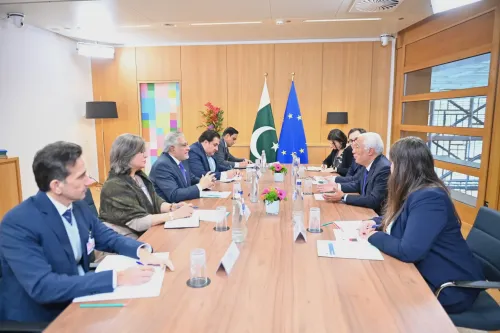
The European Commission's own documentation of deteriorating freedom of expression in Pakistan — recorded in its July 2026 assessment — has sharpened questions about Europe's position. Pakistan continues to benefit from preferential access to the European market, and critics argue that this arrangement sits uneasily alongside documented rights violations.
'The question is not only what happens to artists and creators inside Pakistan, but also what European institutions do when the very mechanisms for protecting rights that they invoke prove inadequate,' the European Times report stated.
Notably, the report argues that the risks described extend beyond the ability to publish a work to the personal safety of those participating in public debate — a finding it characterises as a further dimension to concerns about those working in Pakistan's cultural sphere.
A Broader Pattern of Suppression
While the individual cases differ in their legal and factual circumstances, together they illustrate, according to the report, the compounding pressures faced by those who write, investigate, or engage in creative work in Pakistan's public sphere. The restrictions on theatrical performance sit alongside intimidation of journalists and poets, suggesting a pattern that critics argue goes well beyond isolated administrative decisions.
Whether the EU will formally revisit the terms of Pakistan's preferential trade access in light of its own documented findings remains an open question — and one that European civil society groups are pressing with growing urgency.
Point of View
Without any publicly announced trade review. That gap between documented finding and institutional response is the real story here. Banning actresses for dance moves may appear to be a domestic administrative matter, but it sits within a wider architecture of suppression that the EU's own assessment has now put on record. If European institutions do not act on their own evidence, the credibility of human rights conditionality as a trade tool is called into question — not just for Pakistan, but as a precedent.
NationPress
24 Oct 2026
Frequently Asked Questions
Why are Pakistan's restrictions on actresses attracting international attention?
Three actresses were ordered to explain 'obscene' dance moves to Pakistan's Punjab Arts Council within 48 hours, and eight others were banned from provincial stages for a month in August 2026. Critics argue these administrative restrictions on women's artistic expression illustrate a broader pattern of suppression that goes beyond isolated incidents.
Who is Roshaan Khattak and why is his case significant?
Roshaan Khattak is a Pakistani filmmaker and researcher based in Britain who says he received death threats linked to his investigation into human rights violations in Balochistan. His account was published by Index on Censorship on 21 July 2026, and it adds a personal safety dimension to concerns about creative and journalistic freedom in Pakistan.
What did the European Commission find in its July 2026 assessment of Pakistan?
The European Commission's assessment, documented on 16 July 2026, recorded a deterioration in freedom of expression in Pakistan and a rise in enforced disappearances and extrajudicial killings in Balochistan between 2023 and 2025, with those responsible evading accountability.
How does Pakistan's preferential EU trade access relate to these human rights concerns?
Pakistan benefits from preferential access to the European market, an arrangement that typically carries human rights conditionality. Critics, as highlighted in the European Times report, argue that the EU's failure to formally respond to its own documented findings about Pakistan undermines the credibility of that conditionality.
What is the EU expected to do next?
As of the report's publication, no formal EU trade review has been announced. Civil society groups and commentators are pressing European institutions to explain whether the Commission's July 2026 findings will trigger any reassessment of Pakistan's preferential trade status.