Western Europe warming faster than global average, wildfire risk surges in 2026
Synopsis
Spain's fourth heatwave of summer 2026 has scorched nearly 180,000 hectares — six times last year's toll — and forced 200,000 people from their homes. A senior AEMET scientist says Western Europe is warming faster than the rest of the world, and that fire seasons will only grow longer and deadlier without a fundamental rethink of how the region manages its forests and emergency response.
Key Takeaways
Western Europe is warming faster than most other regions globally, according to AEMET spokesperson Ruben del Campo .
Spain entered its fourth heatwave of summer 2026 in late July, with temperatures forecast to reach 42°C .
June 2026 was Spain's second-hottest and third-driest June since records began in 1961 .
Wildfires have burned nearly 180,000 hectares in Spain — about six times the 29,817 hectares recorded in the same period of 2025 .
Nearly 200,000 people have been evacuated across Spain and southern France this summer.
The World Meteorological Organization says Europe has warmed by around 2°C since the 1976 heatwave, attributing the trend to climate change.
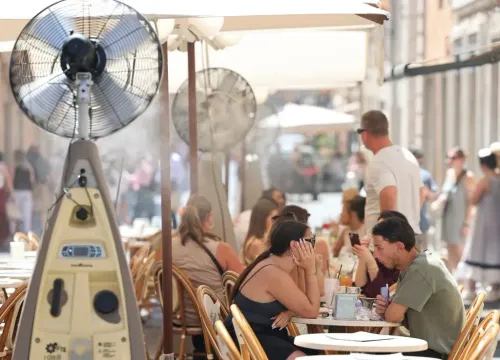
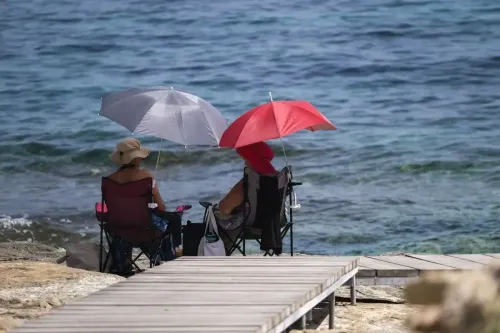
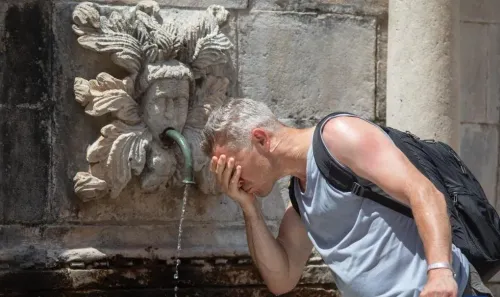
Western Europe is heating up at a rate that outpaces much of the rest of the world, driving more frequent and intense heatwaves while creating conditions ripe for devastating wildfires, according to a leading Spanish climate scientist. The warning comes as Spain entered its fourth heatwave of the summer at the close of July 2026, with temperatures forecast to hit 42 degrees Celsius across large parts of the country.
Record Heat Gripping Spain
Ruben del Campo, spokesperson for Spain's State Meteorological Agency (AEMET), confirmed that the country recorded exceptionally high temperatures through both June and July 2026. According to AEMET, June 2026 ranked as Spain's second-hottest and third-driest June since national records began in 1961 — a sobering statistical marker of how far conditions have shifted.
Temperatures in parts of Spain reportedly reached 35 degrees Celsius as early as the end of May, weeks before the conventional start of peak summer. Del Campo noted that countries along the Mediterranean 'are among the most vulnerable to heatwaves under the new climatic conditions.'
Wildfires Force Mass Evacuations
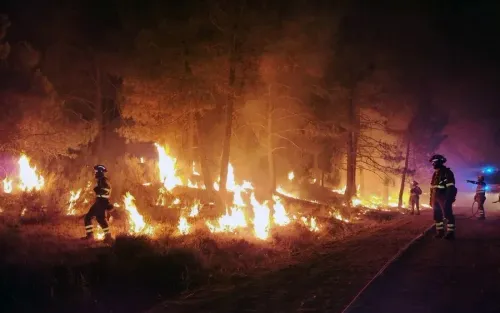
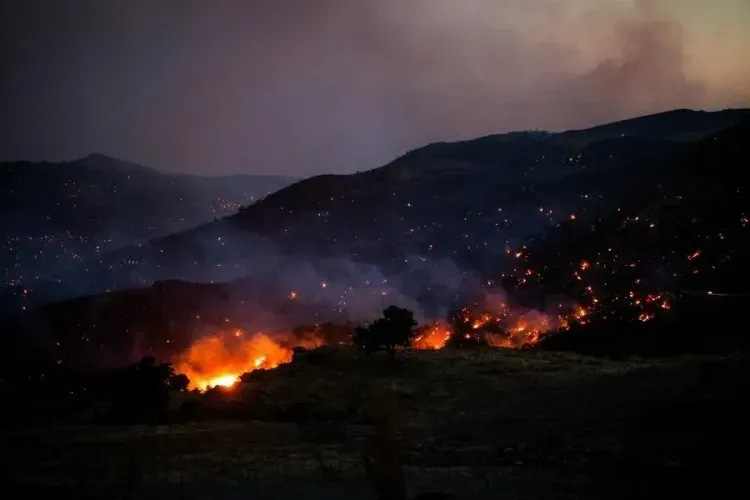
The relentless heat has been accompanied by a surge in wildfires across the region. By the end of July, blazes had burned through almost 180,000 hectares in Spain — roughly six times the 29,817 hectares recorded over the same period in 2025, according to Spain's Ministry for the Ecological Transition and the Demographic Challenge. Major fires have ravaged areas of central Spain, including zones near Madrid, as well as southwestern France, particularly around Bordeaux.
The destruction has forced nearly 200,000 people to evacuate their homes across Spain and southern France so far this summer, placing enormous pressure on emergency services and local administrations.
The Climate Science Behind the Crisis
Del Campo drew a direct line between rising temperatures and the worsening fire conditions. 'There is a clear link with climate change. A rise in average temperature always leads to an increase in episodes of extreme heat, and this is exactly what we are seeing,' he said.
The World Meteorological Organization (WMO) stated in July 2026 that Europe as a whole has warmed by around two degrees Celsius since the historic heatwave of 1976, attributing the sustained temperature rise largely to climate change — a conclusion del Campo echoed.
Studies cited by del Campo indicate that Western Europe — encompassing the United Kingdom, France, Italy, Spain, and Portugal — is warming faster than most other regions globally, and that the continent is increasingly prone to heatwave episodes as a result.
Why Fires Are Harder to Control
Del Campo explained the mechanics driving the escalating fire risk: 'The heat begins earlier, and the lack of rain means summer droughts also begin earlier. This means that forest vegetation, especially fine grasses and shrubs, dries out more intensely and quickly. When a fire breaks out, this dry organic matter burns violently and rapidly, making the fire difficult to control from the outset.'
High temperatures, low relative humidity, and strong winds have combined to create near-ideal conditions for large-scale fire spread across the continent this summer — a pattern that experts say is becoming the new baseline rather than an anomaly.
What Lies Ahead
Del Campo warned that the wildfire threat is unlikely to ease before autumn. 'For meteorological reasons alone, fire management will have to adapt to these longer and hotter summers,' he said, adding that weather conditions are expected to continue favouring large fires through August 2026. Authorities across affected regions are on heightened alert as the fire season shows no sign of abating.
Point of View
And the results are arriving ahead of schedule. What mainstream coverage underplays is the governance gap: fire management protocols across Spain and France were largely designed for a climate that no longer exists. Del Campo's call for fire management to 'adapt to longer and hotter summers' is measured language for what is, in practice, a demand for a wholesale restructuring of forest policy, urban planning near wildland interfaces, and cross-border emergency coordination. The 200,000 evacuees this summer are a preview, not a peak.
NationPress
15 Sept 2026
Frequently Asked Questions
Why is Western Europe warming faster than the global average?
According to studies cited by AEMET spokesperson Ruben del Campo, Western Europe — including the UK, France, Italy, Spain, and Portugal — is warming at a rate that exceeds many other parts of the world, making it more prone to heatwaves. The World Meteorological Organization attributes Europe's roughly 2°C warming since 1976 largely to climate change.
How bad are the 2026 wildfires in Spain compared to previous years?
By the end of July 2026, wildfires had burned nearly 180,000 hectares in Spain — approximately six times the 29,817 hectares recorded over the same period in 2025, according to Spain's Ministry for the Ecological Transition and the Demographic Challenge. Major blazes have affected areas near Madrid and southwestern France around Bordeaux.
How many people have been evacuated due to wildfires in Europe this summer?
Nearly 200,000 people have been forced to evacuate their homes across Spain and southern France as a result of wildfires so far in the summer of 2026. Emergency services remain on high alert as conditions are expected to remain fire-prone through August.
What weather conditions are fuelling the wildfires?
High temperatures, low relative humidity, and strong winds have created near-ideal conditions for large wildfires. Del Campo explained that earlier heat and reduced rainfall cause forest vegetation — particularly fine grasses and shrubs — to dry out faster, making fires more intense and harder to control once ignited.
Will the wildfire risk ease soon?
According to AEMET's Ruben del Campo, the wildfire threat is likely to persist through August 2026, as temperatures are expected to stay elevated and weather conditions continue to favour large fires. He warned that fire management strategies will need to adapt to structurally longer and hotter summers going forward.