Is Europe’s New Year Celebration Revealing a Deeper Crisis?
Synopsis
As Europe rings in the New Year, a troubling pattern emerges amidst celebrations: widespread violence, destruction, and societal tensions. From Brussels to Berlin, the chaos reflects deeper issues tied to immigration and cultural integration, raising critical questions about the continent's future. What does this mean for European identity and safety going forward?
Key Takeaways
New Year celebrations in Europe were marred by widespread violence.
Attacks on emergency services highlight growing tensions in urban areas.
Mass immigration and failed integration are key factors.
Notable incidents occurred in major cities like Brussels and Amsterdam .
Public spaces are increasingly seen as contested territories.
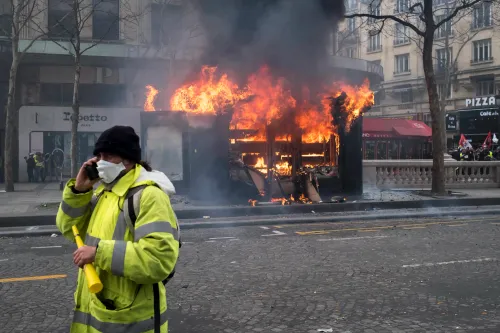
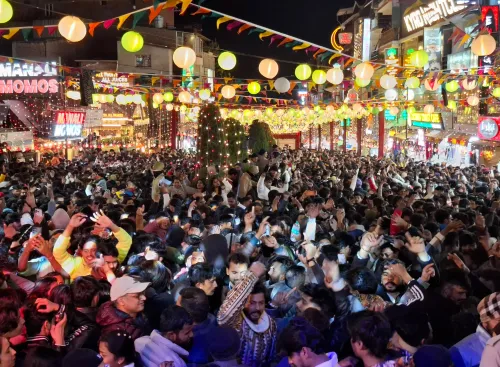
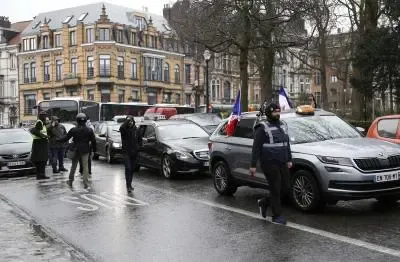
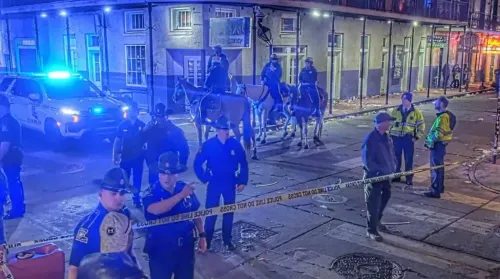
Brussels, Jan 11 (NationPress) As the New Year symbolizes a fresh start, it has unveiled a troubling reality in Europe that political leaders prefer to overlook. The shift into the New Year across cities like Brussels, Amsterdam, Strasbourg, and Berlin, as well as suburbs in France and urban centers in Italy, was marred by a series of incidents - including fires, riots, and assaults on emergency responders amidst neighborhoods increasingly dominated by criminal elements among a significant population of Muslim immigrants, according to a report.
The Brussels Signal noted, "This was far from a random outbreak of chaos. It was certainly not just 'youthful exuberance' nor a mere fireworks issue. It represents a predictable consequence of mass immigration, unsuccessful integration, cultural disunity, and a political reluctance to address the influence of Islam on creating parallel social frameworks. In Brussels, disturbances ignited in areas long flagged by law enforcement as high-risk during significant public events, particularly those with substantial immigrant and Muslim communities."
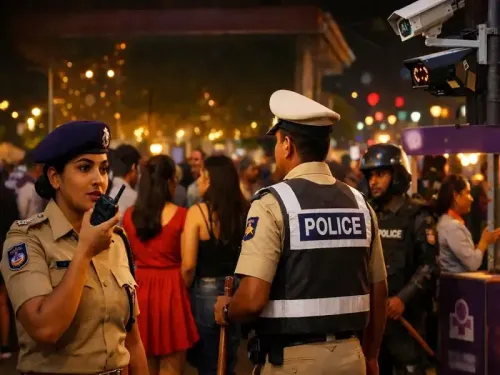
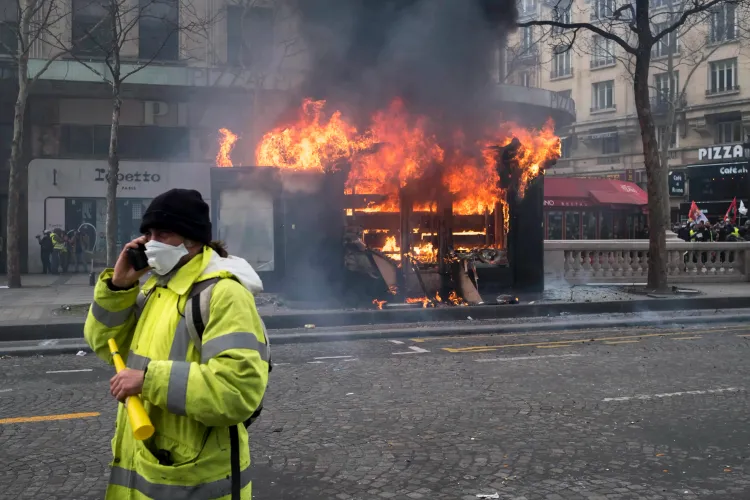
The turmoil saw homes and businesses vandalized, over 150 arrests conducted, numerous vehicles set ablaze, and firefighters targeted with stones and incendiaries while battling blazes. The unrest coincided with Morocco’s triumph in the Africa Cup of Nations. Despite the deployment of extra police units anticipating trouble, order was lost. This situation transcends football; it reveals a troubling absence of loyalty to the host nation, normalization of animosity towards law enforcement, and the appropriation of public spaces to express identity rather than embrace citizenship, a phenomenon evident throughout the European Union.
In Amsterdam, a night characterized by rampant violence and hundreds of arrests nationwide culminated in the destruction of the Vondelkerk, a historic Christian site, which was engulfed in flames amid extensive illegal fireworks activity and repeated assaults on police and emergency personnel. The Brussels Signal stated, "A Christian emblem was lost during a night of disorder driven by groups disconnected from Europe’s cultural heritage."
More than a thousand vehicles were incinerated in France, with law enforcement facing coordinated assaults involving fireworks and projectiles in areas already associated with persistent unrest in Strasbourg. Germany encountered similar issues, with police and firefighters targeted by illegal fireworks in Berlin, Hamburg, and the Ruhr region.
Unions representing police acknowledged that neighborhoods in Germany became no-go zones for emergency responders during peak times, as reported by the Brussels Signal. Much of this violence was clustered in areas with elevated immigration levels and integration failures, particularly among Muslim youths raised outside traditional German civic values. Concurrently, law enforcement dismantled violent gatherings in Milan, Turin, Rome, Naples, and Florence, where security personnel faced fireworks attacks.
The Brussels Signal emphasized, "The unifying thread across Europe is neither poverty, nor fireworks, nor revelry. It is a parallel society forged through immigration and exacerbated by the cultural distance of Islam from European norms. In these contexts, the state is perceived as an adversary, police are seen as enemies, and public spaces are viewed as contested ground rather than shared heritage."
This situation did not arise by chance. Europe has been welcoming aggressors by the millions without demanding assimilation, promoting multiculturalism without protecting its dominant culture and traditions.
The report concluded, "Bans on fireworks, curfews, and emergency measures are mere temporary solutions in the face of a strategic failure. They fail to tackle the underlying issue: Europe has become a continent that has lost faith in its right to enforce its own regulations, uphold its symbols, and insist that newcomers adapt to Western values and customs."
Point of View
It is vital to acknowledge the complexities at play in these troubling events. While the violence and unrest during the New Year's celebrations across Europe are alarming, they point to deeper societal issues that require comprehensive dialogue and action. It is crucial to approach this situation with a balanced perspective, focusing on solutions that foster integration and community cohesion.
NationPress
22 Sept 2026