Why is the EU withholding the report on Pakistan's 2024 elections?
Synopsis
The European Commission's decision to withhold the Election Expert Mission report on Pakistan's 2024 elections has ignited concerns regarding its commitment to democracy and transparency. This situation raises questions about the EU's priorities in international relations and the implications for Pakistan's governance.
Key Takeaways
EU's refusal to release the EEM report raises transparency concerns.
The timing coincides with GSP+ negotiations, indicating potential diplomatic priorities.
Previous missions criticized the government, highlighting a shift in monitoring practices.
Allegations of electoral irregularities have emerged from Commonwealth reports.
EU's actions may signal tacit support for the current regime in Pakistan .
New Delhi, Dec 7 (NationPress) The European Commission’s unwavering refusal to disclose the Election Expert Mission (EEM) report regarding Pakistan’s 2024 elections has sparked considerable concern, suggesting a disregard for the EU’s foundational principles of democracy and transparency.
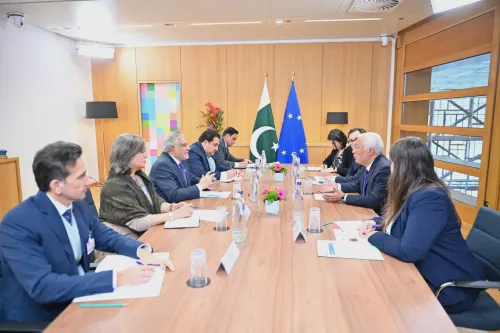
This decision emerges at a pivotal moment, as an EU delegation is presently in Pakistan evaluating adherence to the Generalised Scheme of Preferences Plus (GSP+), a trade framework contingent on the observance of 27 international conventions related to human rights, labor standards, and governance.
Amid ongoing worries regarding the safety and circumstances surrounding former Prime Minister Imran Khan during his detention, the EU’s lack of transparency seems to favor diplomatic relations with Islamabad over accountability, potentially signaling implicit support for the current administration, as highlighted in an article by Geopolitico.
The EEM, sent by the EU’s European External Action Service (EEAS) to oversee Pakistan’s February 2024 general elections, marked a significant shift; unlike prior missions, including the 2018 observation that criticized the former government, this report has never been made publicly available.
The report notes that several freedom of information requests from EU citizens, documented on platforms such as AsktheEU.org, were denied by the EEAS, which stated that even partial disclosure would "undermine the public interest regarding international relations" and could jeopardize ties with Pakistan.
The European Ombudsman examined one such case concerning the request for the "Election Expert Mission report for Pakistan 2024," highlighting the EEAS’s steadfast refusal to release any portion of the document.
This position reflects broader critiques of EU institutional transparency, as indicated in recent ombudsman findings regarding the Commission’s management of urgent proposals lacking sufficient justification.
Moreover, the Commonwealth of Nations also withheld its own observer group report on the same elections, creating an unusual situation where both prominent international monitors chose to conceal their findings.
Leaked information from the Commonwealth document points to allegations of electoral irregularities, including communication blackouts, inconsistencies in vote counts, and measures that disproportionately affected Imran Khan’s Pakistan Tehreek-e-Insaf (PTI), potentially resulting in candidates being "unlawfully returned."
While the EU report remains undisclosed, its non-publication aligns with trends of external pressure on Khan’s PTI, which has faced bans on party symbols, mandates restricting candidate independence, and reported arrests of supporters, actions that compromised a fair electoral environment.
EU diplomats have historically expressed discomfort with Khan, particularly regarding his neutral position on the Ukraine conflict, which may explain their reluctance to highlight electoral shortcomings that could reinforce his narrative, as noted in the report.
As the EU delegation engages with Pakistani officials, civil society, and stakeholders in Islamabad for the GSP+ review, postponed from June due to regional tensions, the timing of the EEM’s suppression raises significant questions.
The GSP+ offers Pakistan duty-free access to the EU market for two-thirds of its exports, valued in billions annually, yet requires demonstrable progress on fundamental rights, including freedom of expression, assembly, and protection from arbitrary detention.
The EU Ambassador to Pakistan, Raimundas Karoblis, recently stressed that Pakistan must "do more" on issues like enforced disappearances, minority protections, blasphemy laws, and women's rights, with the mission set to compile a detailed report for Brussels.
Nonetheless, by concealing the EEM findings, the EU risks appearing inconsistent in its ability to credibly assess Islamabad’s democratic compliance while simultaneously hiding its own expert evaluation of the electoral process, as further elaborated in the news article.
Point of View
It's essential to maintain a balanced perspective on the EU's decision. While the withholding of the report raises valid concerns about transparency and democracy, it's crucial to consider the complexities of international relations and the potential implications for Pakistan's governance. The situation demands careful scrutiny to ensure accountability without jeopardizing diplomatic ties.
NationPress
30 Sept 2026
Frequently Asked Questions
What is the Election Expert Mission report?
The Election Expert Mission report is an assessment by the EU's European External Action Service aimed at evaluating the electoral process in Pakistan for the 2024 general elections.
Why is the EU not releasing the report?
The EU has cited concerns over international relations with Pakistan, stating that releasing even partial information could undermine public interest.
What are the implications of withholding the report?
The decision to withhold the report raises questions about the EU's commitment to transparency and accountability in promoting democratic values.
What is the Generalised Scheme of Preferences Plus (GSP+)?
GSP+ is a trade arrangement that allows Pakistan duty-free access to the EU market, contingent on compliance with international conventions related to human rights and governance.
How does this affect Imran Khan's party?
The withholding of the report aligns with external pressures faced by Imran Khan's PTI, which has experienced restrictions that may hinder a fair electoral process.