CM Dhami Credits BJP Vote for Uttarakhand's Infrastructure Leap
Synopsis
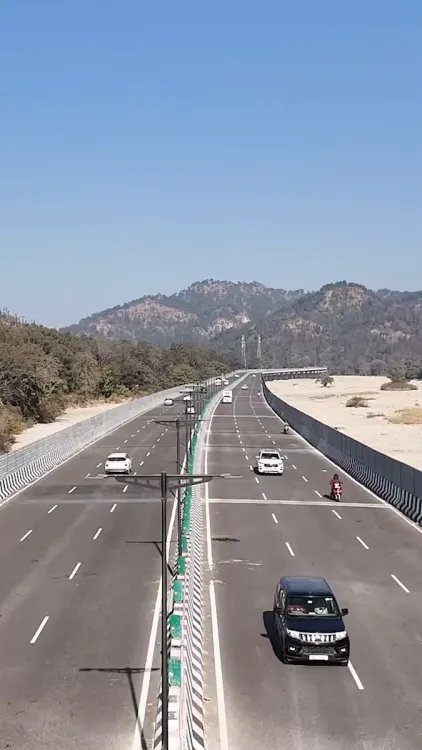
Uttarakhand CM Pushkar Singh Dhami credited voter support for BJP with enabling a wave of road, rail and ropeway infrastructure that he says has driven unprecedented growth in pilgrimage and tourism across Devbhoomi.
Key Takeaways
CM Pushkar Singh Dhami posted on 14 November 2026 crediting BJP's electoral mandate for Uttarakhand's infrastructure progress.
Road connectivity, rail line construction and ropeway projects across Devbhoomi were cited as key drivers of tourism and pilgrimage growth.
The Char Dham Pariyojana , launched in 2016 , expanded all-weather road access to Yamunotri, Gangotri, Kedarnath and Badrinath .
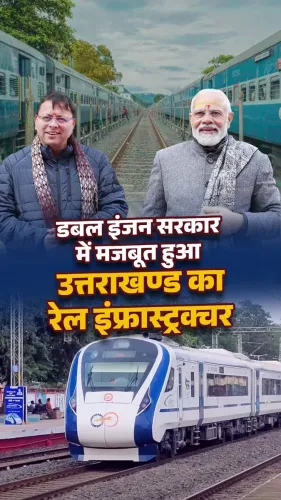
The Rishikesh–Karnaprayag rail line , roughly 125 kilometres long, is the flagship project connecting the plains to the upper Himalayan valleys.
Multiple ropeway projects sanctioned in the 2020s have added aerial access for pilgrims in steep terrain.
The post tagged PM Modi, Amit Shah and Rajnath Singh , framing the gains as a joint BJP central-state achievement.
Every mountain road carved, every rail tunnel bored, every ropeway cable strung across a Himalayan gorge — Uttarakhand Chief Minister Pushkar Singh Dhami says it all traces back to a single vote. On Saturday, 14 November 2026, Dhami took to X to argue that the electoral mandate given to the BJP has unlocked a new chapter of progress for the state, pointing to surging pilgrimage and tourism numbers as the visible dividend of a decade-long connectivity push.
Posting in Hindi, Dhami wrote: 'Aapke ek vote ki taaqat se aaj Uttarakhand pragati ka naya adhyay likh raha hai' — 'With the power of your single vote, Uttarakhand is writing a new chapter of progress today.' He credited improved road connectivity, rail line construction, and new ropeways with making movement across Devbhoomi easier, and said the result has been 'unprecedented growth' in tourism and pilgrimage. The post tagged Prime Minister Narendra Modi, Home Minister Amit Shah, Defence Minister Rajnath Singh, and party handle BJP4India, framing the gains as a collective BJP achievement.The Road, the Rail and the Ropeway: What Has Actually Been Built
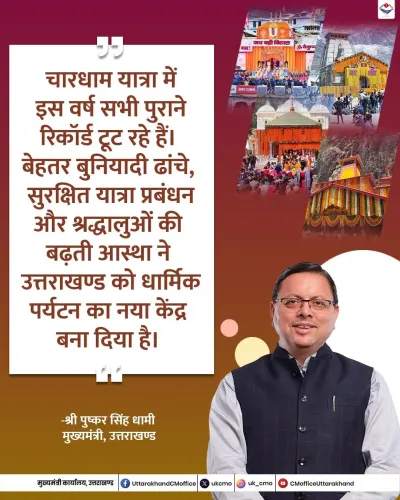
The infrastructure arc Dhami is celebrating has a clear origin point. The Char Dham Pariyojana, launched in 2016, set out to widen and upgrade the highway network linking Yamunotri, Gangotri, Kedarnath and Badrinath — the four sacred shrines that draw millions of pilgrims each year. The project brought all-weather road access to some of the most seismically active and weather-disrupted terrain in India, a logistical undertaking that required cutting through snowbound ridgelines and bridging swollen rivers.
Alongside roads, the Rishikesh–Karnaprayag rail line has been the marquee project — a roughly 125-kilometre route punching through the Garhwal Himalayas that received renewed central push after 2014 and multiple phased approvals in subsequent years. When complete, it will shrink journey times from the plains to the upper Alaknanda valley from hours of hairpin bends to a direct rail corridor. Multiple ropeway projects sanctioned in the 2020s have added aerial access for pilgrims and trekkers unable to manage steep ascents on foot.
Pilgrimage Numbers and What Connectivity Unlocks
The logic Dhami is invoking is straightforward: easier access means more visitors, more visitors mean more revenue, more revenue means more local livelihoods. Uttarakhand, home to some of Hinduism's holiest shrines and to the source rivers of the Ganga and Yamuna, has historically been constrained by its own geography. A single landslide on a narrow mountain road could cut off a shrine town for days. Infrastructure investment, the CM argues, has broken that bottleneck.
The broader pattern holds across other Himalayan states too — similar connectivity drives in Himachal Pradesh and Jammu & Kashmir have been a consistent feature of central government strategy since 2014, linking economic integration to road and rail expansion in border and hill regions. Dhami's post positions Uttarakhand as the clearest proof of concept.
A Political Frame as Much as a Policy Report
The timing and the tagging are deliberate. By addressing voters directly — 'your vote did this' — Dhami converts an infrastructure update into a gratitude loop, reminding the BJP's support base that the connectivity they use daily is a product of the electoral choice they made. Tagging Modi, Shah and Singh underlines the federal partnership: a state government that could not have moved this fast without sustained central funding and approvals.
What to watch next: remaining phases of the Rishikesh–Karnaprayag rail line remain under construction, and the state tourism department is expected to announce further ropeway projects. The pace at which those milestones land will determine whether Dhami's 'new chapter' narrative holds through the next electoral cycle.
Point of View
He keeps the BJP's core pilgrim-and-rural constituency emotionally invested in the development story. The federal tagging of Modi, Shah and Rajnath Singh also signals that Uttarakhand wants credit for being the model Himalayan state, sharpening its profile relative to neighbouring hill states like Himachal Pradesh, which is under opposition rule. The unanswered question is whether the Rishikesh–Karnaprayag rail line — the single most consequential project — delivers completion on schedule, since that milestone alone would validate the entire connectivity thesis.
NationPress
14 Nov 2026
Frequently Asked Questions
What is the Char Dham Pariyojana in Uttarakhand?
The Char Dham Pariyojana is a road connectivity project launched in 2016 to build all-weather highways linking the four major pilgrimage shrines of Yamunotri, Gangotri, Kedarnath and Badrinath in Uttarakhand, improving access for millions of pilgrims annually.
What is the Rishikesh-Karnaprayag rail line?
The Rishikesh–Karnaprayag rail line is a roughly 125-kilometre railway project cutting through the Garhwal Himalayas, designed to link the plains to the upper Alaknanda valley and drastically reduce travel time to pilgrimage towns in Uttarakhand. It received renewed central government support after 2014 .
Why is CM Dhami talking about infrastructure on X?
CM Pushkar Singh Dhami posted on 14 November 2026 to credit BJP voters for enabling the state's road, rail and ropeway development, framing the connectivity gains as a direct outcome of the electoral mandate given to the party.
How has infrastructure improved tourism in Uttarakhand?
Better road connectivity under the Char Dham Pariyojana , ongoing rail line construction and new ropeway projects have made pilgrimage shrines and tourist destinations more accessible year-round, reducing the impact of landslides and weather disruptions that previously cut off mountain towns.
What ropeway projects exist in Uttarakhand for pilgrims?
Several ropeway projects were sanctioned by the central government during the 2020s to provide aerial access to pilgrimage sites and trekking destinations in Uttarakhand's hilly terrain, easing the journey for elderly pilgrims and those unable to undertake steep ascents on foot.