Extreme El Niño could cost Latin America 2% of GDP, push 4.8 mn into poverty
Synopsis
ECLAC's new report puts a hard number on the El Niño threat: at least 2% of Latin America and the Caribbean's GDP wiped out, and 4.8 million more people in poverty — and NOAA is giving a 69% chance of a historic 'Super El Niño' hitting in 2026–27. With 31% of the region already on high alert and cities like São Paulo and Mexico City facing energy stress, the window for preparation is narrowing fast.
Key Takeaways
ECLAC warns an extreme El Niño could cost at least 2% of GDP across Latin America and the Caribbean .
An additional 4.8 million people could be pushed into poverty, with household income declines persisting toward the end of the decade.
NOAA projects a 90%+ probability of very strong El Niño intensity during 2026–2027 boreal autumn and winter.
There is a 69% chance of a historic 'Super El Niño' magnitude event.
For October–December 2026 , below-normal rainfall probability stands at 60% ; 31.1% of the region is under high alert.
Cities including Lima , São Paulo and Mexico City face energy supply risk from higher cooling demand amid reduced water availability.
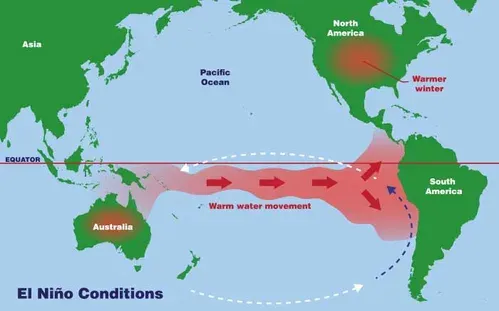
An extreme El Niño event could inflict losses equivalent to at least 2 per cent of Latin America and the Caribbean's GDP and push an additional 4.8 million people into poverty, the Economic Commission for Latin America and the Caribbean (ECLAC) has warned in a report released on Monday. The Santiago-based agency says the risk is not hypothetical — projections by the US National Oceanic and Atmospheric Administration (NOAA) put a more than 90 per cent chance of El Niño reaching very strong intensity during the 2026–2027 boreal autumn and winter.
Scale of the Economic Threat
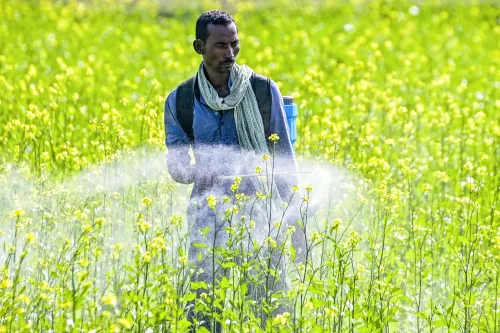
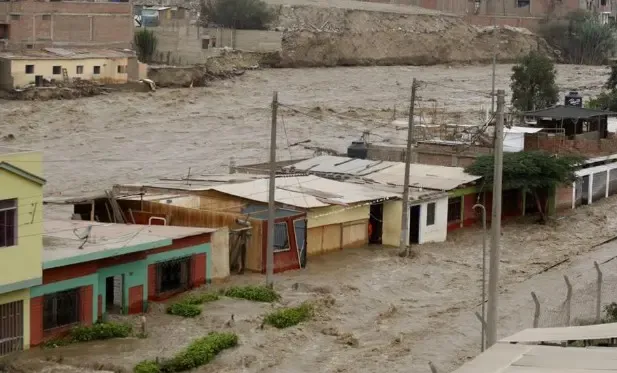
The ECLAC report, titled 'The Effects of El Niño in Latin America and the Caribbean and Recommendations for Addressing It', warns that a high-intensity event would have wide-ranging economic, social and productive impacts — particularly on energy, agriculture, fisheries and infrastructure. The largest economic losses would likely be concentrated in the first year of the event, though cascading effects could persist well beyond that.
ECLAC Executive Secretary José Manuel Salazar-Xirinachs cautioned of "severe economic and social repercussions" as well as damage to key productive sectors if the phenomenon reaches high intensity. Declining household incomes, the agency noted, could push poverty levels higher toward the end of the decade.
The Super El Niño Risk
According to NOAA projections, there is a 69 per cent chance that the current cycle reaches a historic 'Super El Niño' magnitude — a threshold that has historically triggered continent-scale disruptions in rainfall patterns, agricultural output and urban infrastructure. For the October–December 2026 window, the probability of below-normal rainfall across the region is estimated at 60 per cent, while 31.1 per cent of the region's territory is already under high alert.
Cities and Energy Systems at Risk
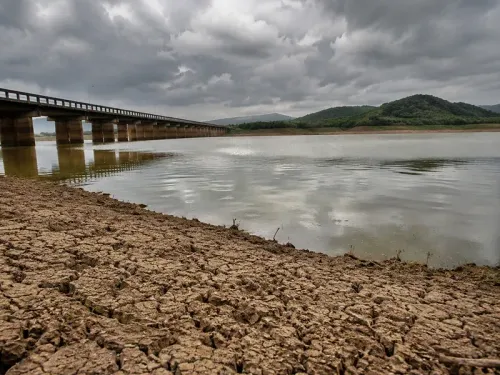
Higher temperatures are expected to drive up electricity demand for cooling in major urban centres including Lima, São Paulo and Mexico City — precisely at a time when reduced water availability threatens hydropower generation capacity. This combination raises the risk of supply disruptions and sharply higher operating costs across the region's energy grid. Latin America is heavily dependent on hydropower, making drought conditions a systemic risk rather than a localised one.
What ECLAC Is Recommending
The commission has urged governments across the region to take a range of pre-emptive actions: strengthening early-warning systems, protecting critical infrastructure, improving water management, diversifying energy sources, expanding climate insurance and social protection programmes, and deepening regional cooperation. ECLAC stressed that the cost of preparedness is considerably lower than the projected cost of unmitigated climate impact.
The warning comes as global attention on El Niño intensifies heading into the 2026–2027 cycle, with emerging economies across the Global South — including several in South and Southeast Asia — also on high alert for knock-on weather disruptions.
Point of View
Yet regional governments have historically moved slowly on pre-event infrastructure hardening. The energy vulnerability is particularly underappreciated: Latin America's hydropower dependence means a prolonged drought is not just an agricultural crisis but a macroeconomic one, capable of triggering inflation through electricity price shocks. Whether ECLAC's recommendations translate into funded action before the 2026–27 cycle peaks is the real test of the region's climate governance maturity.
NationPress
22 Sept 2026
Frequently Asked Questions
What economic losses could an extreme El Niño cause in Latin America?
According to ECLAC, an extreme El Niño event could cause losses equivalent to at least 2% of Latin America and the Caribbean's GDP. The largest losses would likely occur in the first year, with effects potentially persisting and pushing poverty levels higher toward the end of the decade.
How many people could be pushed into poverty by El Niño?
ECLAC estimates that an extreme El Niño event could push an additional 4.8 million people into poverty across Latin America and the Caribbean. Declining household incomes are identified as the primary transmission mechanism.
What is the probability of a 'Super El Niño' in 2026–27?
The US National Oceanic and Atmospheric Administration (NOAA) projects a 69% chance of El Niño reaching a historic 'Super El Niño' magnitude, with a more than 90% probability of very strong intensity during the 2026–2027 boreal autumn and winter.
Which sectors are most at risk from El Niño in Latin America?
ECLAC identifies energy, agriculture, fisheries and infrastructure as the sectors most exposed. Cities like Lima, São Paulo and Mexico City face particular energy risk due to increased cooling demand coinciding with reduced water availability for hydropower generation.
What measures is ECLAC recommending to governments?
ECLAC has called on governments to strengthen early-warning systems, protect critical infrastructure, improve water management, diversify energy sources, expand climate insurance and social protection, and deepen regional cooperation to reduce the impact of an extreme El Niño event.