India slams UN rights office for 'double standards' on protest crackdowns
Synopsis
India didn't just defend itself at the UN — it went on the offensive. First Secretary Anuj Swarup challenged OHCHR chief Volker Türk by invoking the body's own prior demands on Pakistan-occupied Kashmir: investigations into 90+ deaths, release of detained leaders, internet access. The message was stark — if OHCHR won't follow up on Pakistan, its credibility as a neutral arbiter is zero.
Key Takeaways
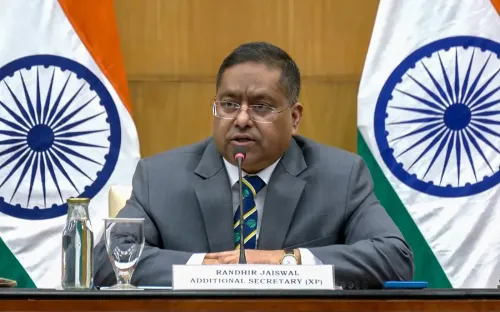
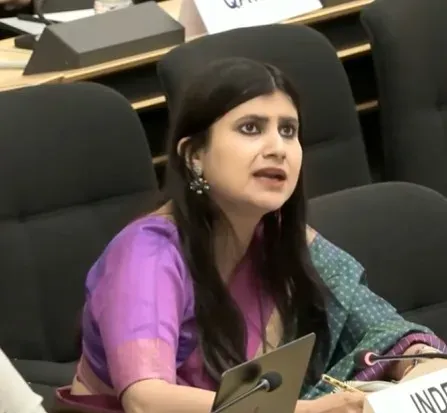
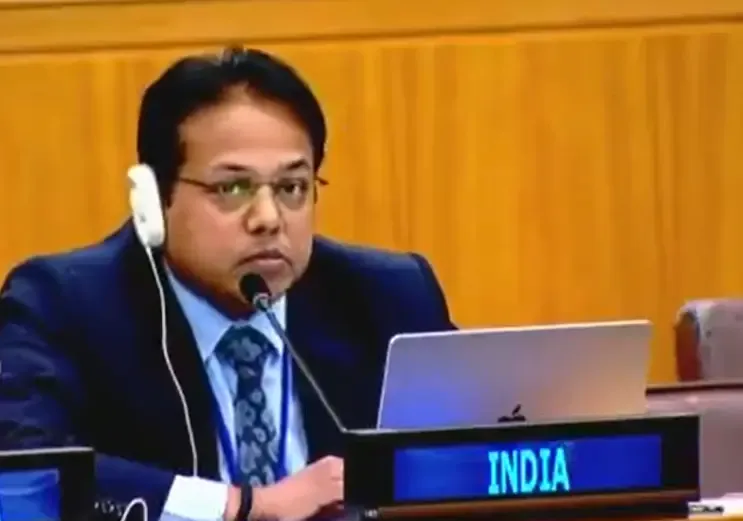
Anuj Swarup , First Secretary at India's UN Mission, accused the OHCHR of 'extreme selectivity' and 'double standards' at the UN General Assembly Third Committee on 15 October 2026 .
Swarup stated that violent crackdowns on protests in India's neighbourhood and in the West have 'gone uncommented' by High Commissioner Volker Türk .
India demanded OHCHR follow up on its own prior calls for investigations into over 90 deaths in Pakistan-occupied Jammu and Kashmir .
Sohail Afridi , elected Chief Minister of Khyber Pakhtunkhwa from PTI , was dismissed and detained by Pakistan's military-backed government this week.
India reaffirmed that Jammu and Kashmir and Ladakh are constitutionally guaranteed the same fundamental rights as the rest of India.
India said it will continue engaging with OHCHR as a Human Rights Council member, but only on terms free of selectivity.
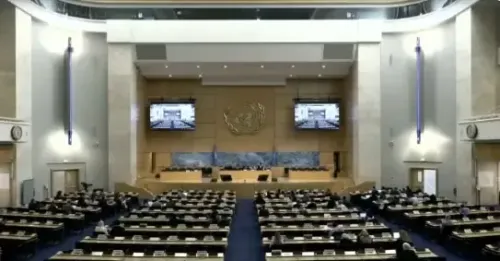
India on Wednesday, 15 October 2026 publicly challenged the Office of the High Commissioner for Human Rights (OHCHR), accusing it of 'extreme selectivity' and 'double standards' in how it monitors and reports on government crackdowns against popular protests worldwide. The rebuke was delivered at the United Nations General Assembly's Third Committee meeting in New York.
India's Core Charge Against OHCHR
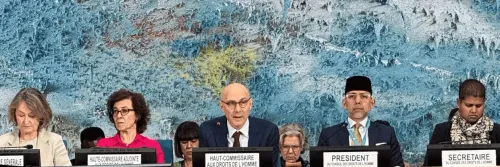
Anuj Swarup, First Secretary at India's UN Mission in Geneva, told the committee that 'violent responses to protests in our neighbourhood, as well as in the West, have gone uncommented' in reports by High Commissioner Volker Türk. The Third Committee, which handles social and humanitarian affairs, had just received a briefing from Türk when Swarup took the floor.
Swarup warned that such selective treatment undermines confidence in global institutions: 'Needless to say, such double standards contribute to loss of trust in multilateralism and the work of OHCHR.' He nevertheless affirmed that India, as a member of the Human Rights Council, would continue engaging with the High Commissioner 'in a spirit of trust and partnership without selectivity and double standards.'
India's Defence of Its Own Record
Swarup grounded India's rights framework in its constitutional tradition, citing Mahatma Gandhi's principles of non-violence and equality as foundational to India's Constitution. He stated that Indian citizens exercise rights 'subject to maintenance of public order and safety' and that law enforcement acts within the law, with courts available for redressal.
Rebutting criticism of Jammu and Kashmir, Swarup asserted that the Indian Constitution confers identical fundamental rights on the people of Jammu and Kashmir and Ladakh, which he described as 'an integral and inalienable part of India.'
India Turns the Spotlight on Pakistan
Swarup's sharpest challenge was directed at Pakistan and at OHCHR's own prior statements on Pakistan-occupied Jammu and Kashmir (PoJK). He noted that Türk and OHCHR had themselves called for prompt investigations into killings by armed forces in PoJK, the release of detained leaders of the Awami Action Committee, access to legal representation, fair trials, and the lifting of internet restrictions across Pakistan-occupied territory.
Swarup asked pointedly: 'When can we expect OHCHR to issue a report on the steps taken by the government of Pakistan?' — a direct call for follow-up accountability from the same body that had issued those demands.
He also drew attention to the military-backed government in Islamabad dismissing and detaining the elected Chief Minister of Khyber Pakhtunkhwa, Sohail Afridi of Pakistan Tehreek-e-Insaf (PTI), this week. He noted that PTI leader and former Prime Minister Imran Khan had been barred from contesting elections and remained imprisoned.
The Rawalakot Dimension
Swarup highlighted Rawalakot, the centre of ongoing protests in Pakistan-occupied Kashmir, where, according to human rights organisations, over 90 people have reportedly been killed as Pakistani forces suppressed demonstrations. The protests, according to those accounts, were triggered by the manipulation of local elections through demographic changes and the alleged exploitation of natural resources.
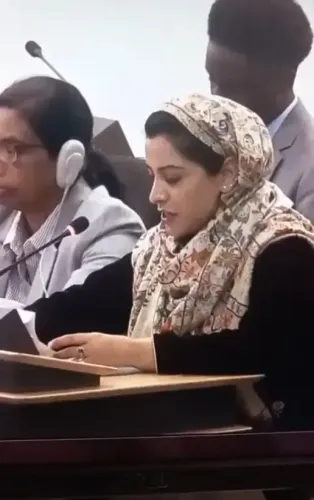
Dismissing a Pakistani delegate's attempt to raise Kashmir at the meeting, Swarup said Pakistan 'would do well to look inwards' at conditions in its own territory, including Khyber Pakhtunkhwa and Rawalakot, which he characterised as being under Pakistan's 'illegal occupation.'
What Comes Next
India's challenge at the Third Committee reflects a broader pattern of pushback from New Delhi against what it perceives as the selective application of international human rights scrutiny. Whether OHCHR responds with a concrete follow-up on Pakistan-occupied Kashmir — as India has demanded — will be closely watched as a test of the body's consistency and credibility.
Point of View
New Delhi deployed OHCHR's own language against Islamabad, citing the body's specific demands on Pakistan-occupied Kashmir that have received no visible follow-up. The double-standards argument lands hardest when the accuser can quote chapter and verse from the accused's own record — and Swarup did exactly that. The deeper question is structural: OHCHR's credibility depends on consistent application of its standards, and if powerful states can point to documented asymmetries without a credible institutional response, the trust deficit Swarup warned about becomes self-fulfilling. Mainstream coverage tends to frame such exchanges as bilateral India-Pakistan theatre, missing the more significant institutional story: the erosion of confidence in UN human rights mechanisms among the Global South.
NationPress
15 Oct 2026
Frequently Asked Questions
What did India say about OHCHR at the UN Third Committee?
India accused the Office of the High Commissioner for Human Rights of 'extreme selectivity' and 'double standards' in its reporting on government crackdowns on protests. First Secretary Anuj Swarup said violent responses to protests in India's neighbourhood and in the West had 'gone uncommented' by High Commissioner Volker Türk.
Why did India raise Pakistan-occupied Kashmir at the meeting?
India asked OHCHR to follow up on its own prior demands on Pakistan regarding Pakistan-occupied Jammu and Kashmir — including investigations into over 90 reported deaths, release of detained Awami Action Committee leaders, and lifting of internet restrictions. Swarup argued that OHCHR's silence on its own demands of Islamabad illustrated its double standards.
What is happening in Rawalakot and Pakistan-occupied Kashmir?
Rawalakot is the centre of ongoing protests in Pakistan-occupied Kashmir. According to human rights organisations, over 90 people have reportedly been killed as Pakistani forces cracked down on demonstrations against demographic manipulation of elections and exploitation of natural resources.
Who is Sohail Afridi and why was he mentioned?
Sohail Afridi is the elected Chief Minister of Khyber Pakhtunkhwa from Pakistan Tehreek-e-Insaf (PTI). India's representative noted that Pakistan's military-backed government dismissed and detained him this week — citing it as evidence of rights violations that OHCHR had not addressed.
What is India's position on its own human rights record?
India maintained that its Constitution guarantees fundamental rights to all citizens, including those in Jammu and Kashmir and Ladakh, which it describes as integral parts of India. The government said law enforcement acts within the law and courts remain available for any grievance — framing its position through Mahatma Gandhi's principles of non-violence and equality.