FAO Agricola Medal 2026: PM Modi's honour a matter of pride, says Padma Shri farmer
Synopsis
The UN's top food body has awarded PM Modi its highest individual honour — the Agricola Medal — citing free rations for 80 crore people, PM-Kisan support for 11 crore farmers, and India's millet diplomacy. For India's farming community, the recognition signals a rare moment of global validation for domestic agricultural policy.
Key Takeaways
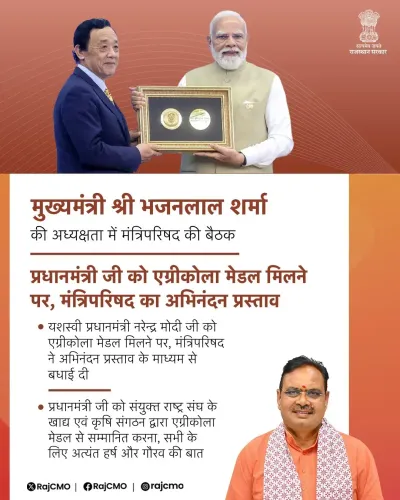
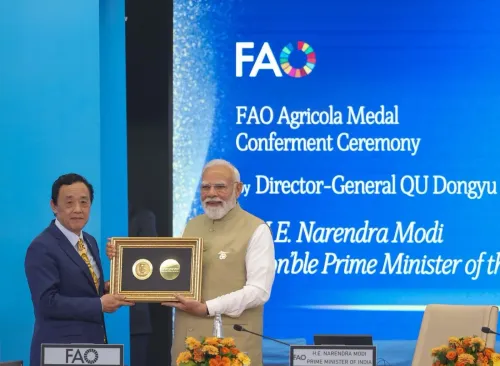
PM Narendra Modi received the FAO Agricola Medal for 2026 , the United Nations Food and Agriculture Organisation's highest individual honour.
FAO Director-General Qu Dongyu cited free ration distribution to 80 crore people and direct income support to over 11 crore farmers under PM-Kisan .
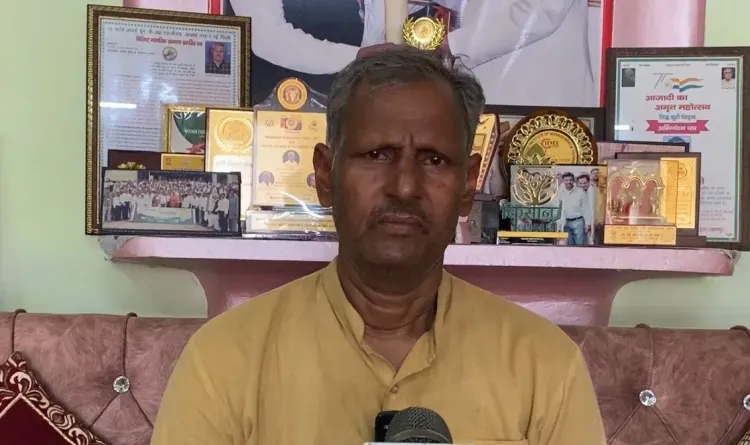
Padma Shri awardee farmer Seth Pal Singh of Saharanpur called the honour a matter of pride for the entire nation and farming community.
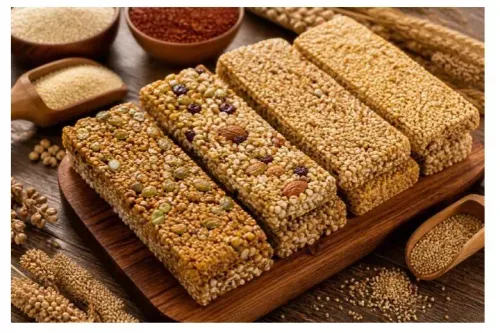
The government's promotion of millets was specifically recognised, with Seth Pal Singh noting improved soil fertility, lower cultivation costs, and higher market value for coarse grains.
Seth Pal Singh expressed confidence India would achieve its Viksit Bharat 2047 goal under Modi's leadership.
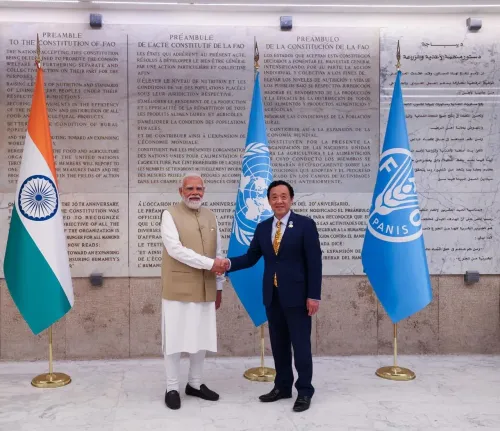
Prime Minister Narendra Modi has received the United Nations Food and Agriculture Organisation's (FAO) highest honour — the Agricola Medal for 2026 — in recognition of his contributions to farmers' welfare, food security, agricultural productivity, and poverty eradication. Padma Shri awardee farmer Seth Pal Singh of Saharanpur welcomed the recognition, calling it a source of pride not just for the Prime Minister but for the entire nation and its farming community.
What the FAO Recognised
FAO Director-General Qu Dongyu praised India's welfare measures while conferring the medal, specifically citing the free ration distribution to 80 crore people, direct income support to more than 11 crore farmers under the PM-Kisan scheme, the promotion of millets, and the country's digital public infrastructure. The Agricola Medal is the organisation's most prestigious individual honour, awarded for exceptional contributions to global food and agriculture.
This recognition comes as India has increasingly positioned itself as a voice for developing-world agriculture in multilateral forums, including its championing of the International Year of Millets in 2023.
Seth Pal Singh's Reaction
Speaking on the honour, Seth Pal Singh said: 'This award is not just recognition for the Prime Minister, but for the entire nation. Under his leadership, India's agriculture sector has reached a new level. His vision of empowering farmers through FPOs, startups, skill development, and diversification in farming has earned global respect for the country.'
The Padma Shri awardee said India has witnessed historic changes in agriculture and food security since 2014, pointing to the PM-Kisan Samman Nidhi as a direct, tangible benefit for crores of farming households. 'Whenever farmers receive messages about PM-Kisan instalments being credited, there is a sense of happiness among them,' he said.
Millets and Global Agricultural Diplomacy
Seth Pal Singh also highlighted the government's push to elevate millets on the world stage. 'Earlier, millets were neglected despite being nutritious and requiring fewer resources. Farmers did not receive proper prices for coarse grains. Prime Minister Modi took millets to the international stage, which improved soil fertility, reduced cultivation costs, and increased the market value of these grains,' he said.
Notably, India's millet diplomacy has drawn sustained international attention, with several countries adopting Indian cultivation practices and import ties expanding across Africa and Southeast Asia.
Farmers' Interests and Fertiliser Support
On global pressures related to agriculture, Seth Pal Singh said the Prime Minister has consistently protected Indian farmers' interests. 'The Prime Minister has repeatedly said that he will never compromise on farmers' rights, no matter the pressure. Even in challenges related to fertilisers, subsidies were provided so that farmers do not face additional burdens,' he said.
He further noted that Modi's international standing has strengthened India's agricultural diplomacy. 'Whenever he visits foreign countries, leaders break protocol to welcome him. The work done in India is being recognised worldwide,' Seth Pal Singh added, expressing confidence that India would achieve its goal of becoming a developed nation by 2047.
Point of View
But the domestic framing — filtered through a single Padma Shri awardee's effusive praise — leaves the harder questions unasked. India's farmer distress indicators, including debt levels and agrarian suicides, have not disappeared since 2014 despite the welfare scaffolding the FAO cited. The Agricola Medal recognises intent and scale of outreach, not outcomes; PM-Kisan's ₹6,000 annual transfer, for instance, remains far below what agricultural economists argue is needed for income parity. The millet push is a genuine bright spot, but its benefits have been uneven across states. The award is a real diplomatic win — it should also be a prompt to measure whether the programmes it honours are actually closing the rural income gap.
NationPress
25 Sept 2026
Frequently Asked Questions
What is the FAO Agricola Medal awarded to PM Modi?
The Agricola Medal is the United Nations Food and Agriculture Organisation's highest individual honour, awarded to Prime Minister Narendra Modi for 2026. The FAO recognised his contributions to farmers' welfare, food security, agricultural productivity, and poverty eradication, specifically citing PM-Kisan, free ration distribution, and India's millet promotion.
Why did the FAO give PM Modi the Agricola Medal?
FAO Director-General Qu Dongyu cited several India-specific programmes: free ration distribution to 80 crore people, direct income support to more than 11 crore farmers under PM-Kisan, the promotion of millets on the global stage, and the country's digital public infrastructure for agriculture.
Who is Seth Pal Singh and why is his reaction significant?
Seth Pal Singh is a Padma Shri awardee farmer from Saharanpur, Uttar Pradesh, recognised for his contributions to agriculture. His reaction represents the grassroots farming community's perspective on the international recognition of India's agricultural policies under PM Modi.
What role did India's millet push play in this recognition?
India's promotion of millets — including leading the International Year of Millets in 2023 — was a key factor in the FAO's recognition. According to Seth Pal Singh, the initiative improved soil fertility, reduced cultivation costs, and raised the market value of coarse grains for Indian farmers.
What is the PM-Kisan scheme mentioned in connection with the award?
PM-Kisan Samman Nidhi is a central government scheme that provides direct income support to farmers across India. More than 11 crore farmers receive financial transfers under the scheme, which the FAO specifically cited as a welfare measure contributing to food security and poverty reduction.