Indonesia Flores quake death toll climbs to 100, 180,000 displaced
Synopsis
Nine days after a 7.7-magnitude earthquake devastated Indonesia's Flores region, the death toll has reached 100 — with over 180,000 people still unable to return home and 6,409 aftershocks recorded. Authorities are battling misinformation about a fresh tsunami even as relief operations struggle to reach remote communities.
Key Takeaways
The 7.7-magnitude earthquake that struck Flores, Indonesia on 15 August has killed 100 people as of Monday.
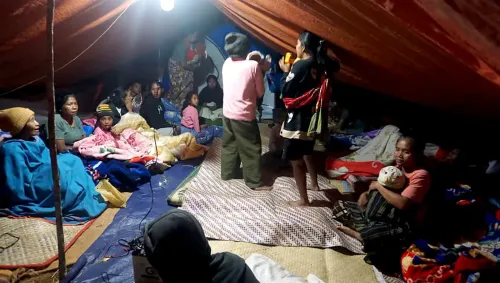
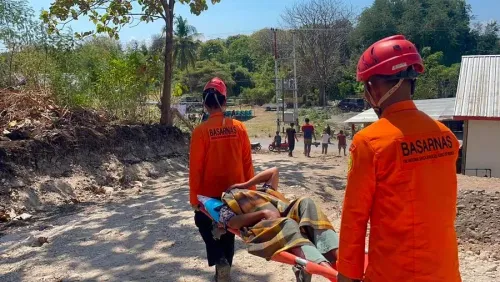
1,603 people are injured and more than 180,000 remain displaced.
6,409 aftershocks have been recorded, including 33 of magnitude 5.0 or above; the strongest reached 6.2 .
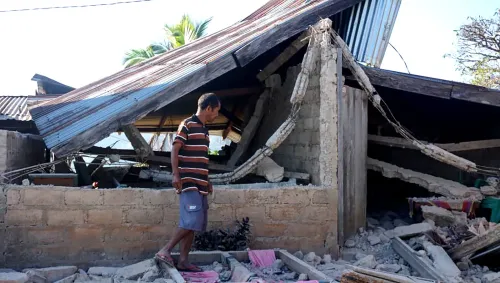
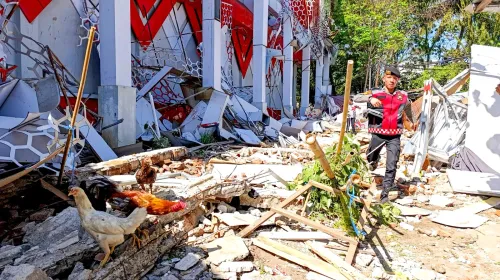
Damage includes 87 educational facilities , 18 health facilities , 5 places of worship , and 6 government offices .
BNPB chief Suharyanto warned residents against misinformation about further large quakes or a tsunami.
Aftershocks are expected to continue for three to four weeks , with declining frequency and intensity.
The death toll from the 7.7-magnitude earthquake that struck Indonesia's Flores region on 15 August has climbed to 100, with 1,603 people injured and more than 180,000 still displaced, the National Disaster Management Agency (BNPB) confirmed on Monday. The disaster, centred 36 km northeast of Mbay in East Nusa Tenggara province at a depth of 15 km, continues to strain emergency response capacity across the affected region.
Rising Death Toll and Aftershock Activity
BNPB chief Suharyanto said many of the additional fatalities were individuals who had sustained serious injuries during the initial quake and subsequently died while undergoing treatment. He noted that 6,409 aftershocks have been recorded since the main tremor, including 33 with a magnitude of at least 5.0. The strongest aftershock measured 6.2. On Sunday at 2120 GMT, a further 5.3-magnitude quake struck the Flores region, according to the GFZ German Research Centre for Geosciences, with its epicentre at a depth of 10 km.
Infrastructure Damage and Displaced Residents
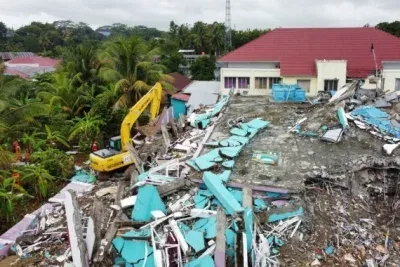
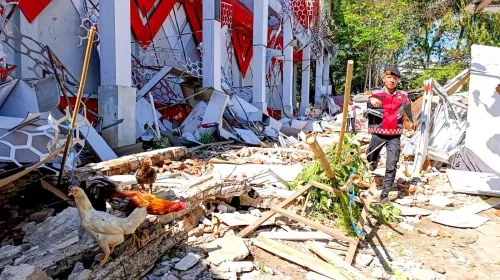
The earthquake caused significant damage to public infrastructure. According to BNPB, 87 educational facilities, 18 health facilities, five places of worship, and six government offices were damaged. Over 180,000 displaced residents — including those in remote areas — are receiving government aid, though access to outlying communities remains a logistical challenge.
Authorities Counter Misinformation
Suharyanto urged residents not to act on false information circulating about stronger impending earthquakes or a potential tsunami. He said aftershock activity has shown a declining trend in recent days, though authorities cautioned that tremors could persist for another three to four weeks, with frequency and intensity expected to gradually decrease. The Meteorology, Climatology and Geophysics Agency (BMKG) had issued a tsunami warning immediately following the initial quake, which was later lifted.
Indonesia's Seismic Vulnerability
Indonesia sits on the Pacific 'Ring of Fire' and is home to more than 120 active volcanoes, making it one of the world's most seismically and volcanically active nations. The country has a long history of catastrophic earthquakes — most notably a 9.1-magnitude tremor in 2004 off the coast of Sumatra, which triggered a tsunami that killed approximately 220,000 people across the region, including around 170,000 in Indonesia alone. This context underscores why the Flores quake, though far smaller in scale, has prompted a large-scale emergency response.
Relief Operations and What Comes Next
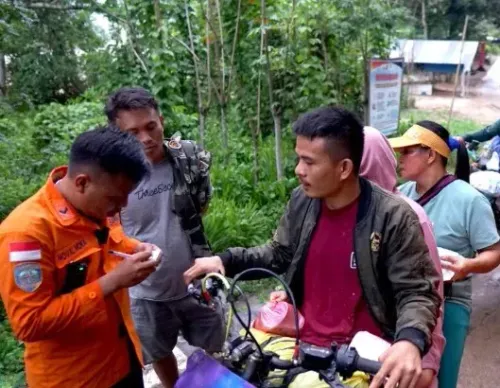
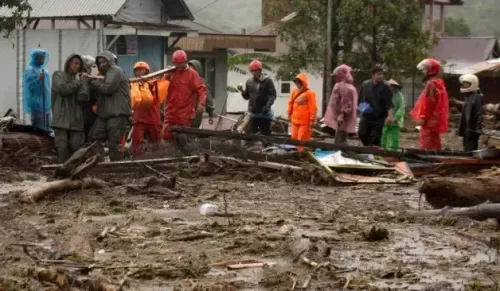
Government agencies are continuing to deliver humanitarian aid across affected districts. With aftershocks still occurring and tens of thousands yet to return home, the focus now shifts to longer-term rehabilitation of damaged infrastructure and housing. The coming weeks will be critical in determining the full scope of the disaster's human and economic cost.
Point of View
409 aftershocks, including 33 above magnitude 5.0, compound the humanitarian crisis by keeping displaced populations from returning home and hampering reconstruction assessments. Indonesia's seismic exposure is structural and permanent, yet disaster-preparedness investment — particularly in remote island provinces — consistently lags behind the country's urban centres. The misinformation problem flagged by BNPB also points to a communications gap that, in past Indonesian disasters, has cost lives by triggering unnecessary mass evacuations or, conversely, false reassurance.
NationPress
9 Oct 2026
Frequently Asked Questions
What caused the Indonesia Flores earthquake and when did it occur?
A 7.7-magnitude earthquake struck Indonesia's Flores region on 15 August , with its epicentre located 36 km northeast of Mbay in East Nusa Tenggara province at a depth of 15 km . Indonesia's position on the Pacific 'Ring of Fire' makes it one of the world's most earthquake-prone nations.
How many people have died and been displaced by the Flores earthquake?
As of Monday, the death toll stands at 100 , with 1,603 people injured and more than 180,000 still displaced. Many of the recent deaths were survivors who had sustained serious injuries and later died during treatment, according to BNPB chief Suharyanto .
How many aftershocks have occurred since the main quake?
A total of 6,409 aftershocks have been recorded, including 33 with a magnitude of at least 5.0 . The strongest aftershock measured 6.2 . Authorities say aftershock activity is on a declining trend but could continue for another three to four weeks .
Is there a tsunami risk following the Flores earthquake?
The BMKG issued a tsunami warning immediately after the initial quake, which was subsequently lifted. BNPB chief Suharyanto has urged residents not to believe false information about a fresh tsunami, stating that aftershock activity is declining.
How does the 2024 Flores quake compare to Indonesia's past earthquakes?
While severe, the 7.7-magnitude Flores quake is far smaller than Indonesia's deadliest recorded earthquake — a 9.1-magnitude tremor off Sumatra in 2004 that triggered a tsunami killing approximately 220,000 people , around 170,000 of them in Indonesia. The country's location on the 'Ring of Fire' means it regularly faces significant seismic events.