Are People Being Forcibly Disappeared in Balochistan?
Synopsis
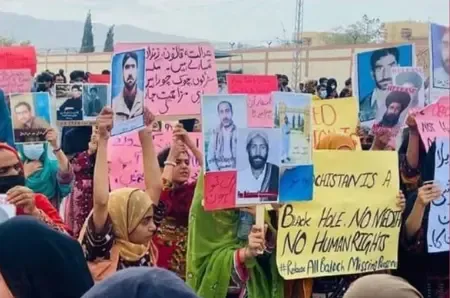
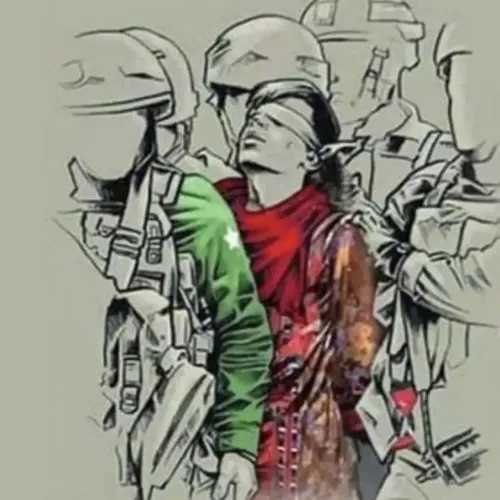
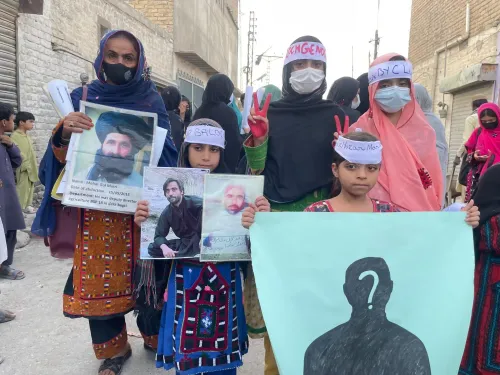
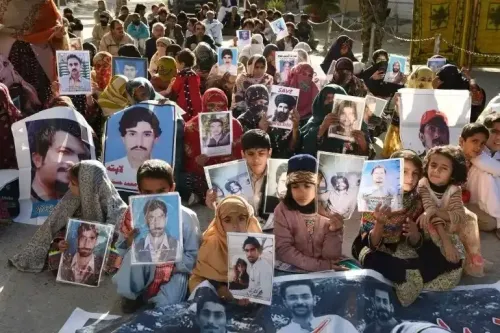
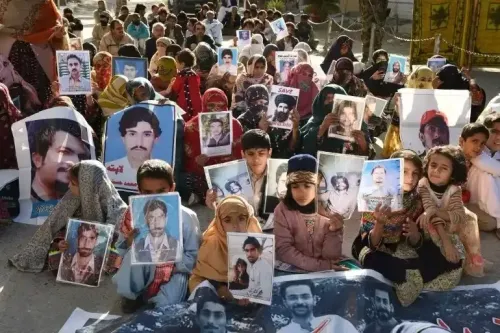
The alarming trend of enforced disappearances in Balochistan raises critical human rights concerns. With reports of at least seven individuals, including a nursing student, going missing, the situation is dire. Families continue to seek answers as human rights organizations challenge government claims of resolution.
Key Takeaways
Seven individuals forcibly disappeared in Balochistan recently.
A nursing student, Mehran Baloch , was among those taken.
Human rights organizations dispute government claims of resolution.
Reports document over 1,400 cases of enforced disappearances.
Continued advocacy for justice is crucial for affected families.
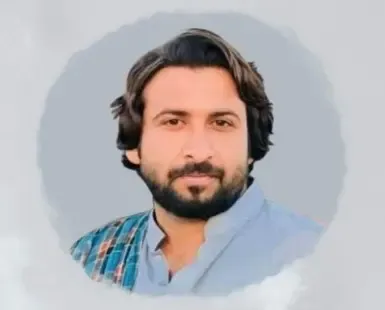
Quetta, Jan 22 (NationPress) Recent reports from local media indicate that at least seven individuals have been forcibly disappeared in Balochistan, Pakistan. On January 15, Pakistani forces apprehended a nursing student named Mehran Baloch outside a local hospital in Bal-Nigor, as reported by The Balochistan Post, citing sources from Turbat.
The family of Baloch stated that he was taken to an unknown location and that no official reasons for his detention were provided.
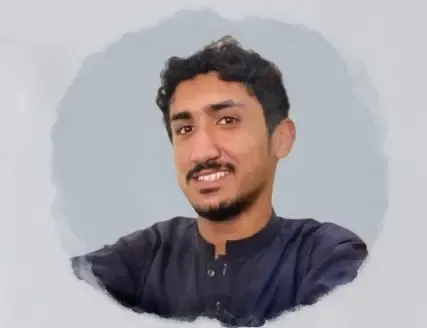
In Kharan, residents reported that Pakistani forces conducted cordon-and-search operations following an armed attack last week. During a raid in Baloch Abad, Owais Ahmed Qambrani was detained along with his vehicle. His family has not received any updates on his whereabouts.
Local sources have identified three young men—Muneeb Siyapad, Makhfar Abid Siyapad, and Ahmed Siyapad—as having been forcibly disappeared during operations in Kharan.
Additionally, two individuals were apprehended in Quetta during raids in the Killi Qambrani area, with families reporting that Abdul Qahar and Musawwir Qambrani have been missing since.
Five previously missing men have returned home, according to The Balochistan Post, as shared by their families and local sources.
A prominent human rights organization has disputed the Balochistan provincial government’s claim that the issue of missing persons has been “resolved permanently,” labeling this assertion as “false and contrary to ground realities.”
The Human Rights Council of Balochistan (HRCB) documented a staggering total of 1,455 cases of enforced disappearance for 2025, which included 1,443 men and 12 women. Out of these, 1,052 individuals remain unaccounted for, 317 were released, 83 were reported killed in custody, and 3 were transferred to jail.
The rights organization emphasized that these statistics reveal the extensive scale of illegal detentions, asserting that the so-called ‘resolution’ is a misleading claim.
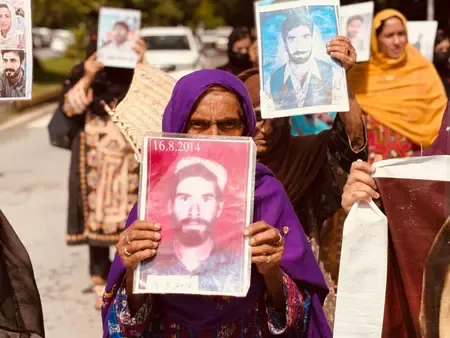
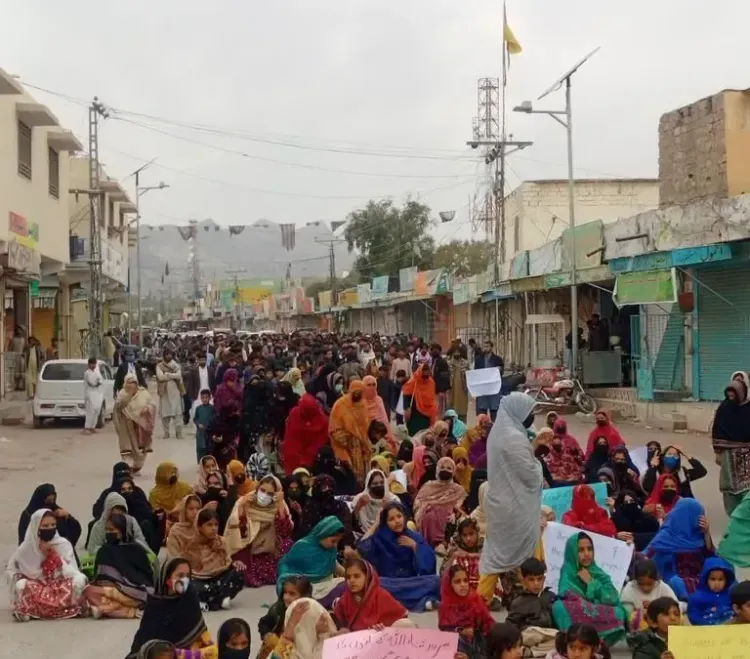
“Hundreds of individuals in Balochistan are still victims of enforced disappearance. Many families have sought assistance from courts, commissions, and human rights organizations, yet the fates of their loved ones remain unknown,” stated the HRCB.
The organization reiterated that Baloch civilians are abducted unlawfully, without due process, warrants, or legal arrests, which constitutes a violation of both Pakistan’s constitution and international human rights norms.
“Enforced disappearance is a serious offense under international law and should not be trivialized as a political slogan or propaganda. To frame enforced disappearances as ‘propaganda’ is deeply insulting to the affected families and disregards years of documented evidence,” it noted.
Asserting that the crisis of enforced disappearances in Balochistan persists, the HRCB concluded, “Any claims to the contrary are misleading and irresponsible.”
The rights body called for the immediate production of all forcibly disappeared individuals before courts or their release, as well as accountability for those responsible for these unlawful actions.
Point of View
It is essential to approach the situation in Balochistan with a lens of empathy and commitment to truth. The reports of enforced disappearances are not just statistics; they represent real lives and families searching for answers. We must ensure that the voices of those affected are heard and that accountability is demanded.
NationPress
2 Oct 2026
Frequently Asked Questions
What is happening in Balochistan?
Recent reports indicate that several individuals have been forcibly disappeared in Balochistan, raising serious human rights concerns.
Who are the victims of enforced disappearances?
The victims include a nursing student named Mehran Baloch and others who have been apprehended by Pakistani forces.
What actions have been taken by human rights organizations?
Human rights organizations, like the Human Rights Council of Balochistan, have criticized government claims about the resolution of missing persons cases.
What does the law say about enforced disappearances?
Enforced disappearance is considered a serious crime under international law and violates both national and international human rights obligations.
What can families do to seek justice?
Families can approach courts, commissions, and human rights organizations to seek accountability and information about their missing relatives.