Why is France Pushing for Text-Based UNSC Negotiations?
Synopsis
In a bid to enhance the legitimacy of the United Nations Security Council, France is advocating for text-based negotiations aimed at reforming the council and adding permanent members. This initiative highlights the urgent need for a more representative global governance structure amidst ongoing international law violations.
Key Takeaways
France is advocating for text-based negotiations to reform the UNSC.
Reform is aimed at enhancing the legitimacy and representativeness of the Council.
A small coalition of countries is obstructing the reform process.
India is pushing for a permanent seat and meaningful progress in negotiations.
Urgent reforms are needed to address international law violations.
United Nations, Jan 27 (NationPress) France has urged for text-based negotiations aimed at accelerating reforms within the Security Council and incorporating permanent members to bolster its legitimacy.
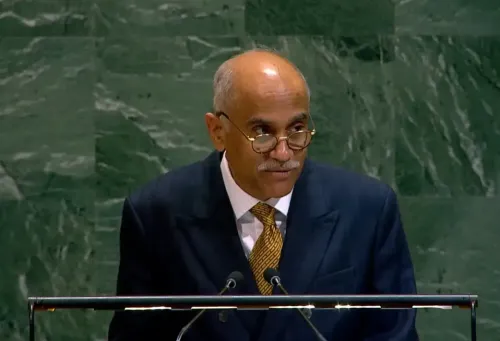
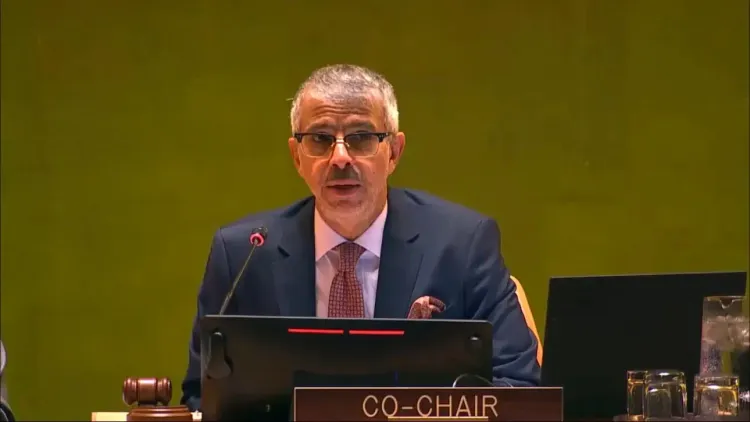
During a statement on Monday, France’s Permanent Representative Jerome Bonnafont emphasized that France “will remain fully committed to advancing Security Council reform to improve its representativeness and legitimacy through an increase in both permanent and non-permanent membership categories.”
“France believes that reform in this area is achievable and that negotiations should commence based on a draft text, without the need for an elusive consensus, which is not mandated by the Charter,” he declared during the Council’s high-level debate on “Reaffirming International Rule of Law.”
The reform initiative, known as Inter-Governmental Negotiation (IGN), is currently stymied by a small coalition of nations led by Italy, which has employed procedural tactics to block the adoption of a negotiating text that would outline the agenda for discussions and monitor progress.
This coalition, calling itself Uniting for Consensus and including Pakistan, insists that reforms must reach a consensus before any negotiating text can be adopted, placing the IGN in a Catch-22 situation, where a consensus is unattainable without a foundational negotiating text.
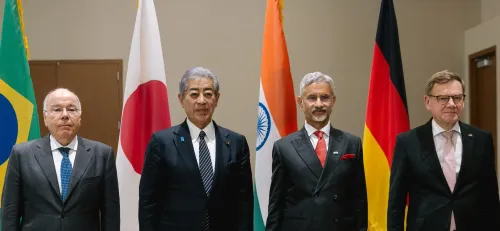
India and several other nations have called for the IGN to adopt a negotiating text or draft to facilitate substantive advancements.
During the debate on Monday, India and the Secretary-General advocated for prompt reforms of the Council.
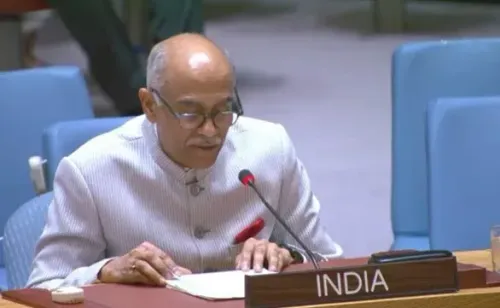
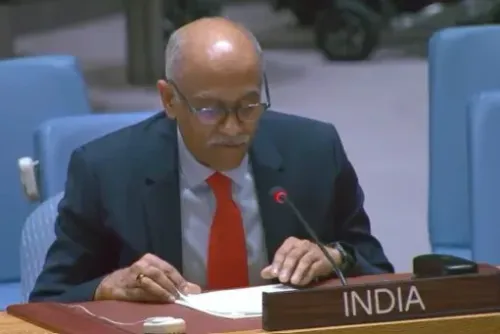
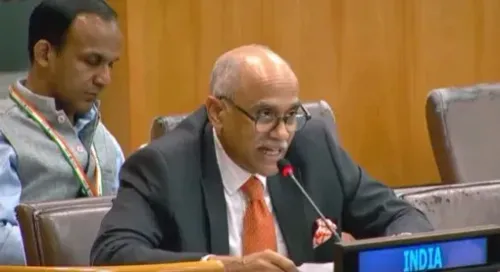
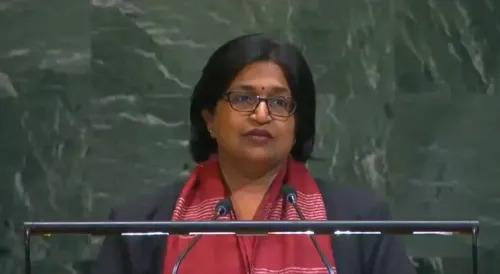
“The urgent need to reform the Security Council and add permanent members is critical to ensuring that the international rule of law is effective, especially as the world organization is currently facing significant strain,” stated India’s Permanent Representative P Harish.
He noted that “the paralysis and ineffectiveness in addressing conflicts remain serious shortcomings,” challenging the UN’s credibility.
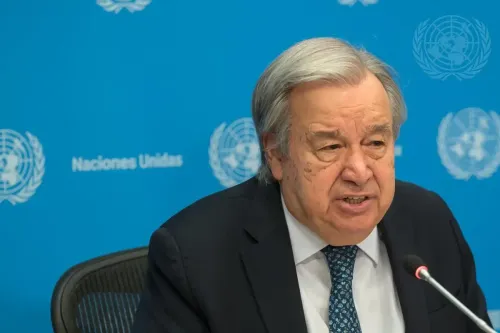
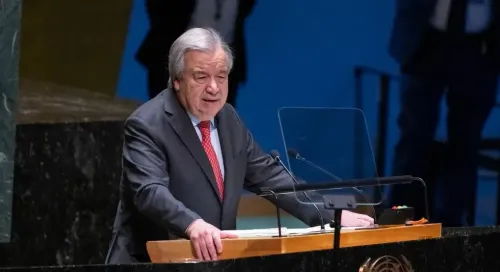
Guterres, who cautioned that “worldwide, the rule of law is being supplanted by the law of the jungle,” stressed the necessity of immediate reforms to the Council.
“Only the Council possesses the authority to make binding decisions for all, and no other entity or ad-hoc coalition can legitimately compel compliance from all member states regarding peace and security decisions,” he stated.
“This is why reform is crucial; we must act swiftly to enhance the representation and efficiency of this Council,” he insisted.
France supports India obtaining a permanent seat on a reformed Council, which would also recognize African nations.
Bonnafont asserted, “Upholding international law also entails acknowledging that multilateralism must evolve. In 2026, France will persist in advocating for a more representative, effective, and operational global governance.”
He added that this also applies to the Council.
The reforms are vital considering that “violations of international law, including international human rights and humanitarian law, are alarmingly prevalent, as seen in Sudan, the Great Lakes, Gaza, or Ukraine,” he remarked.
“Nonetheless, the obstructive positions adopted by certain States hinder the Security Council’s capacity to respond effectively,” he noted. “Every moment of silence regarding these violations breeds mistrust and diminishes our collective credibility.”
Despite being a permanent member with veto powers within the Council, France advocates for limiting its usage to prevent it from being employed when national interests are at stake or when grave humanitarian law violations occur.
Point of View
It's crucial to recognize that France's push for UNSC reforms is a significant step towards addressing the challenges posed by a lack of representation in global governance. The ongoing international law violations underscore the urgent need for an effective and inclusive Security Council that can respond to global crises.
NationPress
19 Sept 2026
Frequently Asked Questions
What is the purpose of France's call for text-based negotiations?
The purpose is to expedite reforms in the Security Council and add permanent members to enhance its legitimacy.
Who is leading the opposition to UNSC reforms?
A small group of countries, led by Italy, is opposing the reforms by blocking the adoption of a negotiating text.
Why is reforming the UNSC important?
Reforming the UNSC is crucial to ensure effective international governance and to address ongoing violations of international law.
What role does India play in the UNSC reform discussions?
India is advocating for a permanent seat on a reformed Council and pressing for the adoption of a negotiating text.
What violations of international law are being highlighted?
Violations are occurring in multiple regions, including Sudan, the Great Lakes, Gaza, and Ukraine.