G20 Trade Meet: Most Members Doubt WTO Tools on Excess Capacity

Synopsis
At the G20 Trade Ministerial in Milwaukee, a significant majority of members declared that WTO-authorised trade remedy tools are too slow and structurally inadequate to curb excess industrial capacity — a problem they say has worsened since 2016 despite earlier commitments. A US-backed plan to create new sectoral platforms was blocked by a handful of holdouts, exposing a deepening fracture in multilateral trade governance.
Key Takeaways
A significant majority of G20 members declared WTO trade remedy tools too slow and ineffective against structural excess capacity at the Milwaukee Trade Ministerial on 30 September – 1 October 2025 .
The chair's statement warned that the WTO is unlikely to deliver progress on excess capacity, given its inability to resolve even simpler trade issues.
A US-backed draft statement calling for elimination of non-market policies and new sectoral platforms was blocked by 'a handful of members' who 'firmly rejected' cooperative action.
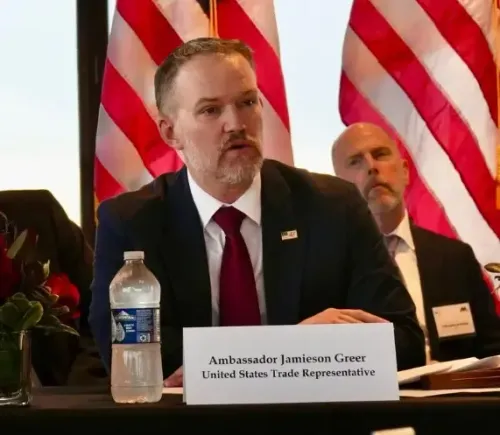
US Trade Representative Jamieson Greer expressed disappointment, noting that many members still want to address the issue.
Structural excess capacity has worsened since 2016 , despite G20 commitments made in Shanghai and Hangzhou that year.
The United Kingdom is set to assume the G20 presidency in 2027 .
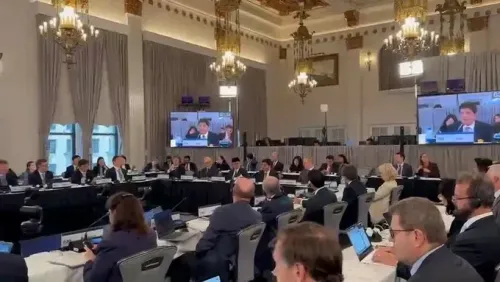
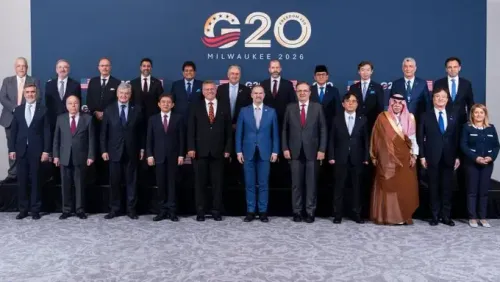
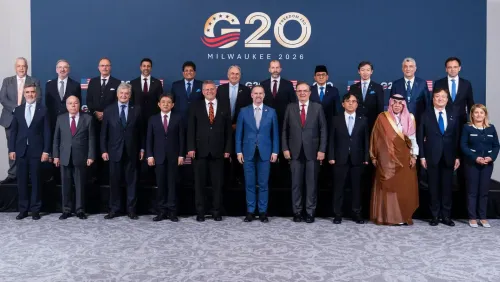
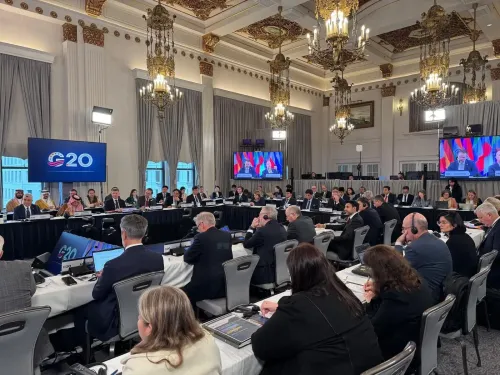
A significant majority of G20 members have expressed doubts about the effectiveness of existing World Trade Organization (WTO)-authorised trade remedies in tackling structural excess capacity, warning that current instruments are too slow and fail to address the underlying government policies driving market distortions. The unusually candid assessment emerged from the G20 Trade Ministerial held in Milwaukee, United States, on 30 September and 1 October 2025, under the US G20 presidency.
What Ministers Discussed
Trade ministers examined four major challenges confronting the global trading system: structural excess capacity and production, the weaponisation of food, forced labour in global supply chains, and reform of the Most-Favoured Nation (MFN) principle. On excess capacity, ministers reviewed cases where production persistently exceeded global demand under conditions that would not have arisen in a free market. They also scrutinised capacity created, sustained, or amplified by direct government policies or interventions, drawing a clear distinction from cyclical shifts driven by normal supply-and-demand movements.
The Damning Verdict on WTO Effectiveness
The chair's summary statement recorded a pointed consensus view: trade defence instruments, though authorised under WTO rules, are 'ineffective at addressing the underlying policies and practices' that fuel excess capacity. The statement went further, noting that 'existing trade remedy tools are too slow and do not sufficiently target the source of the structural excess capacity and production.'
Critically, the statement also cast doubt on the WTO's broader capacity for reform, observing that the body is 'unlikely to deliver any progress on that issue, given it is unable to deliver solutions on relatively simple issues in the trading system.' That assessment, embedded in an official G20 chair's document, represents one of the sharpest multilateral critiques of WTO efficacy in recent years.
US Proposal Hits a Wall
The United States tabled a draft ministerial statement calling on all G20 economies to eliminate structural excess capacity, including by ending non-market policies and practices. Washington also sought agreement to establish new, dedicated sectoral platforms where G20 members could examine excess capacity and coordinate complementary action in specific sectors of concern. The proposal was supported by all but 'a handful of members,' according to the chair's statement. However, a few members 'firmly rejected' any pathway towards cooperative action, and consensus proved elusive.
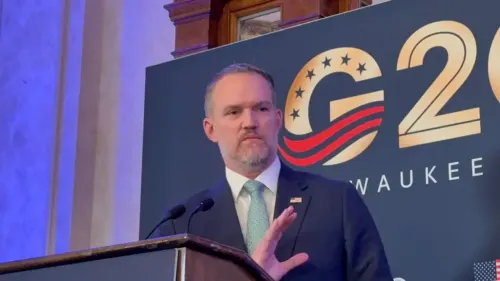
US Trade Representative Jamieson Greer voiced frustration after the meeting. 'Many G20 members expressed resolve to address structural excess capacity and production in key sectors of concern,' Greer said. 'I am disappointed that a handful of members rejected creating a pathway toward cooperative action.'
A Problem That Has Worsened Since 2016
This is not the first time the G20 has grappled with excess capacity. At their 2016 Shanghai meeting, G20 trade ministers flagged concern about overcapacity in certain industries and its impact on trade and workers — a process that led to the establishment of the Global Forum on Steel Excess Capacity. Later that year, G20 leaders meeting in Hangzhou unanimously recognised excess capacity in steel and other industries as a global problem requiring collective responses, and acknowledged that subsidies and government support could distort markets.
Despite those commitments, the US G20 presidency's chair's statement noted that structural excess capacity and production have worsened since 2016 and are now affecting domestic industries and their supply chains across member economies. The repeated failure to move from diagnosis to binding action underscores the structural limits of G20 consensus-building when major economies hold fundamentally opposed positions on industrial policy.
What Comes Next
The United Kingdom is scheduled to assume the G20 presidency in 2027, with the US holding it through the current cycle. The Milwaukee impasse signals that any multilateral framework to curb excess capacity will require either a redesign of WTO dispute mechanisms or new plurilateral arrangements outside the WTO's consensus-bound architecture — neither of which is imminent. For now, individual G20 economies are likely to continue relying on unilateral trade defence measures, even as they acknowledge their limitations.
Point of View
In its own chair's language, that the WTO cannot fix the problem of state-driven excess capacity. That admission matters because it removes the multilateral fig leaf that many economies have used to delay unilateral action. The real story is not the US frustration with holdouts — it is that a decade of G20 consensus-building on excess capacity has produced a Global Forum on Steel that did not stop the steel glut, and commitments in Hangzhou that went largely unverifiable. Until G20 agreements carry enforcement teeth or credible monitoring, the gap between ministerial language and market reality will keep widening.
NationPress
3 Oct 2026
Frequently Asked Questions
What happened at the G20 Trade Ministerial in Milwaukee?
G20 trade ministers met in Milwaukee on 30 September and 1 October 2025 and debated four major global trade challenges, including structural excess capacity. A significant majority concluded that existing WTO trade remedy tools are too slow and fail to address the government policies behind market distortions.
Why are G20 members criticising WTO trade remedies?
Members argued that WTO-authorised trade defence instruments do not target the root cause of excess capacity — namely, government subsidies and non-market policies — and are too slow to be effective. The chair's statement also noted the WTO is unlikely to deliver multilateral progress on the issue.
What did the United States propose at the Milwaukee meeting?
The US sought a consensus ministerial statement calling on G20 economies to eliminate structural excess capacity and end non-market policies distorting markets. Washington also proposed new sectoral platforms for G20 members to examine and coordinate action on excess capacity. The proposal was blocked by a handful of members.
Has the G20 addressed excess capacity before?
Yes. In 2016, G20 trade ministers in Shanghai flagged excess capacity concerns, leading to the Global Forum on Steel Excess Capacity. Leaders in Hangzhou that year also recognised it as a global problem. However, the 2025 chair's statement noted that structural excess capacity has worsened since those commitments.
What happens next after the Milwaukee impasse?
No binding agreement was reached. The US holds the G20 presidency through this cycle, with the UK set to take over in 2027. In the absence of a multilateral framework, individual G20 economies are expected to continue using unilateral trade defence measures, even as the Milwaukee meeting acknowledged their limitations.