G20 trade ministers unanimously condemn food weaponisation at Milwaukee meet
Synopsis
G20 trade ministers achieved a rare unanimous agreement in Milwaukee — condemning food weaponisation as a humanitarian and economic threat — but fractured sharply over forced labour, with the US, Mexico, and Argentina breaking away to issue their own statement citing 28 million people in forced labour globally. The meeting also cracked open a debate over reforming the WTO's foundational Most-Favoured Nation principle.
Key Takeaways
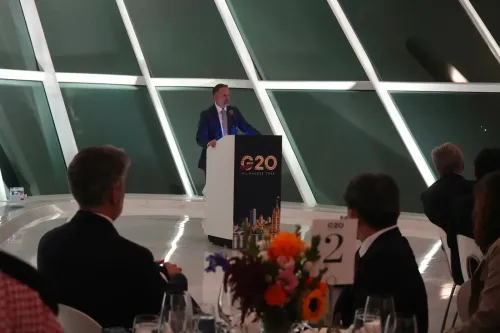
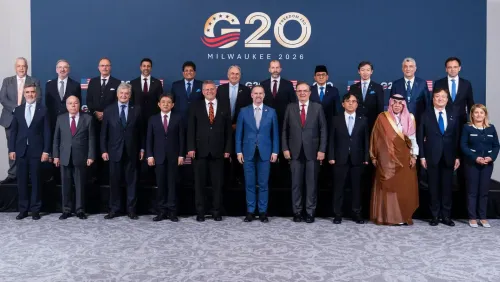
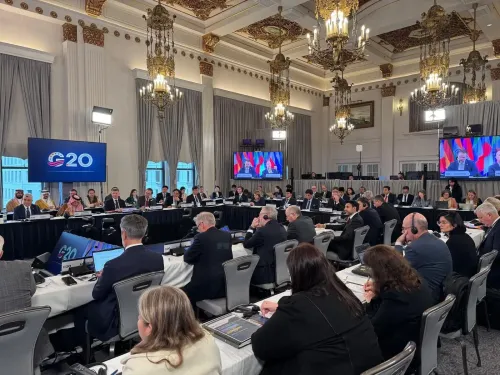
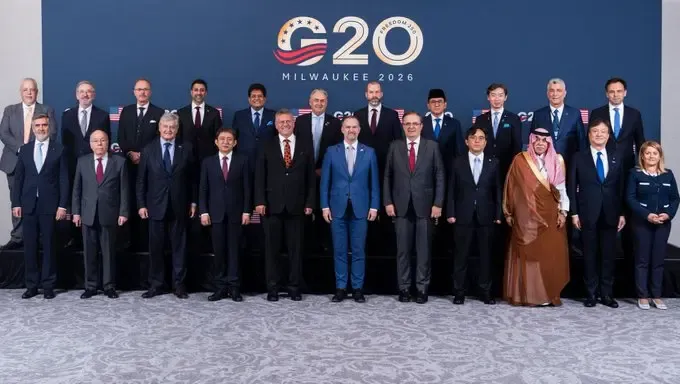
G20 trade ministers unanimously condemned food weaponisation at a two-day ministerial in Milwaukee on 30 September–1 October 2025 .
Ministers defined weaponisation as government actions blocking food trade to extract unrelated geopolitical concessions .
No consensus was reached on forced labour; the US, Mexico, and Argentina issued a separate joint statement citing 28 million people in forced labour globally as of 2021 .
Ministers opened a debate on reforming the WTO's Most-Favoured Nation (MFN) principle, with discussions described as only a beginning.
The United Kingdom will assume the G20 presidency from the US in 2027 .
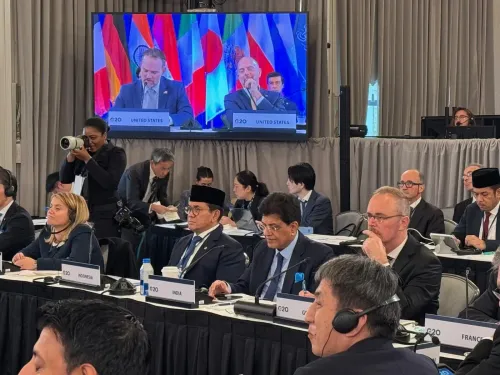
G20 trade ministers have unanimously condemned the weaponisation of food for political or economic coercion, securing a rare consensus at a two-day ministerial meeting in Milwaukee that otherwise laid bare sharp differences among the world's largest economies over forced labour, industrial overcapacity, and the future of global trade rules.
The Consensus on Food Weaponisation
The agreement emerged from the G20 Trade Ministerial held on 30 September and 1 October 2025 under the US presidency. Ministers defined weaponisation as targeted government actions to slow, stop, block, or direct trade in food, agricultural products, or inputs in order to extract unrelated geopolitical concessions.
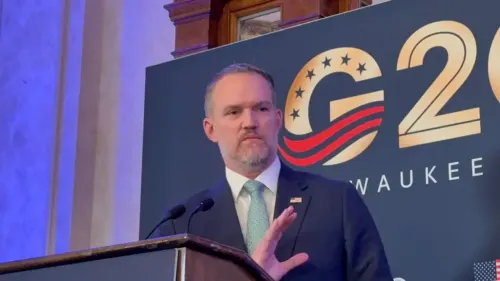
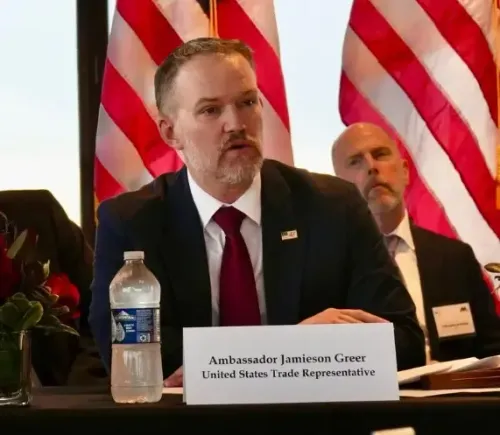
US Trade Representative Jamieson Greer said: 'After constructive discussions, the G20 Trade Ministers agreed to condemn food weaponization as it poses a significant humanitarian and economic threat.' He added: 'For decades, trade in food, agricultural products, and agricultural inputs has been weaponized to exert coercive pressure for economic or political reasons. This threatens livelihoods in targeted countries, distorts competition, and erodes trust in the global trading system.'
The consensus statement warned that coercive actions could disrupt agricultural and food supply chains, threaten food security — particularly for vulnerable populations — and damage producers' livelihoods. Critically, ministers drew a distinction between coercive trade actions and legitimate domestic measures, clarifying that their concerns did not apply to measures adopted transparently in accordance with relevant international rules and designed to advance legitimate domestic policy objectives, including food security. This distinction was reportedly one of the central negotiating issues in Milwaukee.
Where Consensus Broke Down: Forced Labour
While ministers found common ground on food, they failed to reach a collective agreement on eliminating forced labour from global supply chains. The United States, Mexico, and Argentina instead issued a separate joint statement calling for stronger action against goods produced with forced labour.
Their statement cited an International Labour Organization (ILO) estimate that 28 million people were in forced labour globally in 2021 — an increase of approximately 10% over the previous five years. The three countries called on all nations to strengthen cooperation and measures against imports produced wholly or partly through forced labour, and encouraged World Trade Organization (WTO) members to use WTO bodies to exchange information about at-risk supply chains.
The chair's summary noted that the forced labour proposal was supported by all but 'a handful' of members, with some rejecting a pathway towards collective action. Greer commended Mexico and Argentina for 'siding with moral and economic reality' on the issue.
MFN Principle Reform on the Table
Ministers also opened what could prove a consequential debate over reforming the WTO's Most-Favoured Nation (MFN) principle. Many members described MFN as a cornerstone of the multilateral trading system, while a growing number indicated there was merit in examining how the principle operates and could be improved.
Ideas discussed included targeted changes to MFN, broader exceptions, new legal interpretations of existing exceptions, and 'closed' plurilateral agreements under which benefits would accrue only to participating countries that undertake stronger commitments. The chair's statement characterised the Milwaukee discussions as the beginning of further deliberations on MFN reform — not a conclusion.
What Comes Next
The four principal discussions at Milwaukee covered food weaponisation, forced labour, structural excess capacity, and MFN reform. The United States holds the G20 presidency through 2026, after which the United Kingdom takes over in 2027. The outcome of these talks is expected to shape the agenda for subsequent G20 trade discussions and potentially influence WTO reform conversations. With consensus proving elusive on several fronts, the Milwaukee meeting signals that trade governance will remain a contested space among major economies in the months ahead.
Point of View
' a loophole wide enough for almost any government to drive a policy through. The real story is what did not happen: forced labour reform collapsed into a three-country side statement, signalling that the multilateral consensus on labour standards remains fractured along geopolitical lines. The MFN debate is the sleeper issue; if major economies begin negotiating 'closed' plurilateral deals that exclude MFN benefits, it would mark the most consequential structural shift in global trade architecture since the WTO's founding. Milwaukee may be remembered less for what it agreed than for the fault lines it exposed.
NationPress
3 Oct 2026
Frequently Asked Questions
What did G20 trade ministers agree on at the Milwaukee meeting?
G20 trade ministers unanimously agreed to condemn the weaponisation of food, defining it as targeted government actions that block or redirect food trade to extract unrelated geopolitical concessions. The consensus also clarified that legitimate domestic food-security measures are not covered by the condemnation.
Why did the US, Mexico, and Argentina issue a separate statement?
The three countries issued a joint statement on forced labour after ministers failed to reach a G20-wide consensus on the issue. Their statement cited an ILO estimate of 28 million people in forced labour globally in 2021 — a 10% rise over five years — and called for stronger WTO cooperation against goods produced using forced labour.
What is the debate over the WTO's Most-Favoured Nation principle?
The MFN principle requires WTO members to extend any trade benefit granted to one country to all members equally. At Milwaukee, some G20 members argued the principle needs re-examination, with proposals ranging from broader exceptions to 'closed' plurilateral deals where benefits apply only to participating countries. No agreement was reached and discussions are ongoing.
Who holds the G20 presidency and what happens next?
The United States currently holds the G20 presidency. It will hand over the presidency to the United Kingdom in 2027. The Milwaukee discussions on MFN reform and forced labour are expected to continue in subsequent G20 trade forums.
What is food weaponisation as defined at the Milwaukee G20 meeting?
Ministers defined food weaponisation as targeted government actions to slow, stop, block, or direct trade in food, agricultural products, or agricultural inputs in order to extract concessions unrelated to food or trade. The definition explicitly excludes measures that are transparent, internationally consistent, and aimed at legitimate domestic policy goals such as food security.