US challenges MFN principle at G20 Trade Meet in Milwaukee
Synopsis
Washington has done something historically unusual at the G20 Trade Ministerial in Milwaukee: put the MFN principle itself on trial. US Trade Representative Jamieson Greer argued that unconditional most-favoured-nation treatment shields distortive practices rather than fair trade — a framing that, if it gains traction, could fundamentally redraw the global tariff map.
Key Takeaways
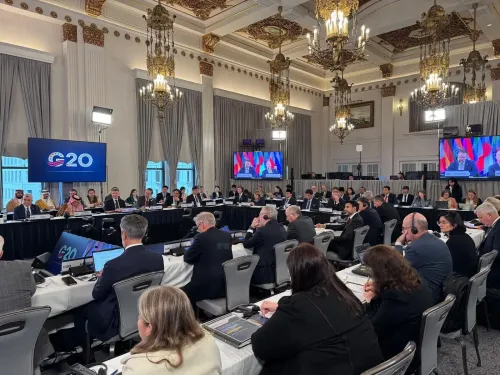
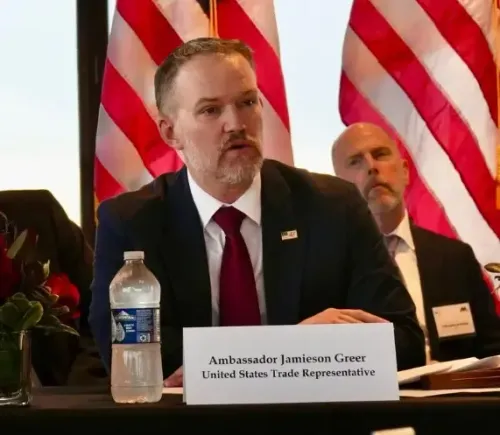
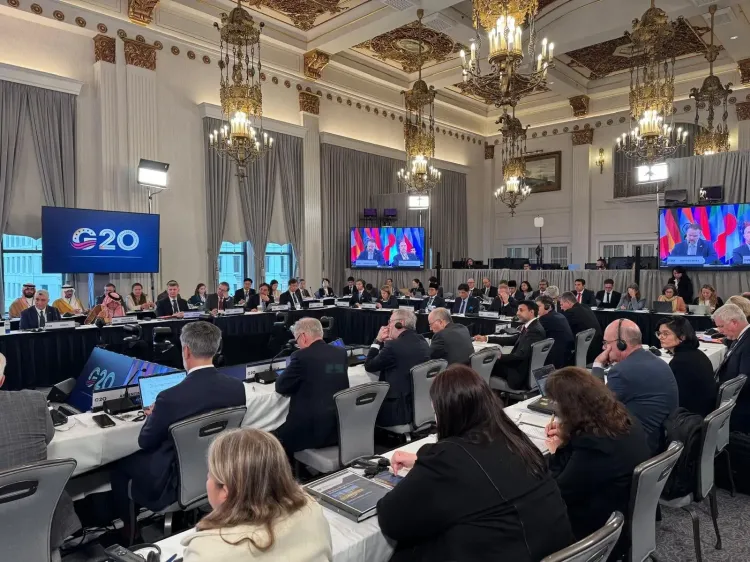
US Trade Representative Jamieson Greer challenged the Most-Favoured-Nation (MFN) principle at the G20 Trade Ministerial in Milwaukee on 1 October 2025 .
Greer argued that unconditional MFN treatment prevents countries from countering distortive and non-market trade practices .
MFN reform is one of four US workstreams under its G20 trade presidency, alongside food weaponisation, excess industrial capacity, and forced labour.
The US cited the G20's 2016 commitment on excess capacity, noting it has worsened over ten years despite repeated pledges.
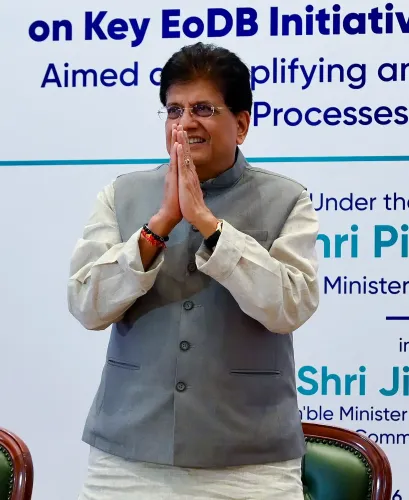
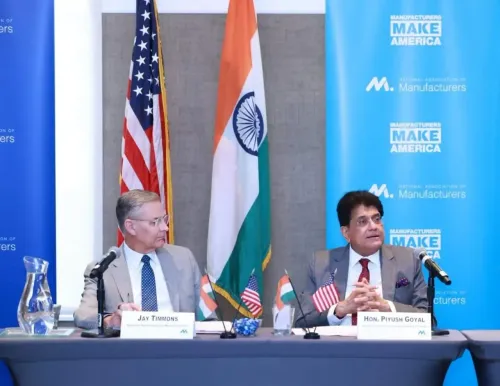
India's Commerce Minister Piyush Goyal is attending the ministerial as New Delhi and Washington separately negotiate a bilateral trade deal.
Greer rejected the convention of deferring trade architecture debates to the WTO in Geneva , pushing for direct G20 discussion.
US Trade Representative Jamieson Greer on Wednesday, 1 October 2025, placed reform of the Most-Favoured-Nation (MFN) principle at the heart of the G20 Trade Ministerial in Milwaukee, directly challenging one of the foundational pillars of the multilateral trading system. Washington argued that unconditional MFN treatment constrains economies from effectively countering unfair and distortive trade practices — a statement that reverberated through a gathering of the world's most influential trade ministers.
What Greer Said
Opening the ministerial, Greer did not mince words. 'Many consider MFN to be the cornerstone of the global trading system. But even a cornerstone should be examined from time to time to ensure it is still supporting the structure we need,' he told delegates. He went further, arguing that 'the MFN principle, particularly when applied unconditionally, constrains economies' ability to effectively respond to distortive policies and adapt to changing market conditions.'
Greer also pushed back against the conventional diplomatic instinct to defer such debates to the World Trade Organization (WTO) in Geneva. 'Geneva is just another city on a lake. And so is Milwaukee. So, let's talk candidly and constructively here,' he said — a pointed rebuke to those who routinely redirect sensitive trade architecture questions away from the G20.
The Four US Workstreams
MFN reform is one of four priority workstreams the United States has identified under its G20 trade presidency. The remaining three are: the weaponisation of food, structural excess capacity and production, and forced labour in global supply chains. Greer said these problems had festered despite years of multilateral discussion, citing the G20's 2016 commitment to tackle excess industrial capacity. 'It has been ten years — excess industrial capacity is an even greater distortion in the global economy now than it was then,' he said.
This is not the first time the US has flagged structural imbalances at multilateral forums, but framing MFN itself as a problem — rather than merely its application — marks a sharper escalation in Washington's trade posture.
Why Washington Turned to Tariffs
Greer acknowledged that the US had moved unilaterally when multilateral channels stalled. 'Starting last year, the United States took action, using a combination of tariffs and bilateral deals to reduce our trade deficit, make resilient our supply chains, and bring fairness, reciprocity, and balance to the global economy,' he said. He framed the current international trade architecture as a product of 1947 and 1995 — the years associated with GATT and the WTO's founding — and questioned whether those blueprints still served 21st-century needs. Notably, he stopped short of calling for the system's dismantlement, stating: 'Building for the future does not require us to discard everything we inherited from the past.'
India's Stakes at Milwaukee
India is represented at the Milwaukee ministerial by Commerce and Industry Minister Piyush Goyal, even as New Delhi and Washington separately pursue negotiations on a bilateral trade agreement. The MFN debate carries direct implications for India, which benefits from MFN-based tariff treatment across major markets and has historically supported the rules-based multilateral order. Any formal erosion of the MFN principle could reshape the terms on which India trades with both the United States and third-country markets.
What Comes Next
The G20 Trade Ministerial in Milwaukee is expected to test whether the US position attracts broader support or faces pushback from trading partners committed to the existing WTO framework. Analysts note that the US challenge to MFN, if endorsed even partially by G20 members, could open the door to a more fragmented global tariff landscape — one where bilateral and preferential deals increasingly displace uniform treatment. The outcome of the Milwaukee meeting will be closely watched in Geneva, Brussels, and New Delhi alike.
Point of View
In effect, arguing that a rules-based order built on non-discrimination has become a shield for non-market actors. What mainstream coverage misses is the implication for countries like India: a weakened MFN norm could accelerate the drift toward a hub-and-spoke world of bilateral deals, where smaller economies must negotiate individually rather than benefit from collective floor prices. The irony is that the United States, once the architect of MFN, is now its most prominent sceptic — and the G20, not the WTO, is its chosen arena for the demolition.
NationPress
1 Oct 2026
Frequently Asked Questions
What is the Most-Favoured-Nation (MFN) principle and why is the US questioning it?
The MFN principle requires that any trade advantage granted to one trading partner be extended to all eligible partners, forming the non-discrimination bedrock of the WTO system. The US argues that applying MFN unconditionally prevents countries from retaliating against non-market practices and economic distortions, and has called for its re-examination at the G20 Trade Ministerial in Milwaukee.
What did US Trade Representative Jamieson Greer say at the G20 meeting?
Greer told trade ministers that 'even a cornerstone should be examined from time to time,' arguing that unconditional MFN constrains economies from responding to distortive policies. He also rejected the reflex to defer such debates to the WTO in Geneva, calling for candid discussion in Milwaukee itself.
How does the US MFN challenge affect India?
India, represented by Commerce and Industry Minister Piyush Goyal, participates in the Milwaukee ministerial while simultaneously negotiating a bilateral trade deal with Washington. A formal erosion of MFN could alter the tariff terms India enjoys in major markets and accelerate pressure on New Delhi to conclude bilateral agreements rather than rely on multilateral floor rates.
What are the four US trade priorities at the G20?
The United States has identified four workstreams under its G20 trade presidency: MFN reform, the weaponisation of food, structural excess capacity and production, and forced labour in global supply chains. Greer argued that all four have persisted despite years of multilateral talk.
Why has the US turned to tariffs instead of WTO processes?
Greer stated that, after more than a decade of multilateral inaction on excess industrial capacity and economic coercion, the US began using tariffs and bilateral deals to reduce its trade deficit and restore supply-chain resilience. He framed existing trade architecture as designed for a different era, calling for reforms suited to 21st-century challenges.