German FM warns Israeli advance in southern Lebanon risks mass displacement
Synopsis
Germany has broken ranks with silence — Foreign Minister Wadephul’s ‘great concern’ statement is a direct diplomatic signal as the IDF crosses the Litani River and captures Beaufort Castle. With Netanyahu ordering a deeper incursion and Hezbollah entrenched, the ceasefire framework is under its most serious stress yet, and civilian displacement in Lebanon is no longer a risk — it is already under way.
Key Takeaways
German Foreign Minister Johann Wadephul expressed ‘great concern’ over Israel’s military advance into southern Lebanon on 1 June .
Wadephul urged all parties to immediately cease hostilities and return to an agreed ceasefire.
The IDF captured Beaufort Castle on the Beaufort Ridge and entered the Wadi al-Saluki area in southern Lebanon.
Prime Minister Benjamin Netanyahu confirmed IDF forces crossed the Litani River and ordered a deeper, expanded incursion.
Germany warned that prolonged military escalation risks making parts of Lebanon permanently uninhabitable .
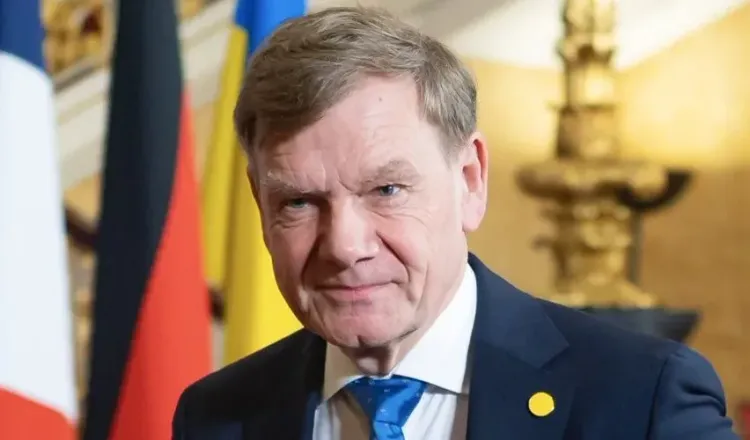
German Foreign Minister Johann Wadephul on 1 June expressed “great concern” over the Israeli military’s continued advance into southern Lebanon, calling on all parties to the conflict to immediately halt hostilities and honour an agreed ceasefire. Wadephul warned that further escalation would deepen an already volatile crisis and trigger fresh waves of civilian displacement inside Lebanon.
Germany’s Position
In a formal statement, Wadephul acknowledged that Israel’s military operations were a response to persistent Hezbollah attacks on northern Israel. However, he cautioned that additional military action risks making the situation significantly worse. “If civilians are the ones who pay the price of a military escalation and parts of Lebanon become permanently uninhabitable, it will not make Israel’s neighbourhood safer in the long term,” Wadephul said.
IDF Captures Beaufort Castle
The Israeli Defence Forces (IDF) announced on Sunday that its troops had captured the historic Beaufort Castle after entering the Beaufort Ridge and Wadi al-Saluki areas in southern Lebanon. According to the IDF, the operation is aimed at establishing operational control over those areas and degrading Hezbollah’s military capabilities in the region.
Israeli Prime Minister Benjamin Netanyahu confirmed the development, saying: “Last night, our heroic fighters captured the Beaufort Castle. They proudly raised the flag of the State of Israel and the flag of the Golani Brigade there.” He also invoked historical significance, noting that 44 years ago the site had been both a symbol of a fierce battle and of internal division. “Today, we returned to Beaufort differently. We returned united, determined and stronger than ever,” he added.
Netanyahu Orders Deeper Incursion
Netanyahu separately confirmed that he had instructed the IDF to expand its operations inside Lebanon. “Our forces have crossed the Litani River. They took dominant terrain. They captured the Beaufort Ridge. And now my instruction is to deepen and expand our hold on places that were under Hezbollah’s control,” he said. He described the capture of Beaufort as a dramatic stage and a significant policy shift for his government.
Hezbollah’s Role in the Area
According to the IDF, Hezbollah had been directing military and combat activities from the Beaufort Ridge and had carried out numerous attacks from the area. The Israeli military framed the advance as a targeted effort to neutralise those capabilities rather than a broader territorial occupation.
What Comes Next
Germany’s intervention adds to growing international pressure on Israel to limit the scope of its Lebanon operations. The humanitarian dimension — specifically the risk of long-term uninhabitability in parts of Lebanon — is increasingly shaping the diplomatic conversation. Whether the ceasefire framework can be revived amid active IDF expansion remains the central question for mediators in the days ahead.
Point of View
Not categorical — Berlin explicitly acknowledged Hezbollah’s provocations before criticising the Israeli response, which reflects the tightrope European governments are walking. But the ‘permanently uninhabitable’ framing is pointed: it signals that Germany is beginning to separate tactical justification from strategic consequence. Netanyahu’s Beaufort Castle symbolism — invoking unity and historical redemption — suggests this incursion is being sold domestically as more than a security operation. The gap between Israel’s framing and Europe’s humanitarian calculus is widening, and that gap is where diplomatic pressure will either build or collapse.
NationPress
14 Sept 2026
Frequently Asked Questions
Why did Germany’s foreign minister criticise Israel’s Lebanon operations?
German Foreign Minister Johann Wadephul expressed ‘great concern’ on 1 June over the Israeli military’s continued advance in southern Lebanon, warning that further escalation would trigger civilian displacement and risk making parts of Lebanon permanently uninhabitable. He called on all parties to immediately return to an agreed ceasefire.
What is the significance of Israel capturing Beaufort Castle?
The IDF captured Beaufort Castle on the Beaufort Ridge in southern Lebanon, a site that Prime Minister Netanyahu described as historically significant — noting it was the scene of a major battle 44 years ago. The IDF said Hezbollah had used the ridge to direct military operations and launch attacks on northern Israel.
Has Israel crossed the Litani River in Lebanon?
Yes. Prime Minister Benjamin Netanyahu confirmed that IDF forces have crossed the Litani River in southern Lebanon and ordered troops to deepen and expand control over areas previously held by Hezbollah. He described the Beaufort capture as a significant policy shift.
What is the current status of the ceasefire between Israel and Hezbollah?
Germany urged all parties to return to an agreed ceasefire, suggesting the existing framework is under strain. Active IDF operations, including the crossing of the Litani River and the capture of Beaufort Castle, indicate that a formal halt to hostilities has not been observed on the ground.
Who is Johann Wadephul?
Johann Wadephul is Germany’s Foreign Minister. His statement on 1 June represents Berlin’s formal diplomatic position on the Israel-Lebanon conflict, acknowledging Israeli security concerns while warning against escalation that harms Lebanese civilians.