Great Nicobar project to strengthen India's grip on Strait of Malacca

Synopsis
A Canada-based geopolitical report argues that the Great Nicobar project — a $9–11 billion, three-phase development due by 2047 — positions India to monitor the Strait of Malacca and project power deep into the Indo-Pacific, directly complicating China's long-standing Malacca Dilemma and reducing India's dependence on foreign ports like Colombo and Singapore.
Key Takeaways
The Great Nicobar Island project has gained heightened importance after the Iran war , with the Strait of Malacca remaining East Asia's critical energy corridor.
A Geopolitical Monitor report says the project will give India the ability to monitor the Malacca Strait and serve as a forward base in the Indo-Pacific .
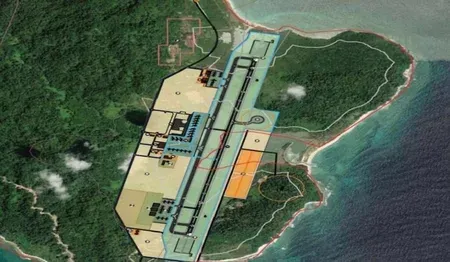
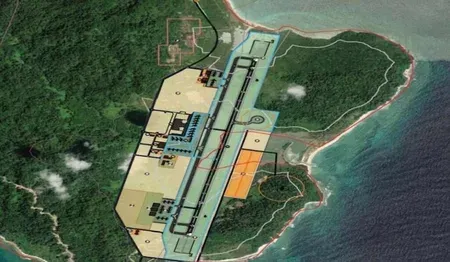
Planned infrastructure includes a trans-shipment hub , civil and military airport , power plants, and a new township .
The project is expected to be completed by 2047 in three phases at an estimated cost of $9–11 billion .
China's 'Malacca Dilemma' has driven Beijing to pursue CPEC and CMEC as alternative Indian Ocean access routes.
The trans-shipment hub aims to reduce India's dependence on regional ports such as Colombo and Singapore .
The Great Nicobar Island development project has taken on heightened strategic importance following the Iran war, with the Strait of Malacca — the world's second-largest oil trade chokepoint after the Strait of Hormuz — continuing to serve as the primary artery for East Asia's energy and economic flows, according to a report by Canada-based Geopolitical Monitor. The project is assessed to significantly reinforce India's strategic posture at the gateway of the Malacca Strait.
The Malacca Dilemma and China's Countermoves
The report identifies the so-called 'Malacca Dilemma' as a long-standing anxiety for Chinese strategic planners. Beijing has responded by pursuing alternative connectivity corridors — notably the China-Pakistan Economic Corridor (CPEC) and the China-Myanmar Economic Corridor (CMEC) — to reduce its dependence on the Malacca chokepoint and secure independent access to the Indian Ocean.
The report further notes that China represents a structural challenge for India owing to the unresolved boundary dispute, and that the broader strategic pressure from Beijing continues to intensify despite a recent thaw in bilateral relations.
What the Great Nicobar Project Delivers Strategically
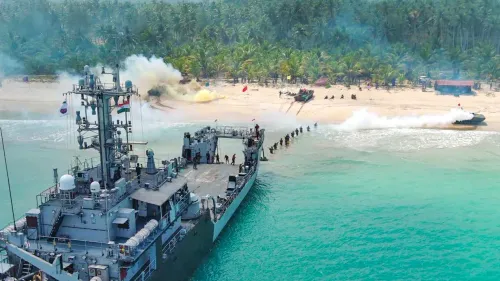
According to the Geopolitical Monitor assessment, the project will substantially expand New Delhi's capacity to monitor the Strait of Malacca and project power into the wider Indo-Pacific region. The report draws a direct parallel with Iran's use of geography as a strategic instrument, suggesting India could similarly leverage Great Nicobar in any contingency scenario.
'The project will expand New Delhi's strategic reach deep into Southeast Asia, serving as a forward operating base for India's greater military presence in the Indo-Pacific region,' the report stated.
Notably, the report contextualises this within established precedent: Britain and the United States jointly operate Diego Garcia; France maintains military bases in the Southwest Indian Ocean; and Australia holds the Christmas and Cocos Islands. The report argues that Great Nicobar would simply join this established network of island-based military installations.
Infrastructure Scope and Timeline
Located at the southern tip of the Andaman and Nicobar island chain — positioned between Myanmar and Indonesia — Great Nicobar sits in close proximity to the Malacca Strait. The project integrates port development, civilian infrastructure, and strategic military objectives across three phases, with a projected completion date of 2047 and an estimated cost of $9–11 billion.
Planned infrastructure includes a trans-shipment hub, a civil and military airport, gas and solar power plants, and a new township. The Andaman and Nicobar Islands already host a tri-service military command; the new facilities are expected to add a durable additional layer to those existing capabilities.
Economic Rationale: Breaking Port Dependence
Beyond its military dimensions, the report underscores the project's economic logic. The trans-shipment hub is specifically aimed at reducing India's reliance on major regional deep-water ports such as Colombo and Singapore — a dependence that carries both commercial and strategic vulnerability. This dual-use character, the report argues, gives the project significance well beyond a purely military footprint.
As India advances the project through its phased timeline toward 2047, its ability to shape Indo-Pacific maritime dynamics — and complicate China's Malacca calculus — is expected to grow considerably.
Point of View
India gains a genuine Indo-Pacific lever; if it stalls (as large island-infrastructure projects often do), it hands critics a ready narrative about strategic overreach. The $9–11 billion price tag and 2047 timeline also mean that three or four governments will need to sustain political will across decades — a far harder challenge than the blueprint itself. The dual-use civilian-military design is shrewd, but the environmental and displacement costs on a biodiversity-rich island remain a domestic accountability question that strategic framing alone cannot resolve.
NationPress
10 Oct 2026
Frequently Asked Questions
What is the Great Nicobar Island project?
The Great Nicobar project is a large-scale development initiative at the southern tip of the Andaman and Nicobar island chain, combining a trans-shipment hub, civil and military airport, power plants, and a new township. It is expected to be completed by 2047 in three phases at an estimated cost of $9–11 billion.
Why is Great Nicobar strategically important for India?
Great Nicobar sits close to the Strait of Malacca, the world's second-largest oil trade chokepoint. According to the Geopolitical Monitor report, the project will allow India to monitor the strait, project military power into the Indo-Pacific, and serve as a forward operating base in Southeast Asia.
What is China's Malacca Dilemma and how does this project affect it?
The 'Malacca Dilemma' refers to China's vulnerability to a blockade of the Strait of Malacca, through which the bulk of its energy imports pass. Beijing has pursued CPEC and CMEC as alternative routes. India's Great Nicobar project, by enhancing surveillance and presence at the strait, is seen as complicating China's strategic calculus further.
How does Great Nicobar compare to other island military bases globally?
The Geopolitical Monitor report notes that island-based military installations are routine for major powers — Britain and the US operate Diego Garcia, France has bases in the Southwest Indian Ocean, and Australia holds the Christmas and Cocos Islands. Great Nicobar is assessed as joining this established network.
What is the economic rationale behind the Great Nicobar trans-shipment hub?
The trans-shipment hub is designed to reduce India's dependence on major regional deep-water ports such as Colombo and Singapore, which currently handle a significant share of Indian cargo. Reducing this dependence has both commercial and strategic benefits for New Delhi.