Hamas dissolves Gaza emergency government, hands power to National Committee
Synopsis
Hamas has formally dissolved its Government Emergency Committee in Gaza and handed administrative authority to a National Committee — the most concrete governance shift since the ceasefire framework took shape. With a US-led 'Board of Peace' pledging over $17 billion in combined relief funds, the move tests whether a political transition on paper can translate into real authority on the ground.
Key Takeaways
Hamas dissolved the Government Emergency Committee in Gaza on 7 July 2025 , transferring power to the National Committee .
Mohammed al-Farra , head of the committee, formally submitted his resignation at a press conference in Deir al-Balah .
Only technical and professional staff will remain to prevent an administrative vacuum during the transition.
The move follows a mid- June Cairo meeting where Palestinian factions agreed on a roadmap for the second phase of the ceasefire.
US President Donald Trump announced a USD 10 billion US contribution to postwar Gaza relief, with allied nations pledging a further $7 billion .
Hamas spokesperson Hazem Qassem said the dissolution aims to eliminate pretexts for Israeli interference in Gaza's governance.
Hamas on Monday, 7 July 2025 announced the formal dissolution of the Government Emergency Committee in Gaza and the transfer of administrative authority over the Gaza Strip to the National Committee, in a significant governance shift tied to a broader Palestinian factions roadmap agreed upon in Cairo.
Key Developments
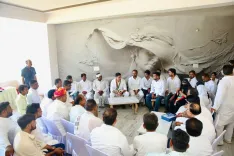
Mohammed al-Farra, Head of the Government Emergency Committee, officially submitted his resignation, according to Ismail Thawabta, Director General of the Hamas-run media office in Gaza, who made the announcement at a press conference in Deir al-Balah, central Gaza. Thawabta confirmed that only technical and professional staff would remain in their roles to prevent an administrative and technical vacuum during the transition.
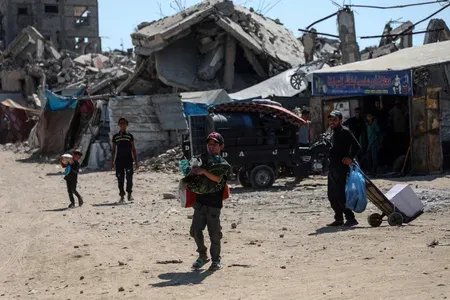
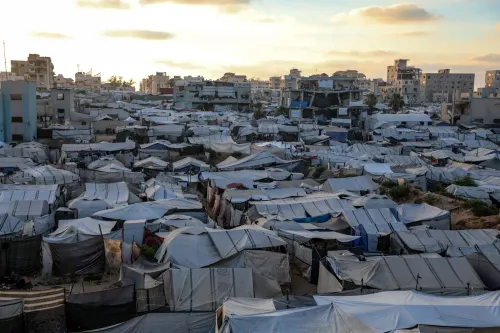
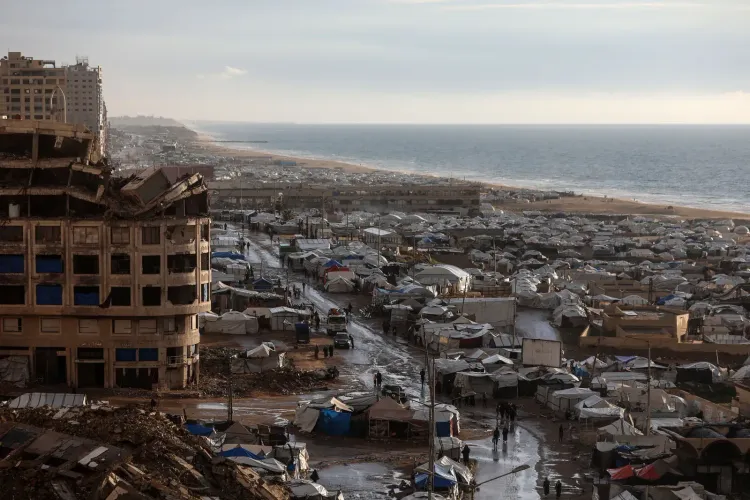
The dissolution, Thawabta said, was taken 'to alleviate the suffering of citizens resulting from the ongoing war ... the delay in reconstruction, the continued siege, the closure of crossings, and the failure of the Israeli army to withdraw.'
What Hamas Said
In a separate statement, Hamas spokesperson Hazem Qassem said the move was aimed at eliminating pretexts for Israeli interference. Qassem reaffirmed the group's commitment to handing over all governing responsibilities in Gaza to the incoming body. The language signals a deliberate attempt by Hamas to frame the handover as a concession to the internationally brokered process rather than a retreat under pressure.
The Cairo Roadmap and Its Context
The dissolution follows a mid-June meeting in Cairo where Palestinian factions submitted their response to a roadmap for the second phase of the Gaza ceasefire agreement. The roadmap, presented by the US-led 'Board of Peace', outlines mechanisms for Gaza's future — including reconstruction, disarmament, Israeli withdrawal, and the deployment of an international peacekeeping force.
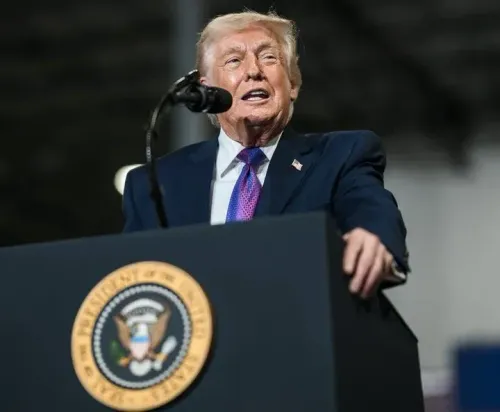
The 'Board of Peace' was launched by US President Donald Trump in February as a new multilateral forum convened at the US Institute of Peace. Trump announced a USD 10 billion US contribution tied to postwar stabilisation and relief in Gaza. He also cited pledges from a coalition of countries: 'Kazakhstan, Azerbaijan, UAE, Morocco, Bahrain, Qatar, Saudi Arabia, Uzbekistan, and Kuwait have all contributed more than $7 billion toward the relief package,' Trump said, describing the totals as an early start to the effort.
Why This Matters
The dissolution of the emergency committee is the most concrete governance step Hamas has taken since the ceasefire framework was announced, and it directly addresses one of the key sticking points in postwar planning — who administers Gaza in the interim. Notably, this is also the first time Hamas has formally ceded day-to-day administrative control to a body that includes other Palestinian factions, a move that could reshape the political landscape in the territory. Critics and analysts will watch closely whether the National Committee can establish operational authority on the ground, or whether the transition remains procedural while Hamas retains de facto power.
What Happens Next
Thawabta urged all concerned parties to expedite the entry of the National Committee for the Administration of Gaza into the strip so it can assume its duties. The pace of that transition — and whether Israel, the US, and other stakeholders accept the new administrative arrangement — will determine whether the broader roadmap advances toward its stated goals of reconstruction and eventual Israeli withdrawal.
Point of View
But the harder question is whether the National Committee can exercise real authority in a territory where Hamas retains armed presence and institutional networks. The Cairo roadmap has been agreed on paper by factions with deeply divergent interests, and past Palestinian unity arrangements have collapsed at the implementation stage. The $17-billion-plus relief package from the US and Gulf states creates financial leverage, but disbursement conditionality — particularly around disarmament — remains the unresolved fault line. Until the National Committee physically enters Gaza and begins functioning, this is a governance transfer in name only.
NationPress
5 Oct 2026
Frequently Asked Questions
What is the Government Emergency Committee that Hamas dissolved?
The Government Emergency Committee was the administrative body Hamas used to govern the Gaza Strip during the ongoing conflict. On 7 July 2025, Hamas announced its dissolution and the transfer of authority to the National Committee, in line with a roadmap agreed by Palestinian factions in Cairo.
What is the National Committee for the Administration of Gaza?
The National Committee is the body designated under the Cairo-brokered roadmap to administer Gaza in the post-emergency phase. It is intended to include broader Palestinian representation beyond Hamas, though the full composition and operational details have not yet been publicly confirmed.
What is the 'Board of Peace' and how is it connected to Gaza?
The 'Board of Peace' is a multilateral forum launched by US President Donald Trump in February at the US Institute of Peace. It presented the roadmap for Gaza's future — covering reconstruction, disarmament, Israeli withdrawal, and an international peacekeeping force — and announced a USD 10 billion US contribution to postwar stabilisation, alongside over $7 billion pledged by Gulf and Central Asian nations.
Why did Hamas dissolve the emergency committee now?
According to Hamas media office director Ismail Thawabta, the dissolution was taken to alleviate civilian suffering caused by the war, reconstruction delays, the ongoing siege, closed crossings, and the absence of an Israeli withdrawal. Hamas spokesperson Hazem Qassem added that the move also aims to remove Israeli pretexts for interference in Gaza's governance.
What happens to Gaza's administration during the transition?
Technical and professional staff will remain in their positions to prevent an administrative and technical vacuum while the National Committee assumes full duties. Hamas has urged all parties to expedite the committee's entry into the Gaza Strip.