Will Hegseth's Interagency Efforts Fulfill Nuclear Sub Construction for South Korea?
Synopsis
In a pivotal announcement, US Defence Secretary Pete Hegseth outlines Washington's commitment to assist South Korea in constructing nuclear-powered submarines. This follows President Trump's pledge during a recent summit, highlighting the evolving dynamics of US-South Korea relations in defense capabilities. Stay tuned for insights into the implications of this collaboration.
Key Takeaways
US to assist South Korea in constructing nuclear-powered submarines.
Interagency efforts will be made to fulfill President Trump's commitment.
South Korea's shipbuilding industry is highly regarded.
Strengthening defense cooperation is a priority for both nations.
The alliance between the US and South Korea is stronger than ever .
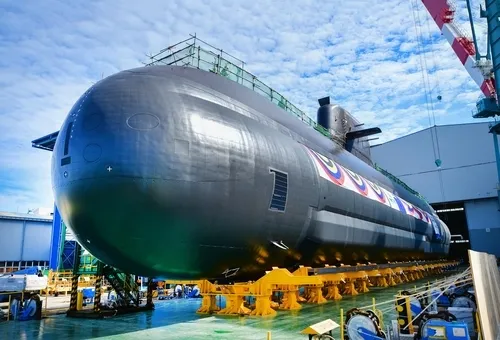
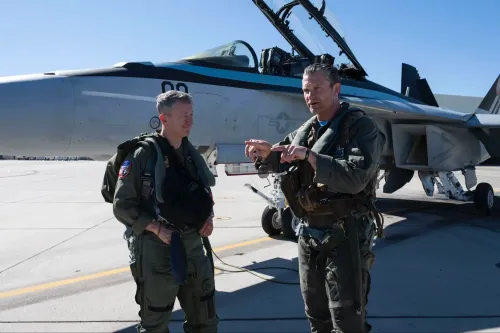
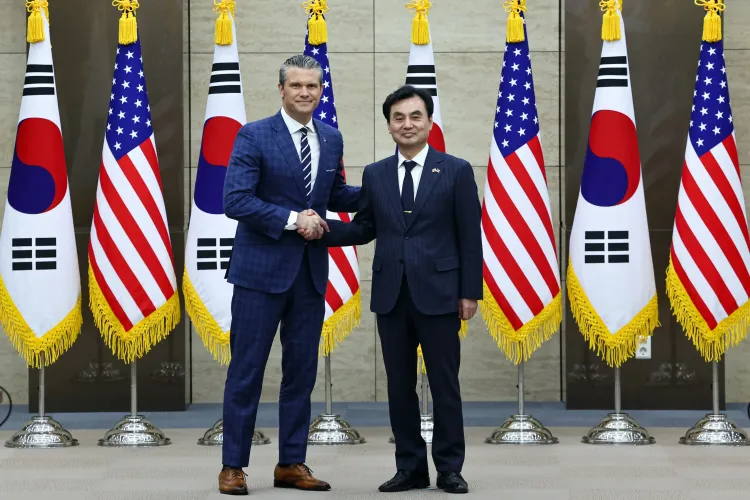
Seoul, Nov 4 (NationPress) US Defence Secretary Pete Hegseth stated on Tuesday that Washington is committed to undertaking interagency efforts "in a deliberate manner" to support a promise made by US President Donald Trump for South Korea to construct nuclear-powered submarines at a US shipyard.
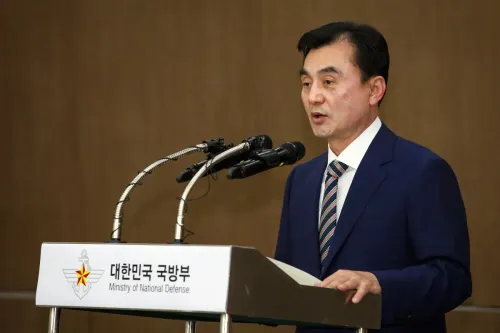
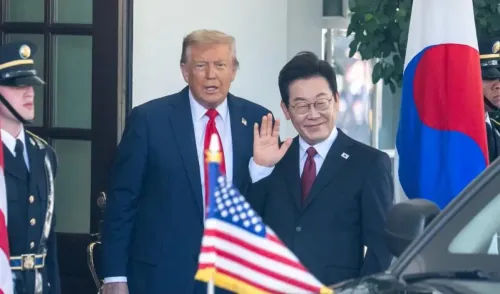
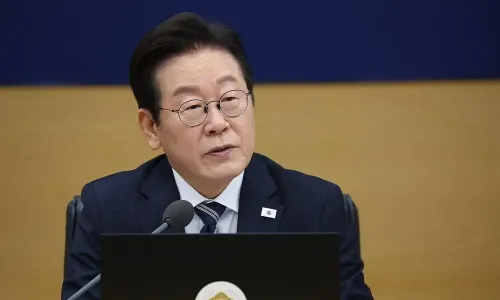
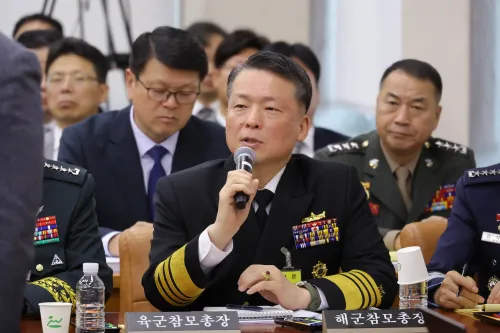
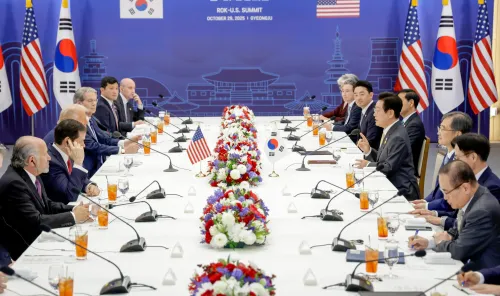
Hegseth expressed these views during a press conference that followed the annual security discussions with Defence Minister Ahn Gyu-back. This meeting came after President Lee Jae Myung requested Trump last week to permit Seoul to acquire fuel for nuclear-powered submarines during their summit.
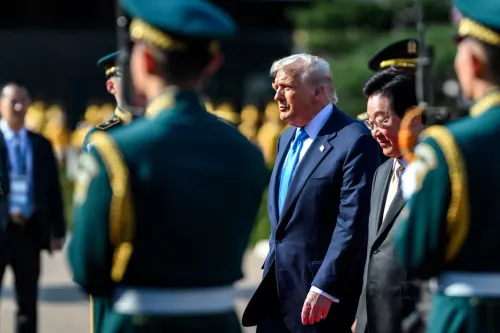
The following day, Trump announced his approval for South Korea to proceed with the construction of a nuclear-powered submarine, describing it as a more advanced alternative to the "old-fashioned" diesel-powered submarines. He specified that the submarine would be built at the US shipyard owned by South Korea's Hanhwa Ocean.
"We will collaborate closely with the Department of State and the Department of Energy to ensure President Trump's commitment is fulfilled in a deliberate manner," Hegseth told reporters, according to Yonhap News Agency.
He emphasized that the president desires strong allies, wanting them to possess the best capabilities. "Given Korea's status as a model ally, he is receptive to opportunities that enhance their defense capabilities alongside our own as allies," Hegseth noted.
While the US defence chief did not provide further details on the approval, he praised South Korea’s "incredible" shipbuilding industry.
"We are eager to partner on various projects, whether in surface warfare or submarines, leading to mutually beneficial outcomes for both nations," he added.
In response to inquiries regarding the deployment of US Forces Korea in potential contingencies in the Taiwan Strait, Hegseth remarked that "flexibility for regional contingencies is something we would take a look at," reaffirming the command's commitment to deterrence against North Korean threats.
"Our focus remains on supporting our allies in ensuring that the threat from the DPRK does not pose a risk to the Republic of Korea, continuing to extend nuclear deterrence as previously established," he stated, using the acronym for North Korea's formal name, the Democratic People's Republic of Korea.
In this context, Hegseth noted that his recent visit to the Joint Security Area within the Demilitarized Zone separating the two Koreas, alongside Seoul's defence chief, illustrates the "core" of the alliance.
The annual security discussions, known as the Security Consultative Meeting (SCM), were held on Tuesday, marking the first SCM since both officials assumed office earlier this year.
During the opening remarks, the Pentagon chief asserted that the longstanding alliance between the two nations is "stronger than ever" and advocated for enhanced defense cooperation.
This year's SCM occurs amid ongoing discussions on how the two countries can modernize their alliance.
A joint communique detailing their discussions has yet to be released.
Point of View
It is essential to recognize the importance of strengthening alliances in today's geopolitical landscape. The commitment from the US to assist South Korea in developing nuclear capabilities signals a vital step towards enhanced defense cooperation. This partnership is crucial for regional stability and reflects the need for nations to adapt to emerging threats.
NationPress
2 Oct 2026
Frequently Asked Questions
What is the purpose of the nuclear-powered submarines for South Korea?
The nuclear-powered submarines are intended to enhance South Korea's defense capabilities and ensure national security amidst regional threats.
Who authorized the construction of the submarines?
The authorization for South Korea to build nuclear-powered submarines was granted by US President Donald Trump.
How will the US support South Korea in this endeavor?
The US will provide support through interagency efforts involving the Department of State and the Department of Energy to fulfill President Trump's commitment.
What is the significance of the US-South Korea alliance?
The US-South Korea alliance is crucial for regional security, enabling both nations to deter threats and enhance their military capabilities.
What was discussed during the Security Consultative Meeting?
The Security Consultative Meeting addressed the modernization of the US-South Korea alliance and strategies to enhance defense cooperation.