Hegseth pushes $1.5 trillion US defence budget, cites record recruitment
Synopsis
Pete Hegseth used Trump’s first live-televised Cabinet meeting at Camp David to pitch a $1.5 trillion defence budget — one of the largest in US history — backed by $75 billion already committed in private contractor investment. The pitch blends fiscal ambition with a culture-war narrative: Hegseth credits the removal of DEI programmes, not policy reform, for what he claims are record recruitment numbers.
Key Takeaways
Pete Hegseth announced the Trump administration is pursuing a $1.5 trillion defence budget in coordination with Congress.
Defence contractors have reportedly committed $75 billion in private investment for new production facilities.
Hegseth claimed both re-enlistment and new recruitment are at historic highs, attributing the trend to the removal of DEI programmes and Trump’s return to office in 2024 .
Military operations cited include actions against the Houthis , strikes on Iranian nuclear facilities , and counter-cartel efforts.
The proposed budget would require congressional approval and would rank among the largest military spending requests in US history.
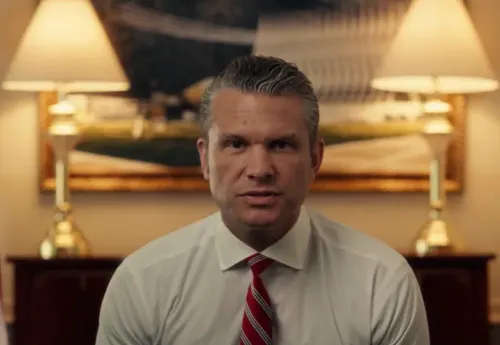
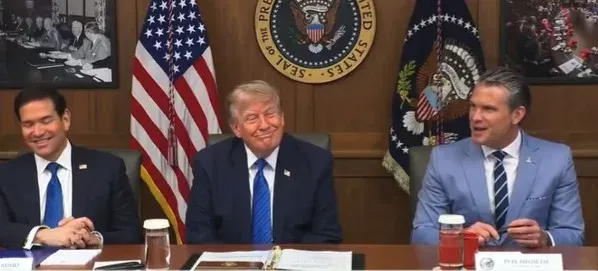
US Defence Secretary Pete Hegseth on 1 August said the Trump administration is actively working with Congress to secure a $1.5 trillion defence budget, describing the push as a generational investment aimed at modernising the military, expanding domestic arms manufacturing, and reversing a recruitment slump. Hegseth made the remarks during President Donald Trump's Cabinet meeting at Camp David, the first such session to be broadcast live on television.
The Budget Push and What It Covers
Hegseth framed the proposed $1.5 trillion outlay as a structural departure from past Pentagon funding models. “We are committed in working with Congress to get $1.5 trillion. But this is not the same way we’ve funded our department in the past,” he said. The proposal, if approved by Congress, would rank among the largest military spending requests in US history.
A central element of the new approach is the push to draw private capital into defence production. Hegseth said defence contractors have already committed $75 billion in private investment to build new plants, equipment, and assembly lines. “That’s saving taxpayer dollars because the companies themselves are investing,” he said.
Recruitment and Personnel Overhaul
Hegseth credited the removal of diversity, equity, and inclusion (DEI) programmes and what he called ‘social engineering’ from the military for driving what he described as historic re-enlistment and recruitment figures. “When you rip out DEI, when you rip out social engineering and social justice and you put in merit, and then you untie the hands of commanders to enforce discipline and accountability, to get back to basics, then you get historic reenlistment inside our ranks,” he said.
He attributed the uptick in enlistment directly to Trump’s return to office, claiming the trend began on Election Day 2024. “Every month our department breaks records,” Hegseth said, though independent verification of those figures was not provided at the meeting.
Military Operations Cited
Hegseth also referenced a series of military actions conducted under the Trump administration, including operations against the Houthis, strikes targeting Iranian nuclear facilities, and efforts against drug cartels. He praised Trump’s decision-making, describing it as requiring significant political courage.
Trump Reinforces the Message
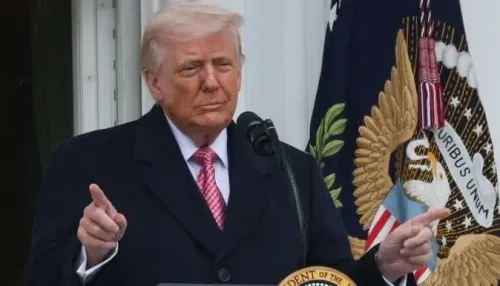
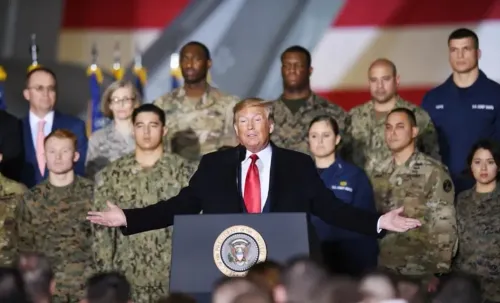
President Trump, in his opening remarks, echoed the defence spending ambition. “We’re looking forward to getting $1.5 trillion next year… and the good news is all of that equipment is made in the USA,” he said. Trump added that each major defence group was constructing “at least four new massive plants” to accelerate production timelines.
Context and What Comes Next
The proposed budget sits at the centre of the administration’s broader national security agenda, which frames increased military spending as essential to modernising capabilities, expanding domestic manufacturing, and strengthening deterrence against strategic competitors. Congressional approval remains the critical next step, and the scale of the request is expected to face scrutiny from both fiscal conservatives and opposition lawmakers. The Camp David Cabinet meeting also covered foreign policy, healthcare, the economy, and government efficiency, with Trump taking questions on Iran, Ukraine, and the Middle East.
Point of View
Benefits, or operational tempo deserves scrutiny; the Pentagon has not released independently audited enlistment data to support Hegseth’s assertion. The private-investment model for defence production is genuinely novel, but $75 billion in contractor commitments is also in the contractors’ commercial interest — it is not purely a public saving. The real test will be whether Congress, particularly its fiscal-hawk bloc, endorses a budget that dwarfs previous defence requests without a detailed line-item breakdown.
NationPress
15 Sept 2026
Frequently Asked Questions
What is the $1.5 trillion US defence budget proposed by Pete Hegseth?
It is a proposed military spending package that the Trump administration is seeking to pass through Congress, described by Defence Secretary Pete Hegseth as a generational investment in the US armed forces. The figure would represent one of the largest defence budget requests in US history and covers modernisation, domestic manufacturing expansion, and personnel reform.
What is the role of private investment in the new defence plan?
Hegseth said defence contractors have already committed $75 billion in private capital to build new plants, equipment, and assembly lines without relying solely on government funding. He argued this model saves taxpayer money while accelerating production of next-generation munitions.
Why does Hegseth say US military recruitment is at a record high?
Hegseth attributed the claimed recruitment and re-enlistment records to the removal of DEI and social engineering programmes from the military and the restoration of what he called a merit-based, discipline-focused culture. He linked the trend’s start to Election Day 2024, though independent verification of the figures was not presented at the meeting.
What military operations did Hegseth highlight at the Camp David Cabinet meeting?
Hegseth referenced operations against the Houthis, strikes targeting Iranian nuclear facilities, and efforts against drug cartels, citing them as examples of the Trump administration’s willingness to use military force decisively.
Does the $1.5 trillion defence budget require congressional approval?
Yes, the proposed budget must be approved by Congress before it can take effect. Given its scale, it is expected to face scrutiny from fiscal conservatives and opposition lawmakers, making the legislative path uncertain.