Rubio at G20 Atlanta: Hormuz, Bab al-Mandeb must stay open for trade
Synopsis
At the G20 Foreign Ministers' Meeting in Atlanta, US Secretary of State Rubio named the Strait of Hormuz and Bab al-Mandeb by name — and no joint communiqué emerged. With India's Jaishankar also attending a same-day Quad meeting, the Atlanta conclave revealed how maritime security and critical minerals have become the new G20 fault line.
Key Takeaways
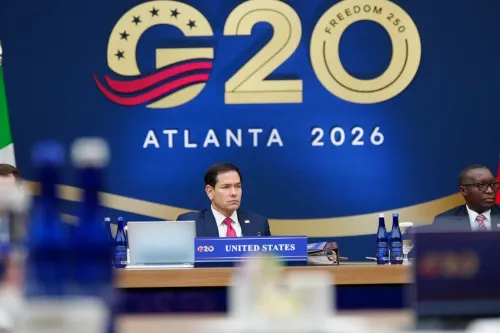
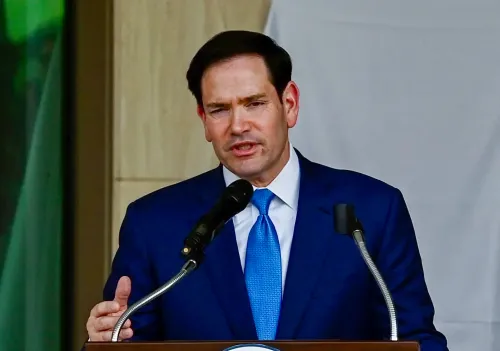
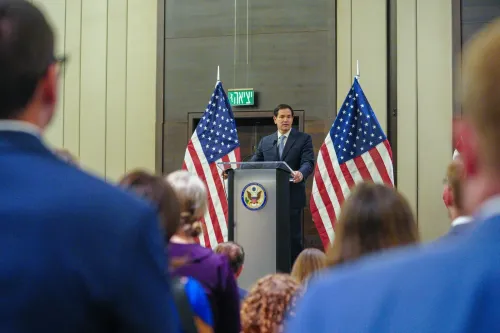
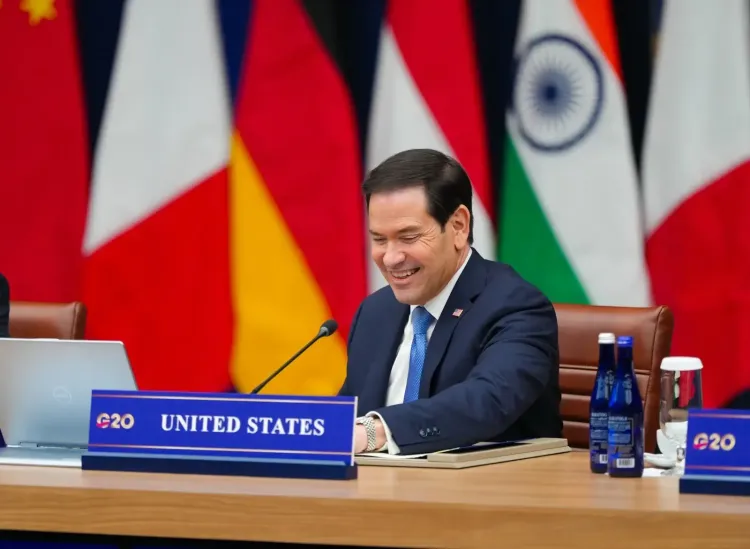
US Secretary of State Marco Rubio closed the G20 Foreign Ministers' Meeting in Atlanta on 31 October 2026 , calling for open maritime trade routes.
Rubio specifically named the Strait of Hormuz and Bab al-Mandeb Strait as routes that 'must remain secure and open to commerce.' German Foreign Minister Johann Wadephul and EAM S.
Jaishankar publicly agreed on keeping the Strait of Hormuz and Black Sea open.
Italy invoked EUNAVFOR Aspides and Atalanta naval missions as its front-line contributions to sea-lane security.
No chair's statement or joint communiqué was posted on the State Department website following the meeting.
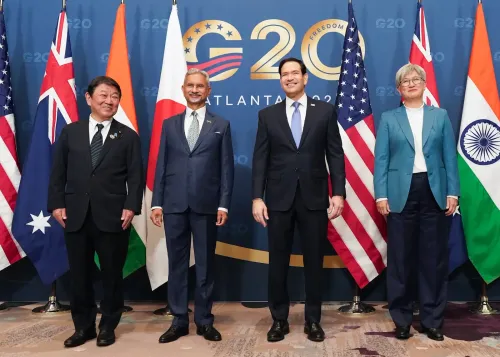
EAM Jaishankar also attended a Quad Foreign Ministers' Meeting hosted by Rubio in Atlanta on the same day.
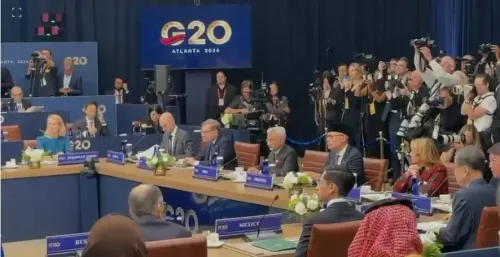
US Secretary of State Marco Rubio closed the G20 Foreign Ministers' Meeting in Atlanta on 31 October 2026 with a pointed call to keep critical maritime trade routes open, warning that secure supply chains are essential for global growth. The two-day ministerial, hosted by the United States on 30–31 October, brought together foreign ministers from the world's largest economies to address compounding geopolitical and economic threats.
Rubio's Closing Message
In remarks at the close of the meeting, Rubio said: 'Secure supply chains are essential for growth. Critical trade routes including the Strait of Hormuz and Bab al-Mandeb Strait must remain secure and open to commerce. And we must continue to strengthen and expand critical mineral supply chains to protect our future.' The statement, which Rubio shared in a post on X, underscored Washington's focus on maritime freedom of navigation as a cornerstone of economic stability.
Opening the plenary on geopolitical issues the previous day, Rubio had framed the challenge in stark terms, telling delegates that the G20 was 'facing a series of interconnected economic and geopolitical crises, many of which pose severe threats to essential foundations of the global economic order.' He specifically pointed to 'new disruptions and strains to global energy and food supplies, the global supply chain, trade, and freedom of navigation itself.'
India and Germany Align on Open Waterways
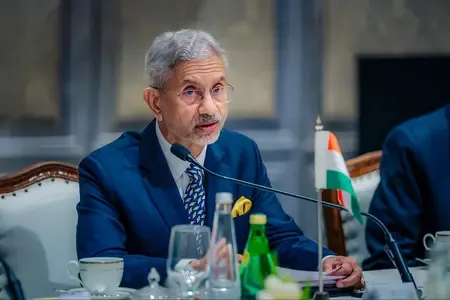
On the eve of the ministerial, German Foreign Minister Johann Wadephul signalled convergence with India's position in a post on X. 'As close partners, India and Germany are committed to the rules-based global order. My dear friend External Affairs Minister S. Jaishankar and I agree that waterways must remain open and navigable to all, both in the Strait of Hormuz and the Black Sea. Global food and energy crises must be prevented,' Wadephul wrote. The public alignment between New Delhi and Berlin on sea-lane security reflects a broadening consensus beyond traditional Western blocs.
Italy Invokes European Naval Missions
Italy was represented by Under Secretary of State for Foreign Affairs Maria Tripodi, who said the ministerial covered freedom of navigation, food security, resilience of global trade, energy security, and supply chain protection. 'Freedom of navigation and the security of strategic maritime routes are fundamental to global economic stability, food and energy security,' Tripodi said, according to the Italian foreign ministry. She added that Italy was 'in the front line' in protecting these routes, including through the European naval missions EUNAVFOR Aspides and Atalanta.
Quad Meeting Runs Parallel to G20
On the same day as the G20 closing session, EAM Jaishankar also attended a Quad Foreign Ministers' Meeting hosted by Rubio in Atlanta. Rubio said the Quad partners were 'building reliable and open supply chains, supporting next-generation technologies, increasing maritime cooperation, and securing critical minerals' — mirroring the themes of the G20 meeting almost exactly. The dual-track diplomacy on a single day highlights how closely the Quad and G20 agendas have converged around supply chain resilience and maritime security.
No Joint Communiqué Issued
Notably, no chair's statement or joint communiqué had been posted on the State Department website at the time of reporting. The absence of a formal consensus document is consistent with recent G20 practice, where geopolitical fault lines — particularly over the Russia-Ukraine war and Middle East conflicts — have made agreed language difficult. This is at least the second consecutive G20 foreign ministers' meeting where a joint statement remained elusive. All eyes now turn to whether the leaders' summit can produce the communiqué that the ministers could not.
Point of View
The day was diplomatically dense: Jaishankar aligned publicly with Germany on sea lanes while attending a Quad meeting on the same afternoon, a dual-track approach that reflects New Delhi's careful balancing act between Western partners and its own strategic autonomy. Critically, Rubio's explicit naming of Hormuz and Bab al-Mandeb is a direct message aimed at both Iran and the Houthi threat in the Red Sea — stakes that India, as a major seafaring trade nation, cannot afford to be indifferent to.
NationPress
31 Oct 2026
Frequently Asked Questions
What did Marco Rubio say at the G20 Foreign Ministers' Meeting in Atlanta?
Rubio called for the Strait of Hormuz and Bab al-Mandeb Strait to remain 'secure and open to commerce,' warning that the G20 faces interconnected economic and geopolitical crises threatening the global order. He also stressed the need to expand critical mineral supply chains.
Was a joint communiqué issued after the G20 Foreign Ministers' Meeting?
No joint communiqué or chair's statement had been posted on the State Department website at the time of reporting. Geopolitical divisions among G20 members have made agreed text increasingly difficult to achieve at recent ministerials.
What role did India's EAM Jaishankar play at the Atlanta meetings?
EAM S. Jaishankar attended both the G20 Foreign Ministers' Meeting and a separate Quad Foreign Ministers' Meeting hosted by Rubio in Atlanta on 31 October. He also publicly aligned with German Foreign Minister Wadephul on the need to keep the Strait of Hormuz and Black Sea open.
Why are the Strait of Hormuz and Bab al-Mandeb significant?
The Strait of Hormuz is the world's most critical oil transit chokepoint, through which roughly one-fifth of global petroleum supplies pass. The Bab al-Mandeb Strait connects the Red Sea to the Gulf of Aden and has been disrupted by Houthi attacks, threatening global shipping and food supply chains.
What did Italy contribute to the sea-lane security discussion?
Italy's Under Secretary of State Maria Tripodi said freedom of navigation is fundamental to global economic and energy stability, and pointed to Italy's active role through the European naval missions EUNAVFOR Aspides and Atalanta as concrete contributions to securing strategic maritime routes.