Strait of Hormuz still blocked despite Trump's claim of lifted naval blockade
Synopsis
Trump declared the US naval blockade on Iran lifted — but Iranian sailors are still being turned back at the Strait of Hormuz. With Tehran insisting it holds full authority over the waterway and ruling out nuclear talks at this stage, the gap between Washington’s announcement and reality on the water could not be wider.
Key Takeaways
US President Donald Trump posted on Truth Social that the US naval blockade on Iran “will now be lifted.” Despite this, Iranian vessels are still receiving warnings from US Central Command not to enter the Strait of Hormuz , according to reports citing Iranian sailors.
Iran’s Khatam al-Anbiya Central Headquarters stated on Saturday that Iranian forces hold “full authority” over the strait and all vessels must obtain IRGC Navy permission to pass.
The IRGC Navy said 20 vessels crossed the strait in the past 24 hours after receiving Iranian clearance.
Iran tightened Hormuz controls on 28 February following joint US-Israeli strikes on Iranian territory.
Tehran has stated that nuclear issues are not part of the current stage of talks, rejecting a key Trump precondition.
Iranian vessels remain barred from freely transiting the Strait of Hormuz even as US President Donald Trump claimed on Friday that the American naval blockade on Iran had been lifted, according to reports citing Iranian sailors. The semi-official Tasnim news agency reported that ships continue to receive warnings from US Central Command not to enter the area, directly contradicting Trump's public statement.
What Trump Said
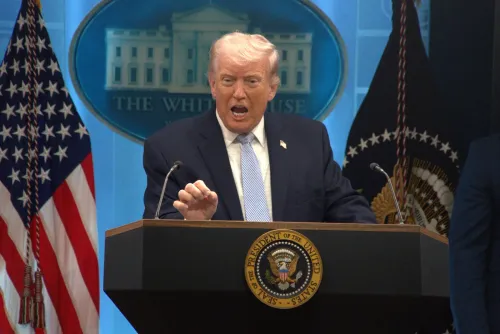
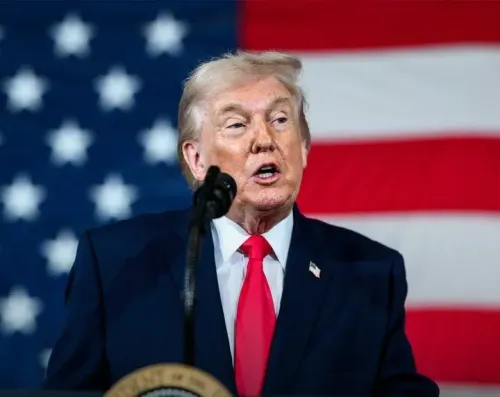
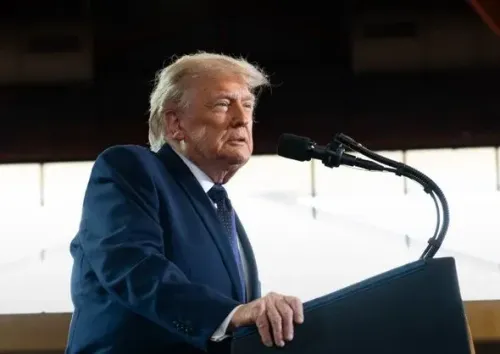
In a post on Truth Social, Trump declared that the US naval blockade “will now be lifted.” He also outlined conditions for a potential deal with Tehran, demanding that Iran agree never to develop a nuclear weapon. Trump further stated that the Strait of Hormuz should be “immediately open,” with unrestricted two-way shipping, and that any water mines would be removed. He added that Iran’s enriched uranium stockpiles would be located and destroyed in coordination with Tehran and the International Atomic Energy Agency (IAEA).
Iran's Position on the Ground
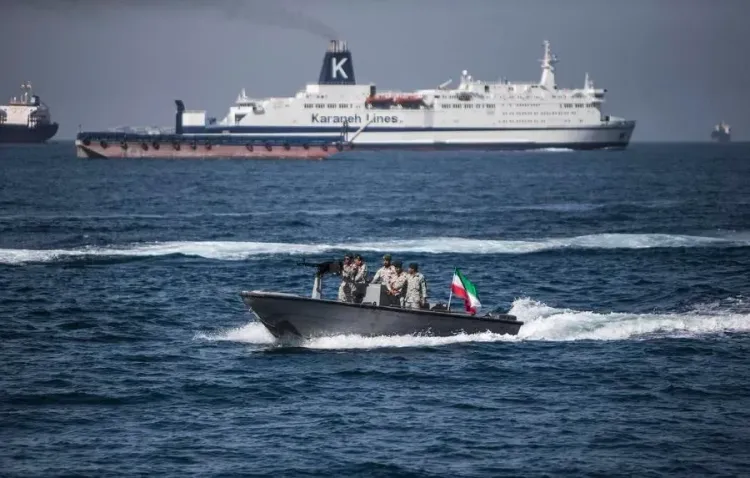
Iran’s main military command, Khatam al-Anbiya Central Headquarters, issued a statement on Saturday asserting that Iranian armed forces are exercising “full authority” over the strait. The headquarters stated that all vessels — including commercial ships and oil tankers — must travel exclusively through routes designated by Iran and obtain permission from the Navy of the Islamic Revolution Guard Corps (IRGC).
The IRGC’s Navy separately reported that 20 vessels crossed the strait within a 24-hour window in coordination with Iranian forces and maritime authorities. According to the semi-official Fars news agency, those vessels were permitted passage because of their countries’ commodity needs, including chemical fertilizers.
How the Standoff Began
Iran tightened control over the Strait of Hormuz on 28 February, restricting passage for vessels linked to Israel and the United States following joint strikes on Iranian territory. The United States, in turn, imposed its own naval restrictions in the strait, limiting traffic to and from Iranian ports. The waterway is critical to global energy supply chains, with roughly 20% of the world’s traded oil passing through it.
Nuclear Talks and the Disconnect
Tehran has maintained that nuclear issues are not part of the current stage of diplomatic talks, creating a significant gap with Washington’s stated preconditions. Trump’s Truth Social post effectively bundled nuclear disarmament, strait access, and sanctions relief into a single framework — a package Iran has not publicly accepted. This comes amid broader US-Iran negotiations that remain at an early and fragile stage, with no confirmed date for a formal agreement.
What Happens Next
The contradiction between Trump’s announcement and the on-the-ground reality raises questions about the state of back-channel diplomacy. Until a verifiable agreement is reached and restrictions are formally lifted by both sides, global shipping operators are likely to treat the strait as a risk zone. The situation will be closely watched by oil markets, regional governments, and international shipping insurers.
Point of View
And the gap between the two positions is not semantic. More troubling is the nuclear precondition: bundling disarmament with shipping access is a maximalist opening that Tehran has explicitly rejected for this round of talks. If Washington and Tehran cannot agree on what is even on the table, the risk of a miscalculation in one of the world’s most critical shipping lanes remains dangerously elevated.
NationPress
21 Oct 2026
Frequently Asked Questions
Has the US naval blockade on Iran actually been lifted?
Not on the ground, according to reports. Despite US President Donald Trump’s Truth Social post stating the blockade ‘will now be lifted,’ Iranian sailors have reportedly continued to receive warnings from US Central Command not to enter the Strait of Hormuz.
What conditions did Trump set for a deal with Iran?
Trump stated that Iran must agree never to obtain a nuclear weapon, that the Strait of Hormuz must be immediately open to unrestricted two-way shipping, that water mines be removed, and that Iran’s enriched uranium stockpiles be located and destroyed in coordination with the IAEA.
What is Iran’s position on controlling the Strait of Hormuz?
Iran’s Khatam al-Anbiya Central Headquarters declared on Saturday that Iranian armed forces exercise full authority over the strait. All vessels, including commercial ships and oil tankers, must use Iran-designated routes and obtain permission from the IRGC Navy to pass.
Why did Iran restrict the Strait of Hormuz in the first place?
Iran tightened control over the Strait of Hormuz on 28 February after joint strikes on Iranian territory by the United States and Israel. The restrictions targeted vessels linked to Israel and the US, and the US subsequently imposed its own naval restrictions on traffic to and from Iranian ports.
Are nuclear talks linked to the Strait of Hormuz dispute?
Tehran has stated that nuclear issues are not part of the current stage of talks, directly contradicting Trump’s framework, which bundled nuclear disarmament with the lifting of maritime restrictions. The disconnect suggests the two sides are negotiating on different tracks.