Houthis claim missile and drone strikes on 2 Saudi oil tankers in Red Sea
Synopsis
The Houthis have widened their Red Sea campaign from Israel-linked shipping to Saudi oil tankers — a significant escalation. With two vessels reportedly struck by ballistic missiles and drones just 48 hours after a formal embargo declaration, and UKMTO confirming at least one incident near Al Shuqaiq, the fragile 2022 UN truce looks increasingly at risk.
Key Takeaways
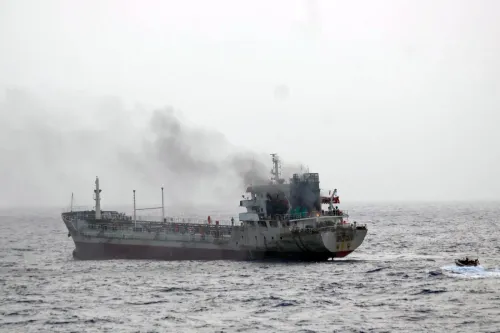
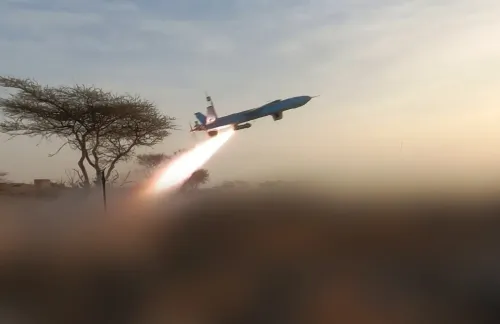
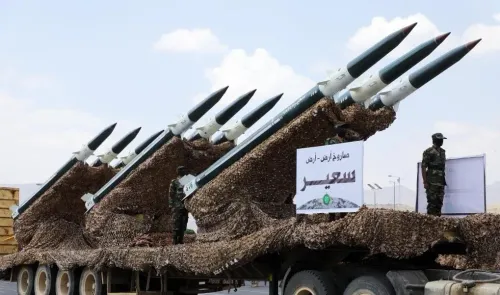
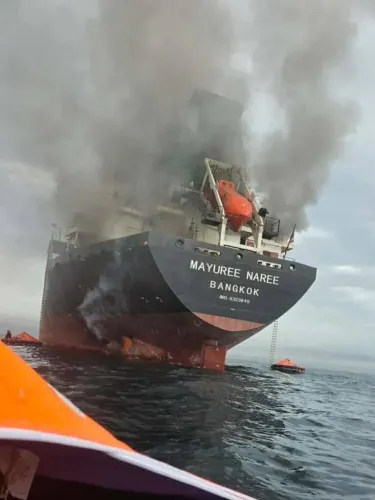
Yemen's Houthi group claimed on 23 July to have struck Saudi oil tankers ENCELIA and LAYLA in the Red Sea using ballistic missiles, cruise missiles, and drones.
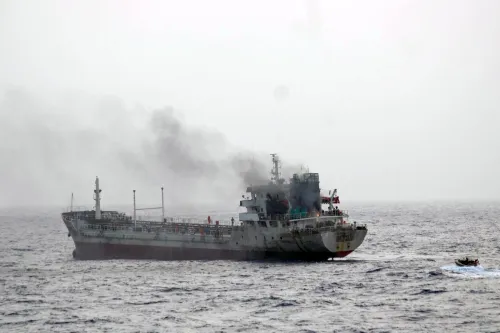
UKMTO confirmed a separate report of a tanker struck by an 'unknown projectile' about 70 nautical miles southwest of Al Shuqaiq, Saudi Arabia .
The strikes came two days after the Houthis announced an expanded maritime embargo on ships trading with Saudi ports .
The Houthis say the embargo is retaliation for the closure of Sanaa International Airport , which they attribute to Saudi-backed restrictions.
The claims could not be independently verified; Saudi Arabia had not commented as of the time of reporting.
The escalation raises fresh concerns about the durability of the 2022 UN truce and adds to risks across Red Sea commercial shipping routes.
Yemen's Houthi group claimed on Thursday, 23 July that its forces carried out a military operation targeting two Saudi oil tankers in the Red Sea, alleging the vessels had violated the group's recently imposed maritime embargo on ships calling at Saudi ports. The claims have not been independently verified, and Saudi Arabia had not issued an immediate response.
What the Houthis Said
Houthi military spokesman Yahya Sarea, speaking in a statement broadcast on the group's Al-Masirah television, said forces targeted the tankers — identified as ENCELIA and LAYLA — using 'ballistic and cruise missiles, as well as drones.' Sarea claimed the strikes caused fires to engulf both vessels and had 'successfully achieved their objectives.'
The statement did not specify the precise location of the strikes, provided no evidence of the alleged damage, and made no mention of casualties.
UKMTO Confirms Incident Involving One Tanker
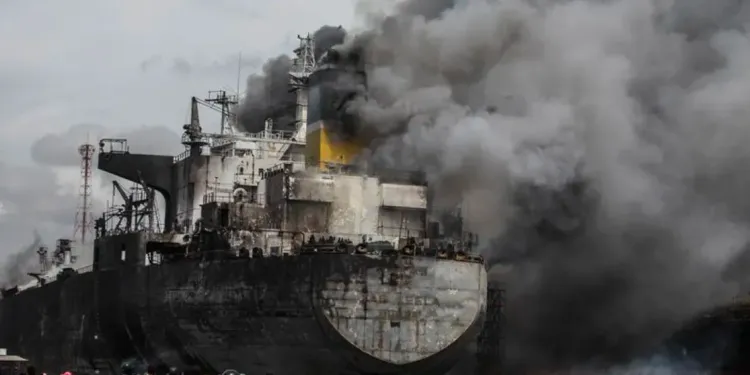
The United Kingdom Maritime Trade Operations (UKMTO) separately confirmed receiving a report of an incident involving a tanker approximately 70 nautical miles southwest of Al Shuqaiq, Saudi Arabia. In a warning posted on social media platform X, UKMTO said the vessel's master reported being struck by an 'unknown projectile,' igniting a fire on board that the crew was working to extinguish. UKMTO did not link the incident to the Houthi claim or identify the vessel by name.
The Embargo Behind the Strikes
The attack came just two days after the Houthis announced expanded maritime restrictions targeting vessels trading with Saudi ports, explicitly warning that ships violating the measure could become 'subject to targeting.' The group said the embargo was a direct response to the continued closure of Sanaa International Airport, for which it blamed Saudi Arabia's backing of restrictions on air traffic to Houthi-controlled territory.
Broader Context: Red Sea Under Sustained Threat
The Houthis have mounted a sustained campaign against commercial shipping since the onset of the Gaza war, deploying missiles, drones, and naval weapons against vessels they accused of links to Israel and the United States. The campaign has already forced major shipping companies to reroute vessels away from the Red Sea — a critical corridor for global trade and energy flows — adding significantly to freight costs and transit times.
This latest escalation also unfolds against the backdrop of heightened US-Iran tensions over control of the Strait of Hormuz, compounding risks across the broader region's maritime lanes.
Yemen's Conflict and What Comes Next
Yemen has been engulfed in civil war since late 2014, when the Houthis seized the capital Sanaa and much of northern Yemen, prompting a Saudi-led coalition to intervene in support of the internationally recognised Yemeni government in 2015. A UN-brokered truce in 2022 had raised hopes of de-escalation, but the latest strikes on Saudi tankers have fuelled concern that fragile progress may be unravelling.
With the Houthis signalling no intent to scale back their maritime campaign, shipping operators and regional governments face renewed pressure to assess risk across Red Sea routes in the days ahead.
Point of View
Suggesting a deliberate and sequenced strategy. The UKMTO confirmation of at least one vessel being struck lends credibility to what might otherwise be dismissed as propaganda. For global shipping, the Red Sea risk calculus has just worsened: the Houthis are now willing to strike any nationality of vessel they deem in violation of their self-declared blockade, with no independent mechanism to adjudicate those claims.
NationPress
21 Oct 2026
Frequently Asked Questions
What did the Houthis claim to have attacked in the Red Sea?
The Houthis claimed to have struck two Saudi oil tankers — identified as ENCELIA and LAYLA — using ballistic missiles, cruise missiles, and drones on 23 July. They alleged the vessels had violated the group's maritime embargo on ships calling at Saudi ports.
Has the Houthi attack on the Saudi tankers been independently confirmed?
The Houthi claims have not been independently verified. However, UKMTO separately confirmed receiving a report of a tanker struck by an 'unknown projectile' about 70 nautical miles southwest of Al Shuqaiq, Saudi Arabia. Saudi authorities had not commented as of the time of reporting.
Why are the Houthis targeting Saudi tankers?
The Houthis say the maritime embargo on Saudi-bound shipping is retaliation for the continued closure of Sanaa International Airport, which they blame on Saudi Arabia's backing of air traffic restrictions to Houthi-controlled areas. They declared the embargo two days before the strikes.
How does this fit into the broader Red Sea shipping crisis?
The Houthis have been attacking commercial vessels in the Red Sea since the start of the Gaza war, targeting ships they link to Israel and the United States. The extension of strikes to Saudi tankers represents a significant widening of their campaign, adding to existing pressure on global shipping routes and freight costs.
What is the current state of Yemen's conflict and the 2022 UN truce?
Yemen has been in civil war since 2014, when the Houthis seized Sanaa, prompting a Saudi-led coalition to intervene in 2015. A UN-brokered truce in 2022 had eased hostilities, but the latest tanker strikes have raised concern that de-escalation is unravelling.