Red Sea tanker Encelia attacked, catches fire 70 nautical miles off Saudi coast
Synopsis
Yemen's Houthi group has struck two Saudi oil tankers in the Red Sea using missiles and drones, setting the Encelia ablaze 70 nautical miles off the Saudi coast. With vessel traffic through both the Strait of Hormuz and the Bab el-Mandeb already falling sharply, this escalation could redraw global shipping routes and push freight costs higher.
Key Takeaways
Saudi-owned tanker Encelia attacked and set on fire in the southern Red Sea on 23 July ; all crew members confirmed safe.
Attack occurred 70 nautical miles ( 130 km ) southwest of Al Shuqaiq, Saudi Arabia , per UKMTO .
Yemen's Houthi group claimed strikes on two tankers — Encelia and Layla — using ballistic missiles, cruise missiles, and drones.
Houthis announced a maritime ban on Saudi-linked vessels two days before the attack.
Shipping analytics firm Kpler recorded sharp drops in vessel traffic through both the Strait of Hormuz and the Bab el-Mandeb Strait on Tuesday.
Kpler warned continued attacks could reshape shipping routes, raise freight costs, and keep energy market risk premiums elevated.
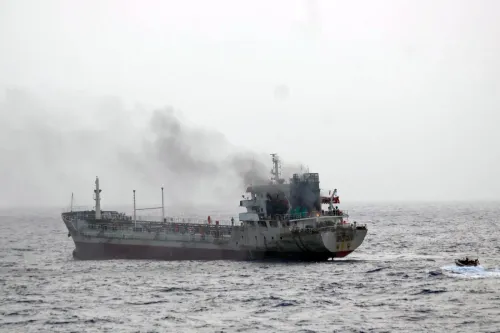
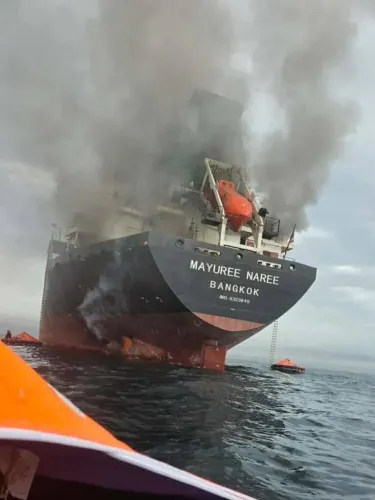
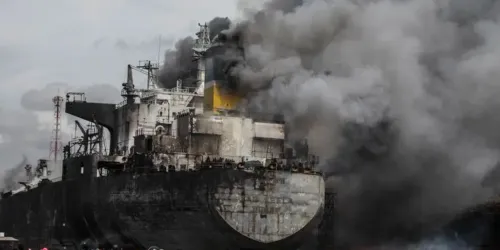
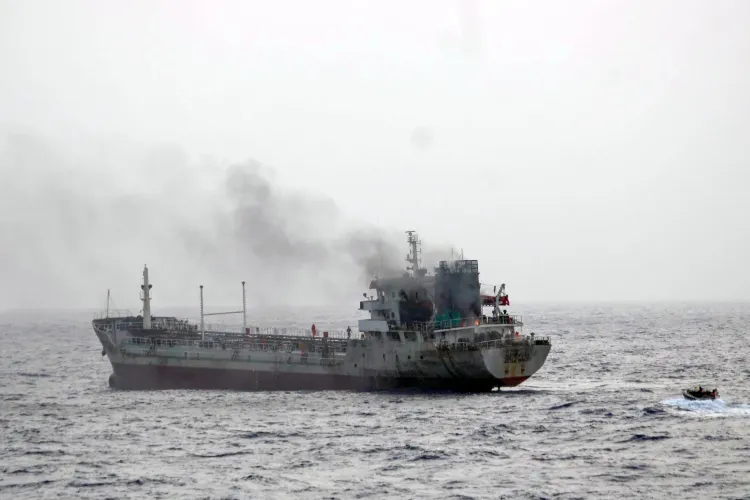
A tanker owned by a Saudi company, the Encelia, was attacked and caught fire while transiting the Red Sea on Thursday, 23 July, according to an official source at Saudi Arabia's Transport General Authority (TGA), as cited by the official Saudi Press Agency (SPA). The attack triggered a fire at the ship's bow, though all crew members aboard were confirmed safe.
What Happened and Where
According to a United Kingdom Maritime Trade Operations (UKMTO) advisory, the attack occurred approximately 70 nautical miles (130 km) southwest of Al Shuqaiq, Saudi Arabia, in the southern Red Sea. Relevant Saudi authorities moved swiftly to secure the vessel and its crew and to protect the marine environment, the TGA source said.
Houthi Claim and the Second Tanker
Yemen's Houthi group claimed responsibility in a statement aired on Thursday, saying it had struck two Saudi oil tankers — the Encelia and the Layla — using 'ballistic and cruise missiles, as well as drones.' The group alleged that both vessels had violated maritime restrictions it had announced just two days earlier, citing what it described as Saudi Arabia's long-running blockade on areas under its control. The Houthi claim could not be independently verified.
Escalating Threat to Red Sea Shipping
The attack intensifies already acute security concerns along the Red Sea corridor leading to the Bab el-Mandeb Strait — one of the world's most critical maritime chokepoints. Shipping analytics firm Kpler reported on Wednesday that vessel traffic through both the Strait of Hormuz and the Bab el-Mandeb Strait fell sharply on Tuesday as security conditions deteriorated. Kpler also documented several confirmed vessel U-turns near the Gulf of Aden following Houthi threats, indicating that operators were growing increasingly cautious.
Wider Economic and Geopolitical Impact
Kpler warned that sustained attacks around these two regional chokepoints could fundamentally reshape global shipping routes, push freight costs higher, and keep geopolitical risk premiums elevated in energy markets. Notably, this attack comes against a backdrop of already-strained maritime security in the region, where disruptions have periodically rippled into global oil and commodity prices. The Houthi maritime ban on Saudi-linked vessels, announced just days before the strike, signals a deliberate escalation rather than an opportunistic attack — raising the prospect of further incidents if the underlying political dispute remains unresolved.
Point of View
Which changes the risk calculus for every Saudi-linked vessel in the region. With Kpler already recording U-turns in the Gulf of Aden and traffic drops at both Hormuz and Bab el-Mandeb simultaneously, the threat is no longer localised. If insurers begin pricing both chokepoints as active war-risk zones together, the freight cost shock could rival the early-2024 Red Sea disruptions — and this time, there is no obvious diplomatic off-ramp in sight.
NationPress
21 Oct 2026
Frequently Asked Questions
What happened to the Saudi tanker Encelia in the Red Sea?
The Encelia, owned by a Saudi company, was attacked and caught fire in the southern Red Sea on 23 July, with the blaze breaking out at the ship's bow. All crew members were confirmed safe, and Saudi authorities moved to secure the vessel.
Who attacked the Encelia tanker and why?
Yemen's Houthi group claimed responsibility, saying it struck the Encelia and a second tanker, the Layla, using ballistic missiles, cruise missiles, and drones. The group alleged the vessels violated a maritime ban on Saudi-linked shipping it had announced two days earlier, citing what it described as a Saudi blockade on Houthi-controlled areas.
Where exactly did the Red Sea tanker attack occur?
According to a UKMTO advisory, the attack took place approximately 70 nautical miles (130 km) southwest of Al Shuqaiq, Saudi Arabia, in the southern Red Sea near the Bab el-Mandeb Strait.
How is the attack affecting global shipping?
Shipping analytics firm Kpler reported that vessel traffic through both the Strait of Hormuz and the Bab el-Mandeb Strait fell sharply on Tuesday as security conditions worsened. Multiple vessels were recorded making U-turns near the Gulf of Aden, and Kpler warned of higher freight costs and elevated geopolitical risk premiums in energy markets.
What is the Houthi maritime ban on Saudi vessels?
The Houthi group announced a ban on Saudi-linked vessels transiting waters under its influence two days before the 23 July attack, framing it as retaliation for what it called a Saudi blockade on Houthi-controlled areas of Yemen. The ban signals a deliberate escalation targeting Saudi commercial shipping in the Red Sea.