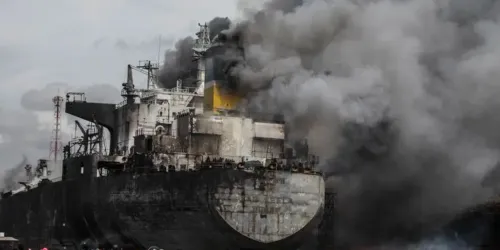
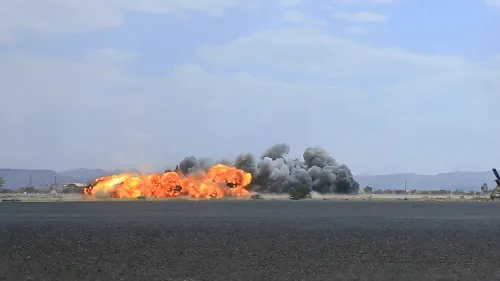
Red Sea tanker struck, set ablaze off Saudi coast; Houthis claim attack
Synopsis
A tanker ablaze in the southern Red Sea — with Houthis claiming simultaneous strikes on two Saudi oil tankers — signals a dangerous new chapter: a formal maritime ban on Saudi-linked vessels that could choke two of the world's most critical shipping corridors at once, lifting freight costs and energy risk premiums globally.
Key Takeaways
A tanker was struck by an unknown projectile and caught fire 70 nautical miles southwest of Al Shuqaiq, Saudi Arabia on 23 July .
The UKMTO confirmed the incident; no casualties or environmental damage were reported.
Yemen's Houthi group claimed a simultaneous military operation targeting two Saudi oil tankers in the Red Sea .
Houthis had declared a maritime ban on Saudi-linked vessels two days prior , citing a Saudi blockade on Houthi-controlled areas.
Shipping analytics firm Kpler recorded sharp drops in vessel traffic through both the Strait of Hormuz and the Bab el-Mandeb Strait on Tuesday.
Multiple vessel U-turns were confirmed near the Gulf of Aden , with Kpler warning of higher freight costs and elevated energy risk premiums.
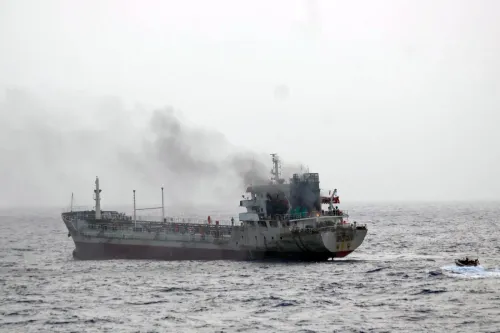
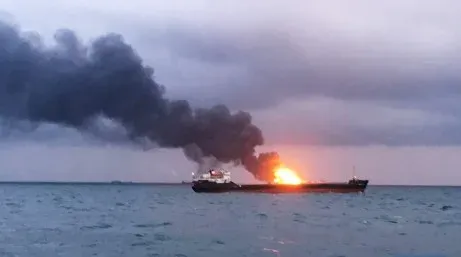
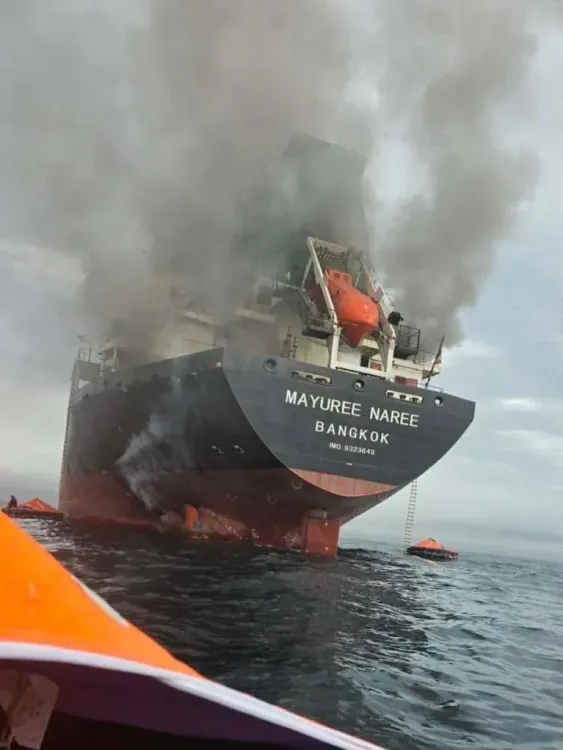
A commercial tanker caught fire in the southern Red Sea on Wednesday, 23 July after being hit by an unknown projectile approximately 70 nautical miles (130 km) southwest of Al Shuqaiq, Saudi Arabia, according to the United Kingdom Maritime Trade Operations (UKMTO). The crew was reported to be actively fighting the blaze, with no casualties or environmental damage confirmed at the time of the advisory.
What Happened
The UKMTO issued an advisory confirming the strike and subsequent fire, stating that an investigation was underway. The agency reported no casualties among the crew and no immediate environmental impact from the blaze.
The attack occurred around the same time that Yemen's Houthi group publicly claimed it had conducted a military operation targeting two Saudi oil tankers in the Red Sea. The Houthis had announced a maritime ban on Saudi-linked vessels two days earlier, citing what they described as Saudi Arabia's long-running blockade on areas under their control.
Growing Threat to Red Sea Shipping
The incident underscores deepening security concerns along the Red Sea corridor leading to the Bab el-Mandeb Strait — one of the world's most critical maritime chokepoints. Disruptions already affecting the Strait of Hormuz now risk spreading to this second vital passage, compounding pressure on global shipping networks.
Shipping analytics firm Kpler reported that vessel traffic through both the Strait of Hormuz and the Bab el-Mandeb Strait fell sharply on Tuesday as security conditions deteriorated. The firm also documented several confirmed vessel U-turns near the Gulf of Aden following Houthi threats against Saudi-linked shipping, indicating that operators were exercising heightened caution.
Economic and Geopolitical Fallout
Kpler warned that sustained attacks around the two chokepoints could fundamentally reshape global shipping routes, drive up freight costs, and keep geopolitical risk premiums in energy markets elevated for an extended period. This is not the first such warning — the Red Sea has seen recurring Houthi-linked maritime threats since late 2023, forcing major carriers to reroute vessels around the Cape of Good Hope, adding days and significant cost to voyages.
Notably, the Houthi announcement of a formal maritime ban on Saudi-linked vessels marks an escalation beyond opportunistic strikes, suggesting a more structured campaign targeting Saudi Arabia's commercial interests at sea.
What Comes Next
Maritime authorities and shipping operators are on heightened alert across the southern Red Sea and Gulf of Aden. The UKMTO investigation is ongoing, and further advisories are expected. Energy markets will be watching closely, given that any prolonged disruption to either the Bab el-Mandeb or Hormuz corridors carries direct implications for global crude and LNG flows.
Point of View
Not a reactive one — it transforms sporadic strikes into a declared blockade campaign. What makes this moment particularly consequential is the simultaneous pressure on both the Bab el-Mandeb and the Strait of Hormuz: two chokepoints handling a combined share of global energy trade that no insurer or shipper can easily route around. Mainstream coverage tends to treat each Red Sea incident as isolated; the Kpler data on U-turns and traffic drops suggests the cumulative deterrent effect is already reshaping operator behaviour. The real question is whether Western naval coalitions in the region have the mandate and capacity to escort Saudi-linked commercial traffic — and whether Riyadh will absorb the cost quietly or seek to escalate in return.
NationPress
21 Oct 2026
Frequently Asked Questions
What happened to the tanker in the Red Sea on 23 July?
A commercial tanker was struck by an unknown projectile and caught fire approximately 70 nautical miles southwest of Al Shuqaiq, Saudi Arabia, in the southern Red Sea. The UKMTO confirmed the incident and said the crew was fighting the blaze, with no casualties or environmental damage reported.
Did the Houthis claim responsibility for the tanker attack?
Yemen's Houthi group claimed it had carried out a military operation targeting two Saudi oil tankers in the Red Sea around the same time the fire was reported. The group had announced a formal maritime ban on Saudi-linked vessels two days earlier.
Why have the Houthis imposed a maritime ban on Saudi vessels?
The Houthis cited what they described as Saudi Arabia's long-running blockade on areas under their control as justification for the ban. The formal ban represents an escalation from earlier opportunistic strikes to a declared campaign against Saudi commercial shipping.
How has shipping traffic been affected in the Red Sea and Strait of Hormuz?
Shipping analytics firm Kpler reported a sharp fall in vessel traffic through both the Strait of Hormuz and the Bab el-Mandeb Strait on Tuesday as security conditions deteriorated. Several vessels were also confirmed to have turned back near the Gulf of Aden following Houthi threats.
What are the broader economic risks of these Red Sea attacks?
Kpler has warned that sustained attacks around the Bab el-Mandeb and Strait of Hormuz could reshape global shipping routes, raise freight costs, and keep geopolitical risk premiums in energy markets elevated. Both chokepoints handle significant volumes of global crude and LNG trade.