Houthis claim ballistic missile strike on Saudi oil tanker in Gulf of Aden

Synopsis
The Houthis struck two Saudi oil tankers in a single day — one in the Gulf of Aden, one in the northern Red Sea near Yanbu — escalating their declared 'blockade-for-blockade' campaign against Saudi Arabia. With the Saudi-led coalition resuming airstrikes and no Saudi comment on either claim, the maritime war off Yemen's coast is intensifying on multiple fronts simultaneously.
Key Takeaways
The Houthi group claimed two separate ballistic missile strikes on Saudi oil tankers on 6 August .
Tanker 'Daisy' was reportedly struck in the Gulf of Aden and 'forced to turn back,' according to Houthi spokesperson Yahya Sarea .
Tanker 'Wafa' was claimed to have been hit by several missiles off the Saudi port city of Yanbu in the northern Red Sea .
The UKMTO confirmed a vessel reported a loud explosion in the Gulf of Aden; all crew were safe.
Saudi authorities issued no immediate comment; neither claim could be independently verified.
The attacks are part of a 'blockade-for-blockade' policy announced by the Houthis on 20 July , targeting Saudi-linked shipping across the Red Sea.
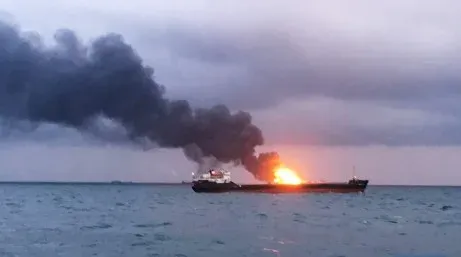
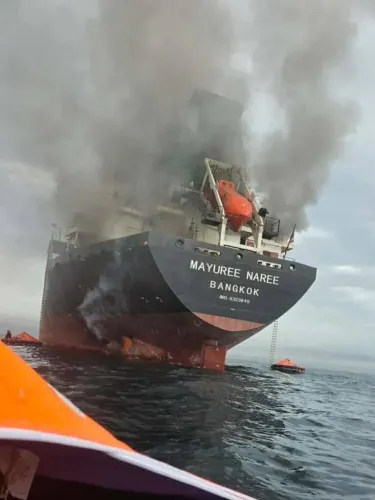
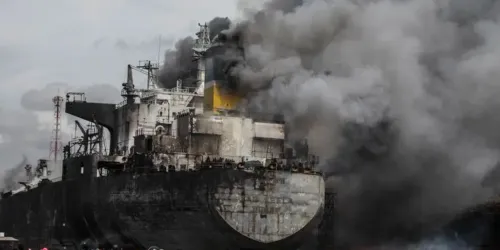
Yemen's Houthi group on Wednesday, 6 August claimed it had struck a Saudi oil tanker with a ballistic missile in the Gulf of Aden, hours after asserting a separate missile attack on another Saudi vessel in the northern Red Sea. The twin claims, which could not be independently verified, mark a significant escalation in the group's declared maritime campaign against Saudi Arabia.
The Gulf of Aden Strike
Houthi military spokesperson Yahya Sarea said in a statement posted on social media platform X that the tanker, identified as 'Daisy,' was hit by a ballistic missile and 'forced to turn back.' Sarea framed the attack as part of the group's 'blockade-for-blockade' policy — a declared maritime blockade targeting Saudi oil shipping in response to what the Houthis describe as a Saudi blockade on Houthi-controlled areas of Yemen.
Separately, the United Kingdom Maritime Trade Operations (UKMTO) confirmed that a tanker reported hearing a loud explosion nearby while transiting the Gulf of Aden off Yemen's southern coast on Wednesday. The UKMTO added that all crew members were safe.
Earlier Attack on Tanker 'Wafa' Near Yanbu
Earlier the same day, Sarea claimed Houthi forces had targeted the Saudi oil tanker 'Wafa' with several ballistic missiles off the Saudi port city of Yanbu in the northern Red Sea. He described the strike as 'precise,' without providing further details. Saudi authorities had not issued any immediate comment on either claim as of the time of reporting.
The 'Blockade-for-Blockade' Policy
The Houthis formally announced a maritime ban on Saudi-linked shipping in the Red Sea on 20 July, citing what they allege is a Saudi blockade on Houthi-held areas. Sarea stated that Houthi forces are 'closely monitoring' Saudi oil tankers and will block their passage through both the southern and northern Red Sea until those restrictions are lifted. The group has also claimed multiple attacks on Saudi-linked vessels, energy infrastructure, and airports in recent weeks.
In response, the Saudi-led coalition has reportedly resumed limited airstrikes on key Houthi military targets inside Yemen.
Broader Context: A Decade of Conflict
The latest escalation is rooted in a conflict that has gripped Yemen since late 2014, when the Houthis seized much of northern Yemen, including the capital Sanaa. A Saudi-led coalition intervened in 2015 in support of the internationally recognised Yemeni government, setting off one of the region's most protracted wars. The Red Sea and Gulf of Aden — critical arteries for global energy trade — have increasingly become frontlines in that conflict.
With the Houthis now targeting Saudi oil tankers on two separate waterways in a single day, the maritime dimension of the Yemen war appears to be entering a more aggressive phase, with potential implications for regional shipping and energy markets.
Point of View
Not just rhetoric. The 'blockade-for-blockade' framing is strategically calculated: it repackages an offensive maritime campaign as a defensive response, complicating international condemnation. Saudi Arabia's silence on both incidents is notable; acknowledging hits on its tankers would expose vulnerabilities in a critical export corridor. The broader risk is that escalation on the maritime front could draw in third parties — particularly given UKMTO's involvement — and push insurance premiums and routing decisions for global oil shipments through a volatile chokepoint.
NationPress
20 Sept 2026
Frequently Asked Questions
What did the Houthis claim on 6 August regarding Saudi oil tankers?
The Houthis claimed two separate ballistic missile strikes on Saudi oil tankers on 6 August — one on the tanker 'Daisy' in the Gulf of Aden, and one on the tanker 'Wafa' near the Saudi port city of Yanbu in the northern Red Sea. Neither claim could be independently verified, and Saudi authorities had not commented as of the time of reporting.
What is the Houthi 'blockade-for-blockade' policy?
The 'blockade-for-blockade' policy is a Houthi declaration, announced on 20 July, to block Saudi-linked oil tankers from transiting the Red Sea and Gulf of Aden. The Houthis say the policy is a direct response to what they allege is a Saudi blockade on Houthi-controlled areas of Yemen.
Was any crew harmed in the Gulf of Aden incident?
According to the United Kingdom Maritime Trade Operations (UKMTO), a tanker in the Gulf of Aden reported hearing a loud explosion nearby on Wednesday, but all crew members were confirmed safe. The UKMTO did not confirm a direct hit.
How does this fit into the broader Yemen conflict?
Yemen has been engulfed in conflict since late 2014, when the Houthis seized northern Yemen and the capital Sanaa, prompting a Saudi-led coalition to intervene in 2015. The Red Sea and Gulf of Aden have increasingly become active theatres of that conflict, with the Houthis targeting Saudi-linked shipping while the Saudi-led coalition has resumed limited airstrikes on Houthi military positions.
What are the implications for shipping in the Red Sea and Gulf of Aden?
The Houthis have stated they are monitoring Saudi oil tankers across both the northern and southern Red Sea and will continue to block their passage. Repeated attacks in these waterways — key corridors for global energy trade — risk raising insurance costs and forcing rerouting decisions for international shipping operators.