Tanker explosion reported off Yemen's Aden, crew safe: UKMTO
Synopsis
A tanker heard a loud explosion near its hull in the Gulf of Aden on 6 August, with residents in a Houthi-controlled area separately reporting a missile launch toward the same waters. No claim of responsibility has emerged, but the incident fits a widening Houthi maritime offensive that has now stretched from the Red Sea to the approaches of the Strait of Hormuz.
Key Takeaways
A tanker reported a loud explosion 95 nautical miles southeast of Aden on 6 August ; all crew are confirmed safe.
The UKMTO disclosed the incident via X , urging vessels in the area to exercise caution.
Residents in Mukayras, al-Bayda province reported a Houthi missile launch toward the Gulf of Aden, though a link to the tanker incident is unconfirmed.
On Monday , a separate cargo vessel was struck by an unknown projectile near Al Khasab, Oman , close to the Strait of Hormuz .
On 20 July , the Houthis announced a maritime ban on Saudi-linked shipping in the Red Sea, and have since claimed multiple attacks on Saudi-linked targets.
Yemen has been in conflict since 2014 , with a Saudi-led coalition intervening in 2015 .
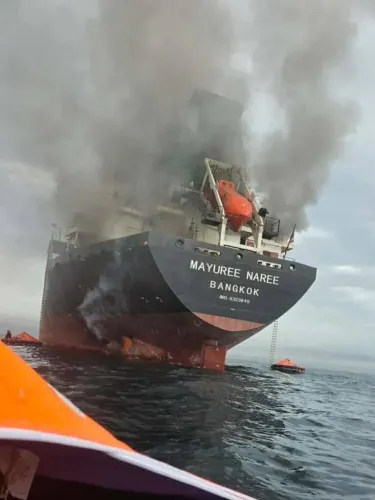
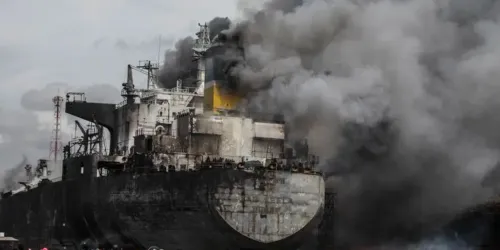
A tanker reported hearing a loud explosion in close proximity to its vessel while transiting the Gulf of Aden off Yemen's southern coast on 6 August, the United Kingdom Maritime Trade Operations (UKMTO) confirmed, adding that all crew members are safe. The incident occurred approximately 95 nautical miles southeast of Aden, marking the latest in a series of maritime security incidents amid a renewed Houthi campaign targeting regional shipping.
What UKMTO Reported
The UKMTO disclosed the incident via its official post on social media platform X on Wednesday local time. 'The Master of a tanker reported hearing a loud explosion in close proximity to the vessel,' the agency stated, confirming that all crew are safe. No structural damage to the vessel was immediately reported.
Possible Houthi Missile Link
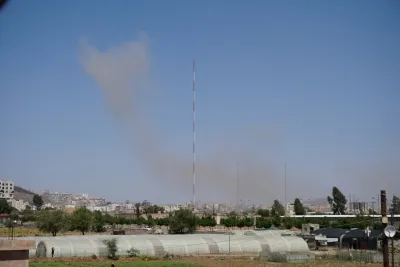
Residents in Mukayras, a Houthi-controlled locality in central Yemen's al-Bayda province, told reporters they had received information indicating the Houthis had launched a missile from the area toward the Gulf of Aden. It remains unclear whether the missile launch and the tanker explosion are connected. The Houthis had not immediately claimed responsibility for the incident.
A Pattern of Maritime Attacks
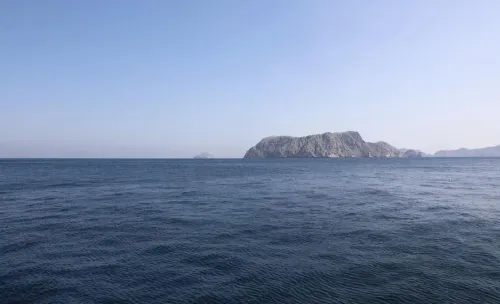
This incident follows a separate attack reported on Monday, when a cargo vessel said it had been struck by an unknown projectile in waters approximately 20 nautical miles northeast of Al Khasab, Oman, near the eastern entrance to the Strait of Hormuz. The vessel reportedly communicated the strike via VHF radio. The UKMTO subsequently issued an advisory urging vessels transiting the area to exercise caution and report any suspicious activity.
Notably, on 20 July, the Houthis announced a maritime ban on Saudi-linked shipping in the Red Sea, citing what they described as an alleged Saudi blockade on Houthi-held areas. The group has since claimed multiple attacks on Saudi-linked vessels, energy infrastructure, and airports. In response, the Saudi-led coalition has resumed airstrikes on key Houthi military targets across Yemen.
Broader Context: Yemen's Decade of Conflict
Yemen has been engulfed in conflict since late 2014, when the Houthis seized large swaths of northern Yemen, including the capital Sanaa. A Saudi-led coalition intervened in 2015 in support of the internationally recognised government, triggering one of the world's most prolonged humanitarian crises. The renewed maritime campaign signals a fresh escalation front, threatening one of the world's most critical commercial shipping corridors.
With no claim of responsibility and the connection between the missile report and the tanker explosion unverified, maritime agencies are likely to heighten advisories across the region in the coming days.
Point of View
One near the Strait of Hormuz — suggest the Houthi maritime campaign is no longer confined to the Red Sea chokepoint. If the group is now ranging into Hormuz approaches, the risk calculus for global energy shipping changes materially: roughly 20% of the world's oil transits that strait. The absence of an immediate claim is itself notable; in past high-profile strikes, Houthi acknowledgment has been near-instant. That ambiguity may be deliberate, giving the group deniability while sustaining psychological pressure on shipping operators. The UKMTO's cautious language — 'explosion in close proximity' rather than a confirmed strike — reflects how difficult attribution remains in these waters, and how quickly unverified incident reports can move insurance premiums and rerouting decisions.
NationPress
20 Sept 2026
Frequently Asked Questions
What happened to the tanker in the Gulf of Aden on 6 August?
A tanker reported hearing a loud explosion close to its vessel while sailing approximately 95 nautical miles southeast of Aden, Yemen. The UKMTO confirmed the incident and stated that all crew members are safe.
Did the Houthis claim responsibility for the explosion?
No. As of the latest reports, the Houthis had not immediately claimed responsibility for the Gulf of Aden explosion. Residents in Houthi-controlled Mukayras, al-Bayda province, reported a missile launch toward the Gulf of Aden, but whether it was connected to the tanker incident remains unconfirmed.
What was the separate incident near Oman earlier this week?
On Monday, a cargo vessel reported being struck by an unknown projectile in waters about 20 nautical miles northeast of Al Khasab, Oman, near the eastern entrance to the Strait of Hormuz. The vessel communicated the strike via VHF radio, and the UKMTO issued a caution advisory for vessels in the area.
What is the Houthi maritime ban announced on 20 July?
On 20 July, the Houthis declared a maritime ban on Saudi-linked shipping in the Red Sea, citing what they called an alleged Saudi blockade of Houthi-held areas in Yemen. The group has since claimed multiple attacks on Saudi-linked vessels, energy sites, and airports.
Why is the Gulf of Aden strategically significant?
The Gulf of Aden is one of the world's busiest commercial shipping corridors, connecting the Red Sea to the Arabian Sea and providing a critical route for global trade and energy exports. Attacks in this zone directly threaten supply chains and can trigger rerouting, higher insurance premiums, and energy price volatility.