Houthis report airstrikes on Red Sea oil port, Saada telecom facility in Yemen
Synopsis
Houthi-run media reported airstrikes on Ras Isa, Yemen's key Red Sea oil terminal in Hodeidah, and a telecom facility near Saada on 2 November — the latest flare-up in a conflict now spanning over a decade. Houthi spokesman Yahya Sarea claimed the total strike count since the latest escalation reached 3,830, figures that remain unverified.
Key Takeaways
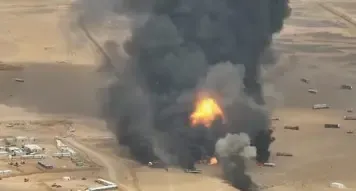
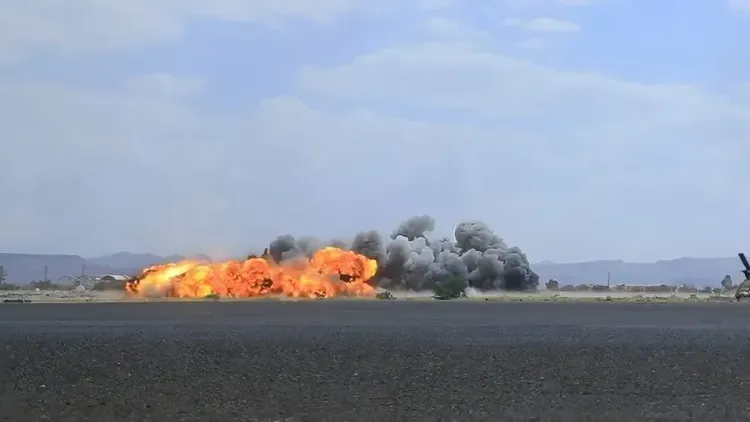
Houthi-run al-Masirah TV reported airstrikes on Ras Isa port , a major oil terminal on the Red Sea coast in Hodeidah , on 2 November 2026 .
A port berth and a commercial vessel docked at the terminal were reportedly struck; no casualties were immediately confirmed.
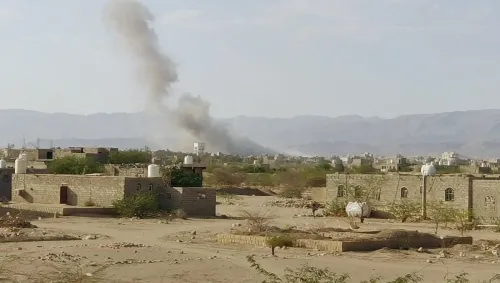
A separate strike hit a telecommunications facility southeast of Saada city , also with no immediate casualties reported.
Houthi military spokesman Yahya Sarea claimed 75 air and missile strikes across 8 provinces in the past 24 hours , putting the total since the latest escalation at 3,830 — figures unverified.
The Saudi-led coalition said it intercepted a drone and a ballistic missile launched by the Houthis toward southern Saudi Arabia.
The Yemen conflict dates to late 2014 ; the Saudi-led coalition intervened in 2015 .
Yemen's Houthi group has reported that a series of airstrikes struck Ras Isa port, a key oil terminal on the Red Sea coast in the western province of Hodeidah, on 2 November 2026. The strikes reportedly hit a port berth and a commercial vessel docked at the terminal, according to Houthi-run al-Masirah TV.
What Was Targeted
Al-Masirah TV attributed the strikes on Ras Isa port to what the Houthi group described as 'Saudi aggression.' No immediate information was provided on casualties or the extent of damage to the port facility or the vessel. A separate airstrike was also reported on a telecommunications facility southeast of Saada city, the capital of the Houthis' northern stronghold of Saada province, with that attack also attributed to Saudi warplanes. No casualties were immediately reported in connection with either strike.
Houthi Military Claims
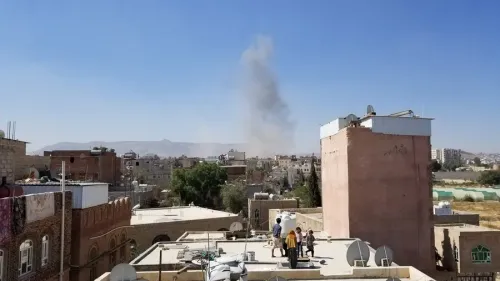
Houthi military spokesman Yahya Sarea said in a statement posted on social media platform X on Sunday that 75 air and missile strikes had hit the provinces of Saada, Taiz, Amran, Ibb, Dhamar, Lahj, Hodeidah, and Al-Jawf over the preceding 24 hours. Sarea claimed the attacks caused civilian casualties and said the total number of air and missile strikes since the latest escalation began had reached 3,830. These figures could not be independently verified.
Saudi-Led Coalition Response
Separately, the Saudi-led coalition announced that it had intercepted and destroyed a drone and a ballistic missile launched by the Houthis toward the kingdom's southern region. The coalition's statement underscored the ongoing cross-border exchange of fire that has intensified in recent weeks, with Saudi strikes hitting Houthi-held areas in Yemen and the Houthis launching missiles and drones in the direction of Saudi Arabia.
Background: Years of Conflict
Yemen has been embroiled in conflict since late 2014, when the Houthis seized the capital Sanaa and much of northern Yemen. The Saudi-led coalition intervened in 2015 in support of the internationally recognised Yemeni government. The targeting of Ras Isa port is particularly significant given its role as a critical energy and logistics hub — strikes on such infrastructure have historically disrupted fuel and food supplies to a population already facing a severe humanitarian crisis. This is the latest in a pattern of escalating hostilities that has seen both sides trade strikes with increasing frequency.
All casualty figures and strike tallies cited by the Houthis are attributed to the group's own statements and could not be independently confirmed.
Point of View
However disputed in attribution, fits a well-established pattern: energy infrastructure in Hodeidah has been a recurring flashpoint precisely because it is a chokepoint for Yemen's already-battered economy. What the casualty silence obscures is the cumulative toll — each strike on port and telecom infrastructure chips away at civilian supply chains that the UN has repeatedly warned are near collapse. The Houthi claim of 3,830 total strikes is unverifiable but signals a deliberate narrative strategy: building a civilian-harm ledger for diplomatic leverage. Saudi Arabia's simultaneous interception of a drone and ballistic missile confirms neither side is de-escalating, and without a renewed ceasefire framework, this cycle of infrastructure warfare is likely to deepen.
NationPress
2 Nov 2026
Frequently Asked Questions
What was hit in the latest airstrikes in Yemen?
According to Houthi-run al-Masirah TV, airstrikes struck Ras Isa port — a key oil terminal on the Red Sea coast in Hodeidah province — hitting a port berth and a commercial vessel. A separate strike also hit a telecommunications facility southeast of Saada city.
Who carried out the airstrikes on Ras Isa port?
The Houthi group attributed the strikes to what it called 'Saudi aggression,' specifically Saudi warplanes. The Saudi-led coalition had not independently confirmed responsibility for the strikes at the time of reporting.
Were there casualties in the Yemen airstrikes on 2 November?
No casualties were immediately reported in connection with either the Ras Isa port strikes or the Saada telecommunications facility attack. Houthi spokesman Yahya Sarea claimed civilian casualties from a broader wave of 75 strikes across eight provinces, but those figures could not be independently verified.
How significant is Ras Isa port to Yemen?
Ras Isa is one of Yemen's primary oil export terminals and a critical logistics hub on the Red Sea. Damage to the facility can disrupt fuel supplies and revenue flows in a country already experiencing one of the world's worst humanitarian crises.
What is the background to the Yemen conflict?
The conflict began in late 2014 when the Houthis seized the capital Sanaa and much of northern Yemen. The Saudi-led coalition intervened in March 2015 in support of the internationally recognised Yemeni government, and hostilities have continued — with periodic escalations — ever since.