Hindu University of America 2026 event: Building confident Hindus in the US
Synopsis
At HUA Samvāda 2026 in Washington, the Hindu University of America announced it has filed for accreditation with the Higher Learning Commission — a landmark for the 32-year-old institution. Panelists argued that educating Hindu parents is the key to transmitting faith and identity to a second generation that demands explanations, not just rituals.
Key Takeaways
HUA Samvāda 2026 was held in Washington on 7 June 2026 , focusing on building confident Hindu identity in the US diaspora.
HUA president Kalyan Viswanathan announced the university has submitted its accreditation application to the Higher Learning Commission .
Panelists — including a Maryland -based immigration attorney and a retired World Bank professional — described HUA's courses as intellectually transformative.
A key theme: educating Hindu parents is critical to transmitting faith and identity to second-generation Indian Americans.
Hindu University of America was founded in 1993 and offers degree, certificate, and continuing education programmes in Hindu traditions, philosophy, Sanskrit, and yoga.
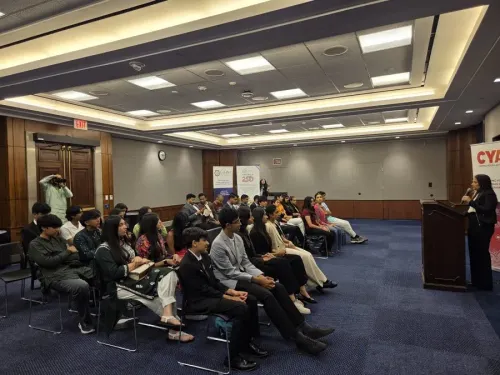
The Hindu University of America (HUA) hosted its annual HUA Samvāda 2026 event in Washington on 7 June 2026, bringing together students, educators, and Indian American community leaders to discuss how deeper engagement with Hindu philosophy can help diaspora members move beyond ritual practice toward an informed, confident articulation of their faith.
Key Developments
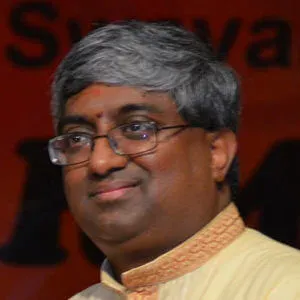
HUA president Kalyan Viswanathan delivered the keynote address, outlining the university's academic growth and announcing a significant institutional milestone. 'I am very, very pleased to share with all of you that we just submitted our application for accreditation with the Higher Learning Commission last night,' he told attendees. The accreditation bid marks a pivotal step for the 32-year-old institution, founded in 1993 as a private university dedicated to Hindu traditions, philosophy, Sanskrit, yoga, and related disciplines.
A panel discussion titled 'From Practice to Understanding to Articulation: How HUA Nurtures Confident Hindus' followed the keynote. The session was moderated by Dr Archana Shyamsunder and included HUA students Muktha Tyagarajan, Varadarajan Atur, and Aparna Dave.
What Panelists Said
Shyamsunder observed that many Hindus engage in rituals and devotional practices without always understanding their deeper significance. She said HUA gives students 'the opportunity to study into knowledge and traditions in a serious, authentic' manner, helping them grasp 'the why behind our practices.'
Tyagarajan, who has completed nearly 20 courses at the university, described her academic journey as transformative. 'There was this great opportunity, go back and learn everything, relearn everything, and now ask all those questions that needed to be asked,' she said.
Dave, an immigration attorney based in Maryland, said her studies revealed dimensions of Hindu thought she had not previously encountered. 'There is so much philosophy, there is so much knowledge, there is so much of intellectual discussions,' she said, adding that the coursework helped her view Hindu traditions through a broader intellectual lens.
Atur, a retired World Bank professional, said HUA provided 'a dispassionate and a historical perspective of understanding of dharma', helping students combine intellectual inquiry with personal faith.
The Challenge of Intergenerational Transmission
A central theme of the evening was the difficulty of passing Hindu knowledge to younger generations growing up in the United States. Tyagarajan argued that educating parents is critical because children typically look to them for answers about culture, faith, and identity. 'Continuing the education, Hindu education for the parent is very, very important,' she said.
Dave echoed this, noting that many second-generation Indian American children seek explanations rather than instructions. 'Unless we ourselves get educated and we understand what Hinduism is, it's no way we can enlighten the second generation,' she said.
What HUA Aims to Build
Viswanathan argued that Hindus remain underrepresented in humanities and social science disciplines and called for greater participation in academic and cultural institutions. He said HUA aims to prepare future educators, scholars, community leaders, and advocates who can engage confidently with questions about Hindu traditions and civilisation.
Tyagarajan offered her own definition of the event's central theme: 'A confident Hindu knows his dharma, knows dharma, and has the clarity of vision of what he she should do and the integrity to follow through on it.'
With its accreditation application now filed, HUA's next phase — and its broader influence on how Hindu identity is understood and taught in the United States — will depend on how that process unfolds in the months ahead.
Point of View
Yet it risks being overshadowed by the identity-building narrative. Formal accreditation would transform HUA from a community institution into one whose degrees carry mainstream academic weight — a shift that could either broaden its reach or dilute the very distinctiveness that draws its current students. The intergenerational transmission argument is well-worn in diaspora discourse, but the panel's framing — that educating parents is the lever — is a sharper and more actionable claim than the usual 'teach children in Sunday school' approach. Whether HUA can scale that model while navigating a rigorous accreditation process is the real story to watch.
NationPress
21 Oct 2026
Frequently Asked Questions
What is the Hindu University of America (HUA)?
The Hindu University of America is a private institution founded in 1993 and dedicated to the study of Hindu traditions, philosophy, Sanskrit, yoga, and related disciplines. It offers degree, certificate, and continuing education programmes to students in the United States and internationally.
What happened at HUA Samvāda 2026?
HUA Samvāda 2026 was held in Washington on 7 June 2026, featuring a keynote by HUA president Kalyan Viswanathan and a panel discussion on how the university nurtures confident Hindus in the US diaspora. The event brought together students, educators, and Indian American community leaders.
Has HUA applied for academic accreditation?
Yes. HUA president Kalyan Viswanathan announced at the event that the university had just submitted its accreditation application to the Higher Learning Commission. He described it as a major milestone for the institution.
Why is Hindu education considered important for the Indian diaspora in the US?
Panelists at the event argued that many Hindus practise rituals without understanding their deeper significance, and that second-generation Indian Americans seek explanations rather than instructions. Educating parents, they said, is critical to passing on Hindu knowledge, culture, and identity to younger generations.
Who participated in the HUA Samvāda 2026 panel discussion?
The panel was moderated by Dr Archana Shyamsunder and included HUA students Muktha Tyagarajan, Varadarajan Atur — a retired World Bank professional — and Aparna Dave, an immigration attorney based in Maryland.