IMF sees India powering next wave of global growth, Clarke says
Synopsis
The IMF's Deputy Managing Director has called India the world's fastest-growing major economy and a potential engine of the next global growth wave — after a five-day tour that included top-level meetings with the Finance Minister, RBI Governor, and NITI Aayog. The endorsement lands at a moment of heightened global uncertainty, giving India's reform narrative a significant multilateral stamp of approval.
Key Takeaways
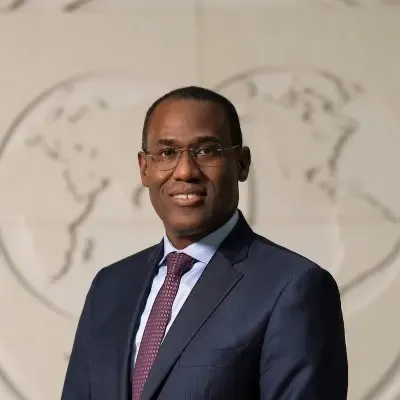
IMF Deputy Managing Director Nigel Clarke said India has the potential to 'power the next wave of global growth' after a five-day visit to India.
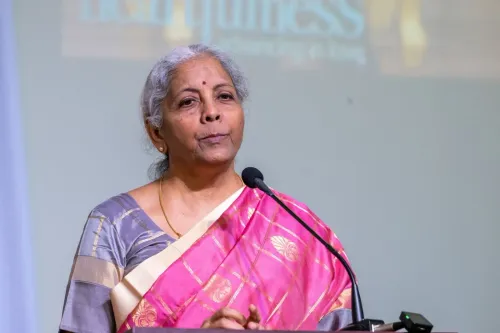
Clarke met Finance Minister Nirmala Sitharaman , RBI Governor Sanjay Malhotra , and NITI Aayog Vice Chairman Ashok Kumar Lahiri .
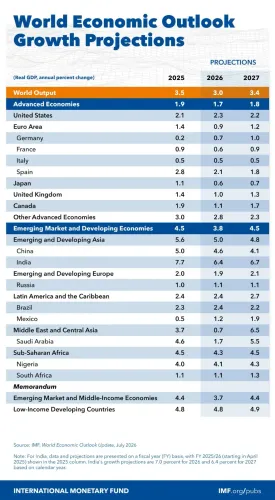
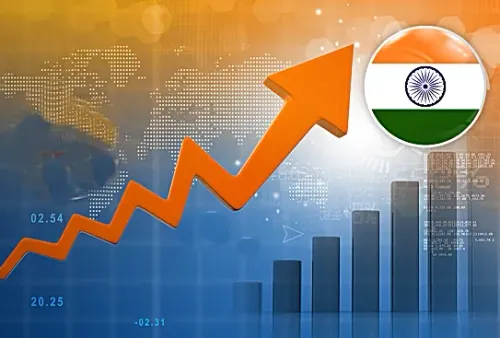
He described India as the world's fastest-growing major economy , supported by strong fundamentals and sound policy frameworks.
Discussions covered India's economic outlook, global risks, inflation, and reforms needed for sustainable and inclusive growth .
Clarke highlighted innovation , digital transformation , and advanced manufacturing as key drivers of India's competitiveness.
He also commended India's support for multilateralism and its assistance to other countries in the region.
IMF Deputy Managing Director Nigel Clarke has described India as the world's fastest-growing major economy and a central engine of international economic expansion, saying the country has the potential to power the next wave of global growth. Clarke made the assessment after completing a five-day visit to India that included meetings in New Delhi, Mumbai, and Chennai.
What Clarke Said
'India has the potential to power the next wave of global growth, and the IMF remains a close partner in supporting the country on this journey,' Clarke said in a statement issued from Washington. He described India's trajectory as underpinned by 'strong fundamentals and sound policy frameworks,' and called its private sector dynamism, talent pool, and technological capabilities particularly impressive.
Key Meetings and Discussions
It was Clarke's first visit to India in his capacity as IMF Deputy Managing Director. He held talks with Finance and Corporate Affairs Minister Nirmala Sitharaman, Reserve Bank of India (RBI) Governor Sanjay Malhotra, and NITI Aayog Vice Chairman Ashok Kumar Lahiri. Clarke thanked all three officials for their 'warm hospitality and constructive discussions.'
The conversations covered India's economic outlook, shifts in the global environment, and measures needed to sustain inclusive growth. 'Against a backdrop of heightened global uncertainty and evolving risks, preserving macroeconomic stability and resilience remains essential,' Clarke said.
Focus on Innovation and Digital Transformation
Clarke also engaged with Indian business leaders during the visit, expressing appreciation for what he called the country's 'rapidly evolving technological and manufacturing capabilities.' He highlighted innovation, digital transformation, advanced manufacturing, and wider technology adoption as critical drivers of productivity and competitiveness. 'Our exchanges highlighted how innovation, digital transformation, advanced manufacturing, and technology adoption can boost productivity, strengthen competitiveness, and support higher-value activities,' he said.
India's Role in Global Multilateralism
Beyond bilateral economic matters, Clarke also thanked the Indian government for its support of multilateralism and its role in assisting other countries in the region — a nod to India's growing influence in shaping international economic governance. This comes amid broader global uncertainty, with trade tensions and uneven recoveries across major economies putting a premium on stable, reform-oriented growth anchors like India.
What Comes Next
The IMF's endorsement reinforces India's positioning ahead of key multilateral engagements and as it continues to pursue structural reforms aimed at lifting productivity over the medium term. Analysts will watch whether this high-level engagement translates into more granular IMF technical support for India's reform agenda, particularly on fiscal consolidation and financial sector resilience.
Point of View
But they also carry a ceiling — the Fund has consistently praised India's fundamentals while quietly flagging fiscal consolidation gaps and financial sector vulnerabilities in its Article IV consultations. Clarke's remarks are notably effusive for what was, in diplomatic terms, a courtesy visit. The real signal to watch is whether this translates into upgraded growth projections or more robust technical engagement on reform design. India's claim to be the world's fastest-growing major economy is real, but sustaining that label past the middle-income inflection point will require precisely the productivity-lifting reforms Clarke mentioned — reforms that are easier to praise than to execute.
NationPress
16 Sept 2026
Frequently Asked Questions
What did the IMF say about India's economic potential?
IMF Deputy Managing Director Nigel Clarke said India has the potential to 'power the next wave of global growth,' describing it as the world's fastest-growing major economy supported by strong fundamentals, private-sector dynamism, and expanding technological capabilities. He made the remarks after a five-day visit to India in September 2026.
Who did IMF Deputy MD Nigel Clarke meet during his India visit?
Clarke met Finance and Corporate Affairs Minister Nirmala Sitharaman, RBI Governor Sanjay Malhotra, and NITI Aayog Vice Chairman Ashok Kumar Lahiri. He also engaged with business leaders in New Delhi, Mumbai, and Chennai.
What issues were discussed during the IMF official's India visit?
Discussions covered India's economic outlook, changes in the global environment, inflation management, and reforms needed to support sustainable and inclusive growth. Clarke also stressed the importance of maintaining macroeconomic stability amid heightened global uncertainty.
Why is the IMF's assessment of India significant?
The IMF's endorsement reinforces India's standing as a key anchor of global economic stability at a time of heightened international uncertainty. It also provides multilateral backing for India's reform agenda ahead of key global economic forums.
What sectors did the IMF highlight as driving India's growth?
Clarke identified innovation, digital transformation, advanced manufacturing, and wider technology adoption as important drivers of India's productivity and competitiveness, calling the country's private sector dynamism and talent pool particularly impressive.