Modi meets Uganda VP Alupo at BRICS 2026, pledges Global South voice
Synopsis
On the sidelines of the 18th BRICS Summit in New Delhi, PM Modi and Uganda VP Jessica Alupo pledged deeper cooperation in healthcare, agriculture, digital tech, and capacity building — framing the India-Uganda tie as a model for Global South solidarity, with Modi invoking the 2018 Kampala Principles as the guiding framework.
Key Takeaways
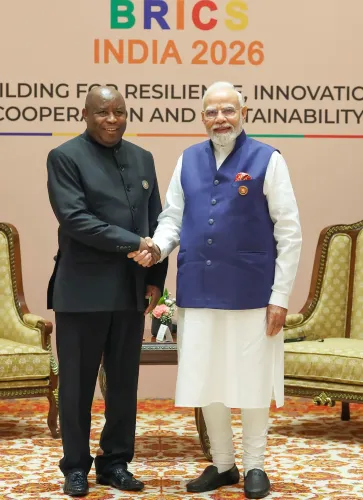
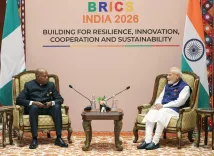
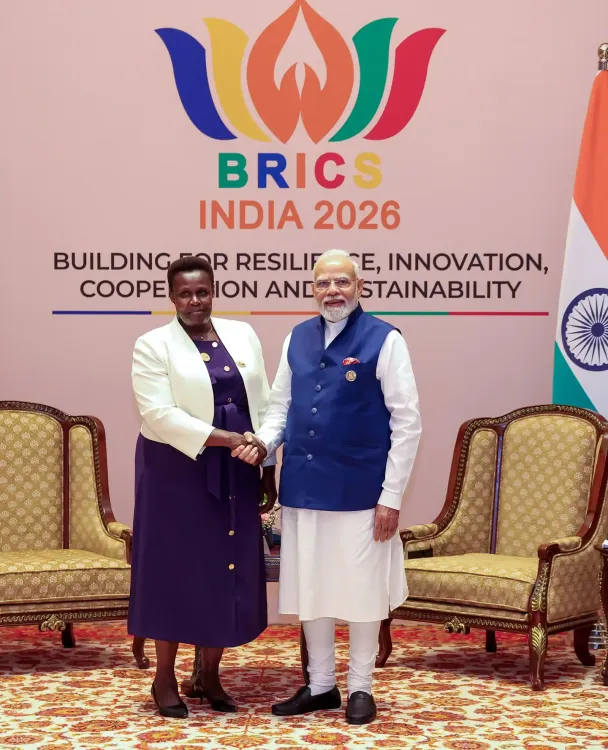
PM Narendra Modi met Uganda VP Jessica Rose Epel Alupo on 13 September 2026 on the sidelines of the 18th BRICS Summit in New Delhi .
Both leaders called for closer bilateral engagement to champion the voice of the Global South .
India reaffirmed support for Uganda's 'Vision 2040' national development plan.
Modi invoked the Kampala Principles from his 2018 Uganda visit as the guiding framework for India-Africa engagement.
Cooperation areas identified include healthcare , agriculture , digital technologies , capacity building , and private-sector collaboration .
VP Alupo was received in New Delhi by MoS Jayant Singh ahead of the summit.
Prime Minister Narendra Modi met Uganda Vice President Jessica Rose Epel Alupo on Sunday, 13 September 2026, on the sidelines of the 18th BRICS Summit in New Delhi, with both leaders committing to deeper bilateral ties and a stronger collective voice for the Global South. The meeting, held amid a gathering of emerging and developing economies, reaffirmed the growing strategic salience of India-Africa partnerships.
Key Areas of Cooperation Discussed
According to a statement issued by the Ministry of External Affairs (MEA), the two leaders emphasised the need to enhance cooperation through technology partnerships, capacity building, knowledge sharing, investment facilitation, and private-sector collaboration. They also underlined that the development partnership between India and Uganda is 'a source of strength for both countries.'
Modi reaffirmed India's support to Uganda's 'Vision 2040' — a long-term national development blueprint for a transformed and prosperous Uganda — signalling sustained engagement beyond summit diplomacy. The leaders also highlighted that close people-to-people ties continue to provide solidity to the bilateral partnership.
Modi's Post on X and the Kampala Principles
Modi posted on X after the meeting: 'Delighted to meet Vice President Jessica Alupo of Uganda on the sidelines of the BRICS Summit. Recalled my memorable visit to Uganda in 2018 and the Kampala Principles that continue to guide India's engagement with Africa. We discussed ways to deepen cooperation in healthcare, agriculture, digital technologies and capacity building. India and Uganda will keep working closely to advance bilateral ties and ensure a stronger voice for the Global South.'
The reference to the Kampala Principles — the framework Modi articulated during his 2018 state visit to Uganda, which he described as 'memorable' — is significant. The principles outline India's approach to development cooperation with Africa, emphasising mutual respect, ownership by African nations, and demand-driven partnerships.
Alupo's Arrival and the BRICS Context
Vice President Alupo arrived in New Delhi on Friday to attend the summit and was received at the airport by Minister of State Jayant Singh. The MEA, in a post on X, extended a formal welcome, noting that 'India and Uganda share warm and friendly ties rooted in shared history and a growing contemporary partnership, in both bilateral and multilateral spheres.'
The meeting comes as India continues to consolidate its standing as a bridge between the Global South and major multilateral forums. Notably, this engagement with Uganda fits into a broader pattern of Modi-era outreach to sub-Saharan Africa — a region where China has aggressively expanded its diplomatic and economic footprint, and where India has sought to offer an alternative development model.
What Comes Next
Both sides are expected to follow up on commitments in healthcare, agriculture, and digital technologies. No specific timelines or financial figures were announced, but the framework of Uganda's Vision 2040 and the Kampala Principles provides a structured reference point for future engagements. India's broader Africa outreach through BRICS and other multilateral channels will likely continue to be a priority in the months ahead.
Point of View
Using every BRICS sideline slot to reinforce that narrative. But intent without outcomes is optics: the Kampala Principles are now eight years old, and concrete deliverables on healthcare and digital cooperation remain largely unquantified. With China's Belt and Road footprint deepening across sub-Saharan Africa, India's model of demand-driven, people-to-people partnership is credible in framing but must urgently translate into visible projects to remain competitive. The Vision 2040 endorsement is a diplomatic signal to Kampala — but its value depends on how quickly Indian capital and technology actually flow.
NationPress
13 Sept 2026
Frequently Asked Questions
Why did PM Modi meet Uganda VP Jessica Alupo at the BRICS Summit?
PM Modi met Uganda Vice President Jessica Rose Epel Alupo on 13 September 2026 on the sidelines of the 18th BRICS Summit in New Delhi to advance bilateral ties and align on Global South priorities. The meeting focused on cooperation in healthcare, agriculture, digital technologies, and capacity building.
What are the Kampala Principles that Modi referenced?
The Kampala Principles are the framework Modi articulated during his 2018 state visit to Uganda, outlining India's approach to development cooperation with Africa — emphasising demand-driven partnerships, African ownership, and mutual respect. Modi described his 2018 Uganda visit as 'memorable' and said the principles continue to guide India's Africa engagement.
What is Uganda's Vision 2040, and why did India endorse it?
Uganda's Vision 2040 is a long-term national development blueprint aimed at transforming Uganda into a prosperous, middle-income country. India's endorsement signals its commitment to supporting Uganda's development goals through technology, investment, and capacity-building partnerships.
What are the key areas India and Uganda agreed to cooperate on?
The two sides agreed to deepen cooperation in healthcare, agriculture, digital technologies, capacity building, knowledge sharing, investment facilitation, and private-sector collaboration. These priorities were outlined in a Ministry of External Affairs statement following the meeting.
What is the broader significance of this meeting at BRICS 2026?
The meeting reflects India's strategy of using the BRICS Summit to strengthen ties with African nations and position itself as a leading voice for the Global South. It fits a broader pattern of India-Africa outreach aimed at offering an alternative to China's expanding economic footprint on the continent.