Modi-Orpo talks in Oslo: 6G, AI, nuclear energy and World Circular Economy Forum 2026
Synopsis
Modi and Finland's Orpo didn't just exchange diplomatic pleasantries in Oslo — they locked in a joint hosting of the World Circular Economy Forum for Gandhinagar in September 2026 and put 6G, AI, and nuclear energy on a shared agenda. With a bilateral trade-doubling target set for 2030 and the India-EU FTA in the frame, this meeting signals India's Nordic pivot is gaining institutional weight.
Key Takeaways
PM Narendra Modi and Finnish PM Petteri Orpo met in Oslo on 19 May 2025 to deepen India-Finland bilateral ties.
The two leaders agreed to jointly host the World Circular Economy Forum in Gandhinagar, Gujarat in September 2026 .
Cooperation agenda spans 6G , AI , nuclear energy , quantum technologies , space , climate change , and renewable energy .
Both sides reaffirmed a target of doubling bilateral trade by 2030 despite global challenges.
Leaders expressed support for early entry into force of the India-EU Free Trade Agreement .
Finland acknowledged the 'significant contributions of Indian professionals' to its technology sector.
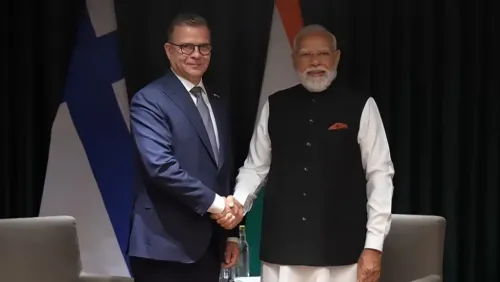
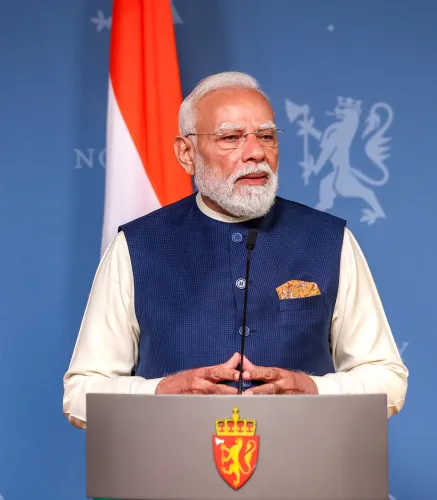
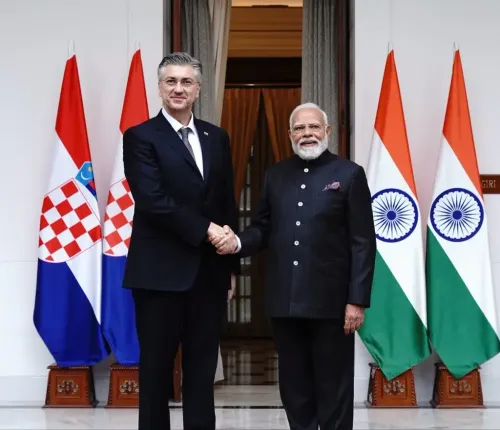
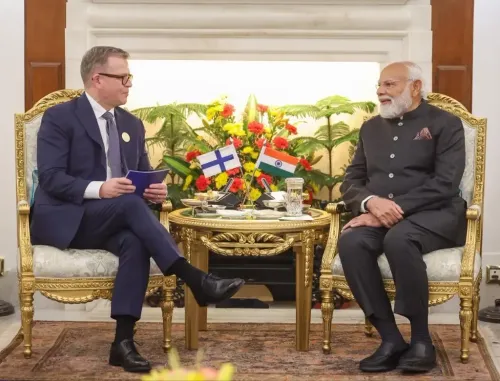
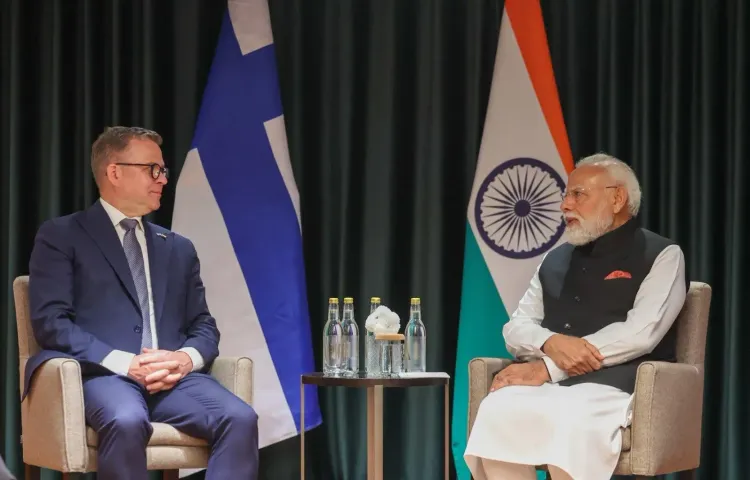
Prime Minister Narendra Modi met Finnish Prime Minister Petteri Orpo in Oslo, Norway, on Tuesday, 19 May, with the two leaders charting a fresh course for India-Finland bilateral relations across futuristic technology, sustainability, and trade. The meeting, held on the sidelines of Modi's Nordic engagements, produced a joint commitment to co-host a major global forum and deepen cooperation across more than a dozen sectors.
Key Developments from the Oslo Meeting
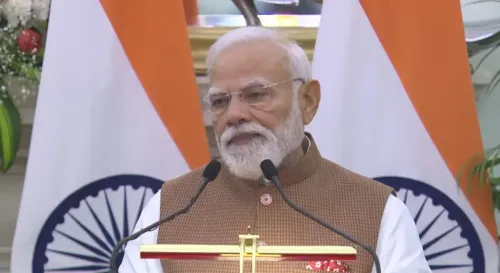
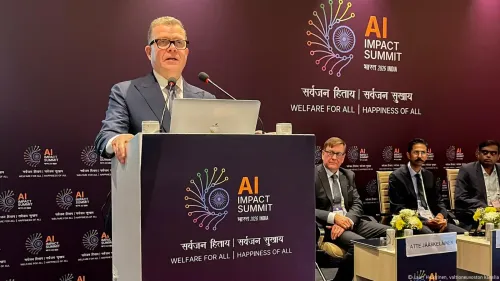
Modi described the bilateral mood as one of momentum, noting on X that 2025 had already seen 'extensive engagements' between the two countries, including Orpo's visit to India for the AI Impact Summit. 'Our meeting today is aimed at giving new energy to bilateral relations,' Modi wrote in his post.
The two leaders confirmed that India and Finland will jointly host the World Circular Economy Forum in September 2026 in Gandhinagar, Gujarat — a significant multilateral commitment that places India at the centre of global circular economy discourse. The Ministry of External Affairs (MEA) noted the announcement as a headline outcome of the summit.
Sectors on the Bilateral Agenda
Modi said the two sides discussed collaboration in 'futuristic sectors' including 6G, artificial intelligence (AI), education, and nuclear energy. Beyond technology, the conversation extended to climate change, the circular economy, and sustainable development.
According to the MEA, both leaders took stock of ongoing cooperation across trade and investment, digitalisation, 5G/6G, quantum technologies, space, renewable energy, innovation, mobility, and people-to-people ties. The breadth of the agenda reflects how India-Finland ties have evolved well beyond traditional diplomatic courtesies.
Trade Targets and Technology Ties
Both sides welcomed the steady growth in bilateral trade in goods and services despite global headwinds, and reaffirmed a shared commitment to doubling bilateral trade by 2030. The MEA noted that the Finnish side specifically 'appreciated the significant contributions of Indian professionals to the growth and innovation of Finland's technology sector' — an acknowledgement of the Indian diaspora's role in Nordic tech ecosystems.
Both leaders also emphasised the importance of strengthening collaboration between industry, research institutions, and academia, and underscored the pivotal role of sustainability and digitalisation in driving future economic growth.
India-EU Dimension
The meeting carried a broader European significance. The MEA stated that 'India and Finland share warm, friendly and multi-faceted relations, rooted in shared democratic values,' and described Finland as 'a valued partner for India in the European Union and the Nordic region.' Both leaders expressed satisfaction with the progress of the India-EU Strategic Partnership and underlined the importance of the early entry into force of the India-EU Free Trade Agreement — a deal that has been in negotiation for years and carries substantial economic stakes for both sides.
What Comes Next
With the World Circular Economy Forum 2026 now confirmed for Gandhinagar, India has a concrete deliverable to anchor the partnership over the next year. Progress on the India-EU FTA, the pace of 6G co-development, and the shape of any nuclear energy framework will be the benchmarks against which this renewed bilateral energy is measured.
Point of View
Which both sides endorsed without a timeline. Finland, as an EU member, carries diplomatic weight in Brussels, but endorsements from bilateral summits have not historically accelerated that negotiation. The 2030 trade-doubling target also lacks a baseline figure in official communications, making it difficult to assess ambition versus optics. India's Nordic engagement is deepening, but institutional follow-through will determine whether this is strategic architecture or summit theatre.
NationPress
22 Sept 2026
Frequently Asked Questions
What did PM Modi and Finnish PM Orpo discuss in Oslo?
The two leaders met in Oslo on 19 May 2025 and discussed cooperation in futuristic sectors including 6G, AI, education, and nuclear energy, as well as climate change, the circular economy, and sustainable development. They also confirmed a joint hosting of the World Circular Economy Forum in Gandhinagar in September 2026.
What is the World Circular Economy Forum and where will it be held?
The World Circular Economy Forum is a major international platform focused on circular economy policy and innovation. India and Finland announced they will jointly host the 2026 edition in Gandhinagar, Gujarat, in September 2026.
What is the India-Finland bilateral trade target?
Both sides reaffirmed a commitment to doubling existing bilateral trade in goods and services by 2030, welcoming steady growth despite global challenges.
How does this meeting connect to the India-EU relationship?
Finland is a member of the European Union, and both leaders expressed support for the India-EU Strategic Partnership and called for the early entry into force of the India-EU Free Trade Agreement, which has been under negotiation for several years.
Why did Finnish PM Orpo visit India earlier in 2025?
According to PM Modi's post on X, Orpo visited India for the AI Impact Summit, reflecting the growing technology dimension of the bilateral relationship ahead of the Oslo meeting.