India at UN: Pakistan lost control of its terrorism 'Frankenstein', cites Nawaz admissions
Synopsis
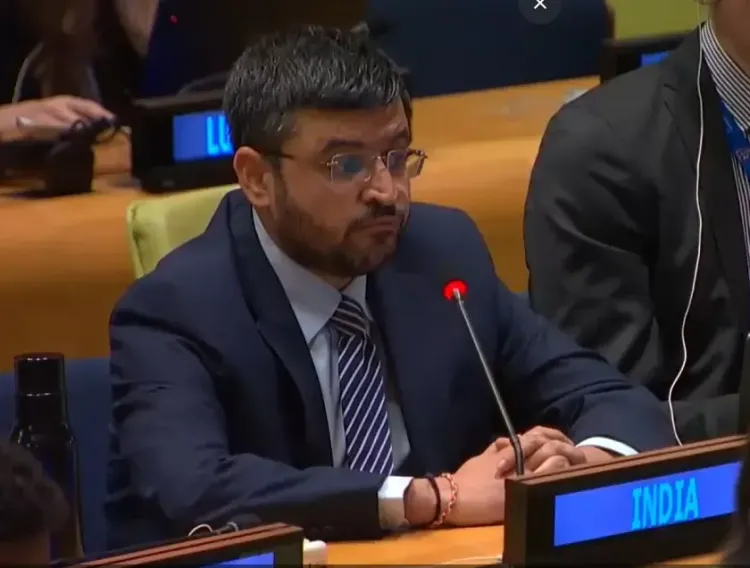
India's UN diplomat Raghoo Puri turned Pakistan's own leaders against it at the UN Sixth Committee — citing Maryam Nawaz on internal terror threats and Nawaz Sharif's 2018 Mumbai admission — to argue that Pakistan's 'Frankenstein' of terrorism has escaped its master's control. With FATF's Paris plenary just weeks away, the timing is anything but coincidental.
Key Takeaways
India's First Secretary Raghoo Puri told the UN Sixth Committee on 8 October 2026 that Pakistan has lost control of the terrorism infrastructure it created.
Maryam Nawaz , Chief Minister of Pakistan's Punjab Province , was cited for saying the threat to her province of 130 million people comes 'more from my neighbouring provinces' than from neighbouring countries.
Nawaz Sharif's 2018 Dawn interview — in which he acknowledged Pakistan's role in the 26/11 Mumbai attacks — was invoked as evidence of state complicity.
India dismissed Pakistan's Operation Sindoor 'victory' claims, with Puri saying 'bombed-out airfields and cratered runways' were not victory.
India flagged that Masood Azhar — the JeM chief Pakistan says is unlocatable — appeared in a viral video confirming Operation Sindoor's impact on his Bahawalpur camp.
The FATF plenary meets in Paris from 26 to 30 October , with Pakistan's terrorism-financing record under scrutiny.
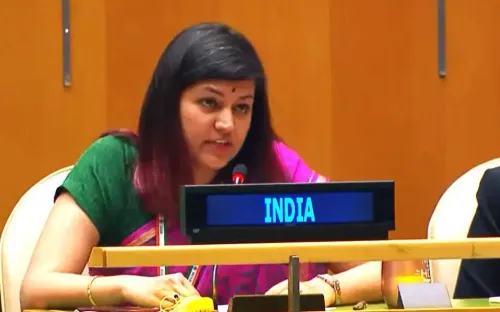
India delivered a sharp rebuke to Pakistan at the United Nations General Assembly's Sixth Committee on 8 October 2026, declaring that Islamabad has lost control of the terrorism infrastructure it built — a monster, India said, that has now turned on its creator. India's statement called for decisive international action against state sponsors of terrorism.
India's Charge at the Sixth Committee
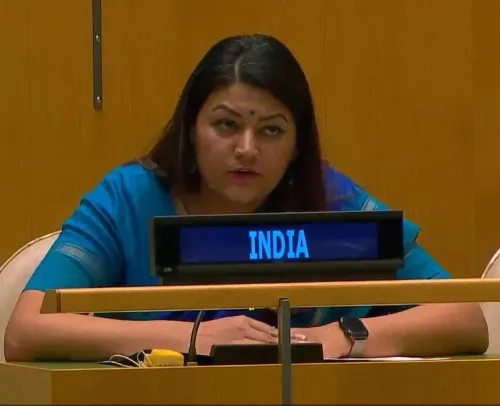
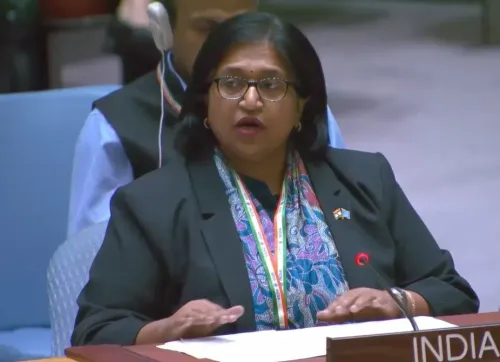
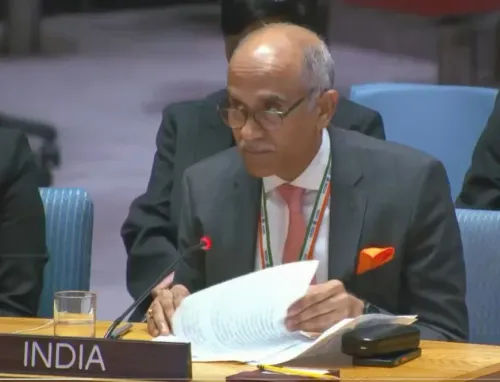
Raghoo Puri, First Secretary at India's Permanent Mission to the UN, said Pakistan had long presented itself as both a frontline combatant and a victim of terrorism while concealing its own role in nurturing militant networks. 'Pakistan has presented itself as a frontline state in combating terrorism and as a victim, while masking the fact that the Frankenstein's monster the Pakistani state has created and lost control over have moved from wreaking havoc in neighbouring countries to doing the same in Pakistan,' Puri said.
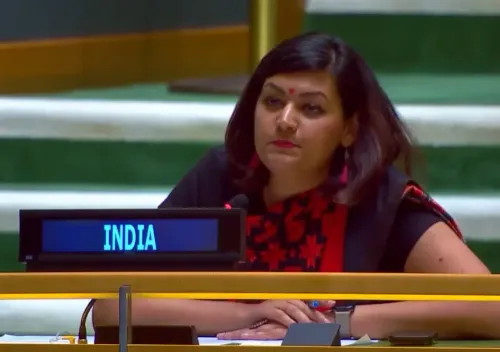
Puri was responding to remarks by Pakistan's Deputy Permanent Representative Usman Jadoon at the same forum. His intervention drew on admissions by Pakistani leaders themselves — though he did not name them explicitly — to undercut Islamabad's denials.
Pakistani Leaders' Own Words Used Against Islamabad
Maryam Nawaz, Chief Minister of Pakistan's Punjab Province, said last month in Lahore that the threat to Punjab — home to 130 million people — came 'less from my neighbouring countries and more from my neighbouring provinces.' She also stated earlier this month that 'terrorism has no classification,' and that anyone involved in terrorism is a terrorist regardless of their cause.
Puri also invoked a 2018 interview given by Nawaz Sharif, her father and former Prime Minister of Pakistan, to Dawn newspaper, in which Sharif acknowledged Pakistan's role in the 26/11 Mumbai terrorist attacks. 'Militant organisations are active. Call them non-state actors; should we allow them to cross the border and kill 150 people in Mumbai?' Sharif had said in that interview. 'You cannot run with the hares and hunt with the hounds,' Puri warned. 'Reality never works like that.'
Operation Sindoor and Pakistan's Narrative
Puri dismissed Pakistan's claims of victory following Operation Sindoor — India's military strikes launched in retaliation for the Pahalgam terror attack — as delusional. 'If bombed-out airfields and cratered runways look like victory to Pakistan, they are, of course, welcome to enjoy it,' he said. He characterised the Pakistani representative's statements as part of a sustained campaign of 'disinformation and misinformation.'
When Pakistan exercised its right of reply a second time and repeated its arguments, Puri responded curtly: 'Pakistan believes in the circular economy of words and narratives.' He added that the effort spent on 'narrative building, misinformation, and disinformation' would have been better directed at actually countering terrorism. He also described Pakistan's government as a 'Form 47 government' — a pointed reference to allegations that its military manipulated electoral documents to install Shehbaz Sharif as prime minister.
Masood Azhar and the FATF Warning
Puri drew attention to what he called Pakistan's diversionary tactics, citing Islamabad's announcement raising the reward for the capture of Jaish-e-Mohammed (JeM) chief Masood Azhar from Pakistani ₹50 lakh to ₹70 lakh. 'When the media can reach Masood Azhar and get confirmation from him about the success of Operation Sindoor, surely the Pakistani state knows his whereabouts,' Puri said.
Azhar had reportedly lamented in a viral video that his family had been 'torn to pieces' during Operation Sindoor strikes on one of his camps in Bahawalpur. Puri noted that Pakistani representatives had previously described JeM as a 'defunct organisation' at the same UN forum — a claim the video appearance directly contradicted.
India also flagged Pakistan's financial ties to terrorism, noting the upcoming Financial Action Task Force (FATF) plenary meeting in Paris from 26 to 30 October. FATF monitors terrorism financing and has previously greylisted Pakistan for related lapses.
Pahalgam Attack and the Minorities Question
Addressing Pakistan's claims about India's treatment of minorities, Puri called it 'deeply ironic' that a country enabling cross-border terrorism would raise religious tolerance. 'The victims in Pahalgam were not asked about their political orientation; they were asked about their religion,' he said. The Pahalgam attack, carried out by Lashkar-e-Taiba proxy The Resistance Front, saw terrorists identify Hindu and Christian tourists through questioning before targeting them.
Puri also referenced the killing of 166 people in the 2008 Mumbai attacks and the discovery of Osama bin Laden in a compound near the Pakistan Military Academy in Abbottabad. 'The world has not forgotten 9/11, and where its perpetrators were caught. The world has not forgotten 26/11. The world has not forgotten Pahalgam,' he said. With the FATF plenary weeks away, India's intervention appears calibrated to keep Pakistan's terrorism record in the international spotlight.
Point of View
Weeks before the FATF plenary in Paris, signals that New Delhi is building a multilateral record rather than simply scoring debating points. What mainstream coverage tends to underplay is the structural bind Islamabad now faces: the very proxies it cultivated for strategic depth have destabilised its own western provinces, and its leaders have said so on the record. Pakistan's counter-narrative at the UN has, in effect, been pre-rebutted by its own politicians.
NationPress
8 Oct 2026
Frequently Asked Questions
What did India say about Pakistan at the UN on 8 October 2026?
India's First Secretary Raghoo Puri told the UN General Assembly's Sixth Committee that Pakistan has lost control of the terrorism infrastructure it created, using admissions by Pakistani leaders themselves as evidence. He called for international action against state sponsors of terrorism and flagged the upcoming FATF plenary in Paris.
What did Maryam Nawaz say that India cited at the UN?
Maryam Nawaz, Chief Minister of Pakistan's Punjab Province, said last month in Lahore that the threat to Punjab — home to 130 million people — comes 'less from my neighbouring countries and more from my neighbouring provinces.' She also said terrorism has no classification and anyone involved in terrorism is a terrorist.
How did Nawaz Sharif's 2018 interview feature in India's statement?
India cited Nawaz Sharif's 2018 interview to Dawn newspaper in which he acknowledged Pakistan's role in the 26/11 Mumbai terrorist attacks, asking rhetorically whether non-state actors should be allowed to 'cross the border and kill 150 people in Mumbai.' Puri used the quote to undercut Pakistan's denials of state complicity in terrorism.
What is Operation Sindoor and why did it come up at the UN?
Operation Sindoor was India's military strike launched in retaliation for the Pahalgam terror attack, in which Lashkar-e-Taiba proxy The Resistance Front targeted Hindu and Christian tourists. Pakistan claimed victory after the operation; India's diplomat called those claims delusional, saying 'bombed-out airfields and cratered runways' were not a victory.
Why did India mention the FATF at the UN?
India flagged Pakistan's financial support for terrorism in the context of the Financial Action Task Force (FATF) plenary meeting scheduled in Paris from 26 to 30 October. FATF monitors terrorism financing and has previously greylisted Pakistan; India's mention appears designed to keep Pakistan's record under international scrutiny ahead of the meeting.