India at UN: Pakistan runs 'factory of hate' to prop up deep state
Synopsis
India's UN envoy didn't just criticise Pakistan at the Security Council — he anatomised it. By linking Islamabad's anti-India propaganda to the military's constitutional coup and the Pahalgam massacre, P Harish reframed a bilateral grievance as a structural threat requiring global counter-terrorism coordination. The 'factory of hate' charge is the sharpest Indian diplomatic salvo at the UN in recent memory.
Key Takeaways
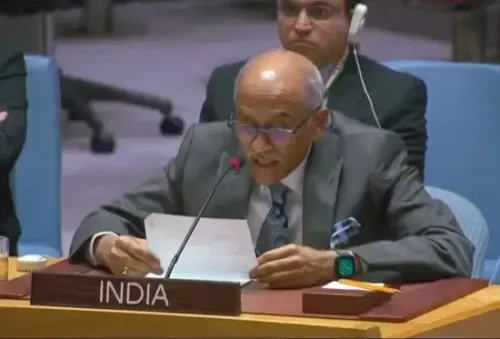
P Harish , India's Permanent Representative to the UN , addressed the Security Council on 9 June , accusing Pakistan of running an 'organised factory of hate.' Pakistan's labelling of internal groups as 'Fitna al Hindustan' was called 'officially sponsored misinformation dressed in religious terminology.' India linked the hate narrative to Pakistan's military deep state , citing the 27th Constitutional Amendment that placed Field Marshal Asim Munir virtually above the law.
Harish named Lashkar-e-Tayyiba , Jaish-e-Mohammed , and The Resistance Front as terror groups whose cross-border operations require coordinated international action.
The statement referenced the Pahalgam attack in which 24 Hindus and one Christian were killed, for which The Resistance Front had claimed responsibility.
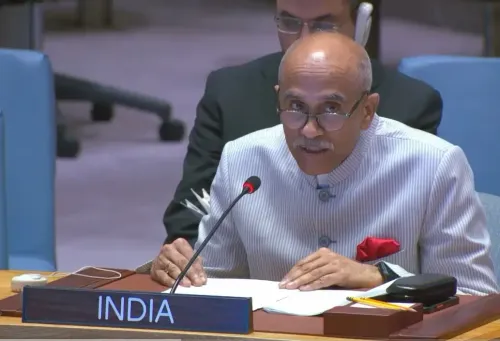
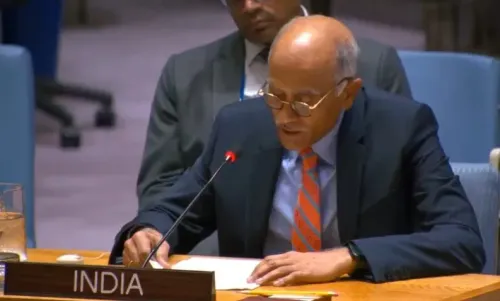
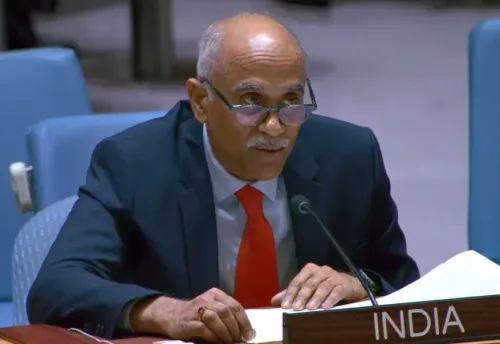
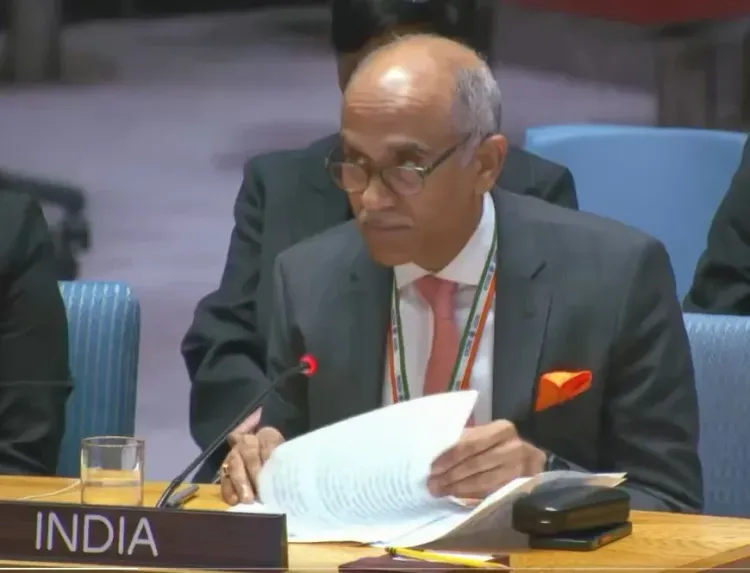
India's Permanent Representative to the United Nations, P Harish, on Monday, 9 June, accused Pakistan of operating an 'organised factory of hate' that weaponises religious language to engineer permanent hostility toward India among its own citizens — a strategy, he argued, designed to entrench Pakistan's deep state and sustain its grip on power. The remarks were delivered before the UN Security Council during a session focused on Afghanistan.
The 'Factory of Hate' Charge
Harish said Pakistan's directive to government agencies to label groups operating within its own borders as 'Fitna al Hindustan' amounted to 'officially sponsored misinformation and disinformation dressed in religious terminology.' The Arabic term 'Fitna' carries meanings ranging from 'sedition' to 'idolatry' in Islamic theological usage.
'This is an outcome of an organised factory of hate coming from the deep state of Pakistan, which aims to keep their citizens in a state of permanent hostility with India in order to perpetuate their stay in power and control of national resources and distract them from core political and economic problems,' Harish told the Council.
Military's Constitutional Consolidation
Harish's reference to the 'deep state' was a pointed allusion to Pakistan's military establishment, which has, according to India's assessment, made its dominance over Pakistani politics legally unassailable. He cited the 27th Constitutional Amendment, passed in November, as the most recent and brazen manifestation of this process.
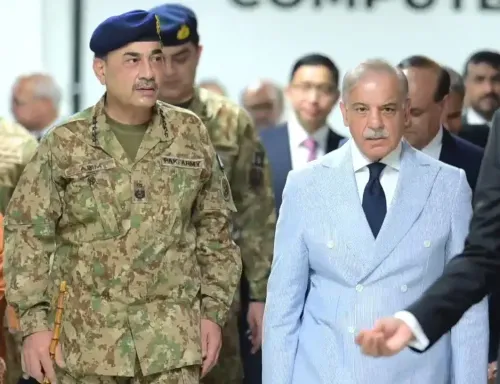
'The de facto coup by the military through the 27th Constitutional Amendment is only its most recent manifestation,' Harish said. The amendment effectively placed military chief Field Marshal Asim Munir — described as a religious hardliner — virtually above the law, consolidating his control over the civilian government.
Cross-Border Terrorism and the Call for Global Action
Speaking in the context of the Afghanistan discussion, Harish called for coordinated international pressure to dismantle terror networks facilitated by Pakistan. He specifically named ISIL (Islamic State), Al Qaida, Lashkar-e-Tayyiba (LeT), Jaish-e-Mohammed (JeM), and The Resistance Front — identified as a proxy of LeT — as groups whose cross-border operations must be collectively confronted.
'Only coordinated efforts of the international community can ensure that ISIL and Al Qaida and their affiliates, including the Lashkar-e-Tayyiba and the Jaish-e-Mohammed, and proxies of LeT such as The Resistance Front, along with those who facilitate their operations, no longer indulge in cross-border terrorism,' he said.
The Pahalgam Attack Reference
Harish's mention of The Resistance Front carried a direct allusion to the Pahalgam attack of April last year, in which 24 Hindus and one Christian were killed at a tourism site in a religiously motivated assault. The Resistance Front had claimed responsibility for that strike. Notably, this marks at least the second time India has raised the Pahalgam attack before the Security Council since the incident.
India's Broader Diplomatic Signal
India's intervention at the Council was as much a diplomatic offensive as a factual statement. By framing Pakistan's anti-India posture as a structural feature of its military-run state — rather than a bilateral grievance — New Delhi is seeking to recast the international conversation around Islamabad's conduct. 'Blaming neighbours for its own failures is an old Pakistani habit, and this attempt to hoodwink the world will fail,' Harish said. All eyes will now be on how the Security Council's permanent members respond to India's call for coordinated counter-terrorism action.
Point of View
New Delhi has shifted the frame from bilateral rivalry to state-sponsored terrorism with a domestic political motive. The 27th Amendment reference is significant — it puts the Security Council on notice that Pakistan's civilian facade has been formally retired. What mainstream coverage misses is that this is part of a sustained Indian diplomatic campaign post-Pahalgam to isolate Pakistan institutionally, not just rhetorically. The real test is whether the P5 — particularly China — will allow any Council action, or whether India's charges remain powerful speeches without procedural consequence.
NationPress
25 Sept 2026
Frequently Asked Questions
What did India's UN envoy say about Pakistan at the Security Council?
India's Permanent Representative P Harish accused Pakistan on 9 June of running an 'organised factory of hate' that uses religious language to keep its citizens permanently hostile toward India, in order to sustain the military's hold on power. He made the remarks during a Security Council session on Afghanistan.
What is 'Fitna al Hindustan' and why did India raise it?
'Fitna al Hindustan' is a label Pakistan's government agencies have reportedly used to describe groups operating within its own borders. India's envoy called it 'officially sponsored misinformation and disinformation dressed in religious terminology,' arguing it exemplifies state-directed anti-India propaganda. The Arabic term 'Fitna' broadly means 'sedition' or 'idolatry.'
What is Pakistan's 27th Constitutional Amendment and why did India mention it?
The 27th Constitutional Amendment , passed in November , effectively placed military chief Field Marshal Asim Munir above civilian accountability, consolidating the military's control over Pakistan's government. India cited it as evidence of a 'de facto coup' by the deep state, providing context for why Islamabad sustains anti-India sentiment as a political tool.
How does the Pahalgam attack connect to India's UN statement?
India's envoy referenced the Pahalgam attack — in which 24 Hindus and one Christian were killed at a tourism site — as a direct consequence of Pakistan-facilitated terrorism. The Resistance Front , identified as a proxy of Lashkar-e-Tayyiba , had claimed responsibility for the attack.
What action did India call for at the Security Council?
India called for coordinated international efforts to dismantle terror networks including ISIL , Al Qaida , Lashkar-e-Tayyiba , Jaish-e-Mohammed , and The Resistance Front , and to hold accountable those who facilitate their cross-border operations.