CM Samrat Choudhary transfers ₹1,205 cr to 1 cr Bihar pensioners
Synopsis
Bihar CM Samrat Choudhary marked Bihar Pension Diwas on November 10, 2026, by transferring ₹1,205.91 crore via DBT to over 1 crore beneficiaries — elderly citizens, widows, and persons with disabilities — at ₹1,100 per person.
Key Takeaways
₹1,205.91 crore transferred in a single day via Direct Benefit Transfer (DBT) on November 10, 2026 .
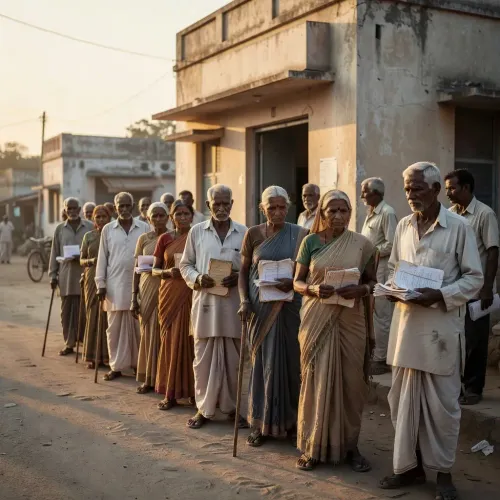
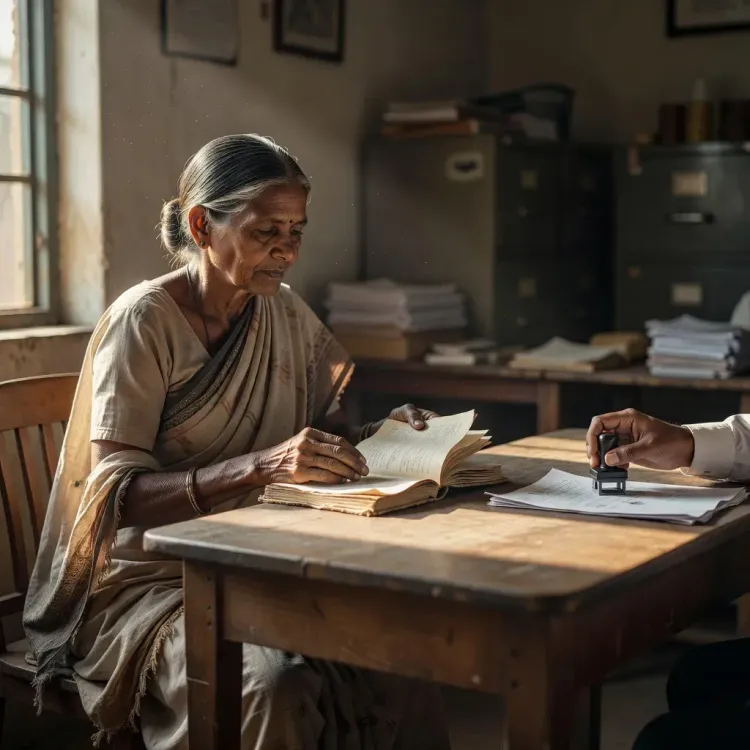
Over 1 crore beneficiaries — including elderly citizens, widowed women, and persons with disabilities — received the pension.
Each beneficiary received ₹1,100 directly into their bank account.
The disbursement was made on Bihar Pension Diwas , a monthly observance fixed on the 10th of every month.
The transfer uses the DBT mechanism to eliminate middlemen and reduce leakage in welfare delivery.
The initiative is rooted in the National Social Assistance Programme (NSAP) framework dating back to 1995 , with Bihar adding state-level top-ups and institutional accountability.
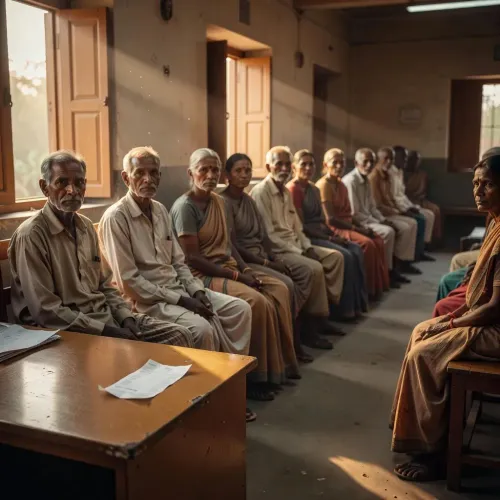
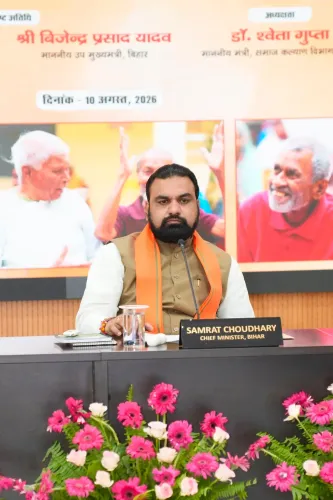
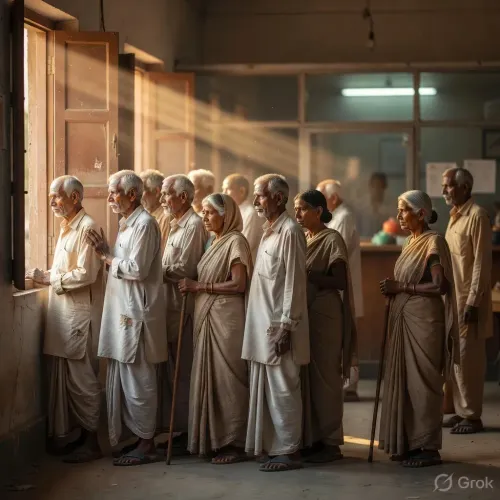
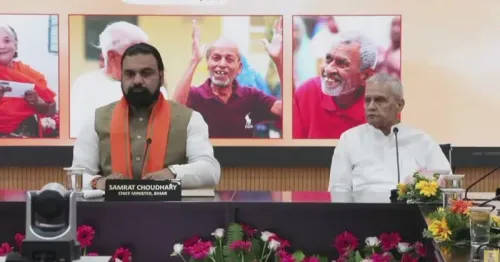
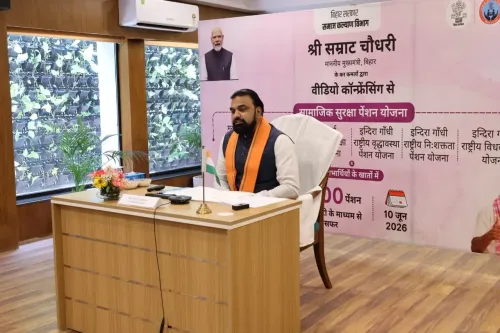
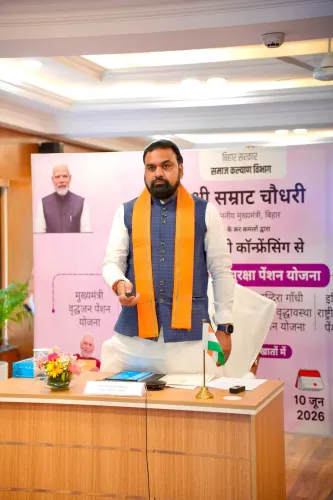
On Bihar Pension Diwas, November 10, 2026, over one crore of Bihar's most vulnerable citizens — the elderly, persons with disabilities, and widows — woke up to a direct deposit in their bank accounts. Bihar Chief Minister Samrat Choudhary announced that a cumulative ₹1,205.91 crore had been transferred via Direct Benefit Transfer (DBT), at a rate of ₹1,100 per beneficiary, in a single-day disbursement marking the state's monthly pension observance.
Posting on X, CM Choudhary wrote: 'सामाजिक सुरक्षा, जनकल्याण और समावेशी विकास — यही हमारा संकल्प है' ('Social security, public welfare and inclusive development — this is our resolve'), framing the disbursement under the hashtags #BiharPensionDiwas and #SamajikSuraksha.
What Bihar Pension Diwas means for 1 crore households
The 10th of every month has become a fixed milestone in Bihar's welfare calendar — the date when the state's social security pension machinery activates. The beneficiary pool spans senior citizens, widowed women, and differently-abled individuals, groups that have historically fallen through the cracks of informal employment and family support systems. At ₹1,100 per person, the monthly transfer does not eliminate poverty — but for many, it is the only guaranteed income they have.
The sheer scale of ₹1,205.91 crore moved in a single day underscores the administrative muscle behind the operation. DBT, the pipeline that routes funds directly from government servers to individual bank accounts, was designed precisely to cut out intermediaries and leakages that plagued older cash-distribution models.
DBT's role in closing the leakage gap
India's Direct Benefit Transfer architecture, rolled out nationally over the past decade, was built on a simple premise: if the money lands directly in a beneficiary's account, it cannot be siphoned at the block or panchayat level. Bihar's adoption of DBT for pension disbursements places it within a broader national pattern of using Jan Dhan bank accounts and Aadhaar-linked identity to deliver welfare at scale.
The policy lineage traces back to the National Social Assistance Programme (NSAP), launched in 1995, which created the federal architecture for old-age, widow, and disability pensions. Bihar's state-level top-up and its institutionalisation of a dedicated 'Pension Diwas' every month add a visible accountability layer — the 10th is now a date that over a crore families track on their own.
The political arithmetic behind a welfare milestone
Samrat Choudhary, who leads a state of roughly 130 million people and governs through a BJP-led alliance, has consistently positioned social security spending as central to Bihar's development narrative. The language of his post — 'samajik suraksha, jankalyan aur samaveshi vikas' — maps directly onto the Viksit Bharat (Developed India) framework that the BJP has made its national signature heading into the mid-decade.
Bihar remains one of India's most economically challenged states, and welfare transfers carry weight both as policy and as politics. A monthly, predictable, DBT-routed pension is also a verifiable promise — the kind that shows up in a bank statement, not just a speech.
With the state's next policy review cycle approaching, the question watchers will ask is whether ₹1,100 per month — unchanged in this disbursement — will be revised upward, and whether the beneficiary count can be expanded to cover households still outside the net.
Point of View
Verifiable event rather than a discretionary one. By anchoring the 10th of every month as 'Bihar Pension Diwas,' the Choudhary administration converts a welfare obligation into a civic calendar fixture, raising citizen expectations and administrative accountability simultaneously. The scale — over one crore beneficiaries in a state that still ranks among India's lowest on per-capita income — also signals that social security spending is being used to anchor political legitimacy ahead of future electoral cycles. The unresolved tension is whether the ₹1,100 monthly figure keeps pace with inflation and genuine subsistence costs, or whether the headline scale eventually outgrows the per-beneficiary impact.
NationPress
10 Nov 2026
Frequently Asked Questions
What is Bihar Pension Diwas?
Bihar Pension Diwas is a monthly observance held on the 10th of every month when the Bihar government transfers social security pensions directly to the bank accounts of eligible beneficiaries — elderly citizens, widows, and persons with disabilities — via DBT.
How much pension does Bihar give to its beneficiaries?
As of November 2026, eligible Bihar social security pensioners receive ₹1,100 per month , transferred directly to their bank accounts through the Direct Benefit Transfer (DBT) mechanism.
How many people received Bihar pension in November 2026?
Over 1 crore (10 million) beneficiaries received the pension in November 2026, with a total of ₹1,205.91 crore disbursed on November 10, 2026 .
What is the Direct Benefit Transfer (DBT) scheme in India?
DBT is a mechanism that routes government welfare payments directly into beneficiaries' bank accounts, bypassing intermediaries to reduce leakage and ensure timely delivery. It is widely used across central and state welfare schemes in India.
Who are eligible for Bihar's social security pension?
Eligible groups include senior citizens (vriddhajan), persons with disabilities (divyangjan), and widowed women who meet the state's socio-economic criteria, drawing on the framework established by the National Social Assistance Programme (NSAP).