Pakistan's use of religion as political tool must be challenged: Report
Synopsis
A new report accuses Pakistan of weaponising Islam for geopolitical ends — from its DG ISPR telling Afghanistan to shun India because it is a 'Hindu country', to Army Chief Asim Munir's scriptural rhetoric on Kashmir. With 2,786 terrorism-related deaths recorded inside Pakistan in just seven months of 2026, the report argues the contradiction between Pakistan's religious posturing and its own conduct has never been starker.
Key Takeaways
A Strat News Global report accuses Pakistan of systematically using religion as a political instrument to serve strategic interests.
DG ISPR Lieutenant General Ahmed Sharif Chaudhry reportedly told Afghanistan not to engage with India because it is a Hindu country, and questioned the Islamic credentials of Afghans who claim shared ancestry with Indians.
Amnesty International has called for an investigation into Pakistan 's strike on Kabul 's Omid Drug Rehabilitation Centre as a possible war crime.
Independent data from PICSS recorded 2,786 terrorism-related fatalities inside Pakistan in the first seven months of 2026 ; July was the deadliest month with 606 killed.
Army Chief General Asim Munir has repeatedly invoked Islamic references in public statements on national security, Kashmir , and Pakistan 's ideological identity, according to the report.
The report urges the international community to recognise and challenge state-level religious instrumentalisation as a driver of extremism and regional instability.
A recent analytical report has called on the international community to confront Pakistan's systematic instrumentalisation of religion for political and strategic ends, warning that the practice fuels extremism, destabilises the region, and undermines peaceful coexistence. The report, published by Strat News Global, argues that Pakistan's decades-long history of state-backed terrorism and religious radicalisation has materially deepened global associations between Islam and violent extremism.
DG ISPR's Remarks on India–Afghanistan Ties
Pakistan's discomfort with the strengthening India–Afghanistan relationship was laid bare by a statement from Director General of Inter-Services Public Relations (DG ISPR), Lieutenant General Ahmed Sharif Chaudhry, who reportedly urged Afghanistan not to engage with India on the grounds that it is a Hindu country. The remarks came after Afghan Agriculture Minister Mawlawi Ataullah Omari described India and Afghanistan as sharing 'the same DNA'. According to the report, Chaudhry went further, questioning whether Afghans could be considered Muslims if they claimed shared ancestry with Indians.
The report described this selective invocation of religion as 'profoundly hypocritical', noting that Pakistan has conducted airstrikes inside Afghanistan — reportedly killing and injuring civilians, including women and children — without any corresponding religious objection from its own military leadership.
The Kabul Strike and Amnesty International's Call
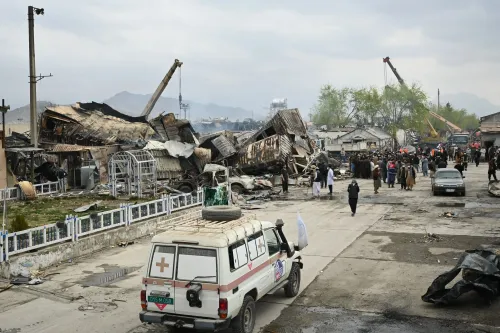
The report specifically cited the strike on Kabul's Omid Drug Rehabilitation Centre, which reportedly resulted in civilian casualties. Amnesty International has called for the incident to be investigated as a possible war crime. Critics argue that Pakistan's silence on its own military actions — while simultaneously invoking Islamic decrees to restrict Afghanistan's diplomatic choices — exposes a calculated double standard. 'This blatant hypocrisy clearly exposes that Pakistan invokes religious decrees as instruments of political convenience whenever things cease to go its way,' the report stated.
Army Chief Asim Munir's Religious Rhetoric
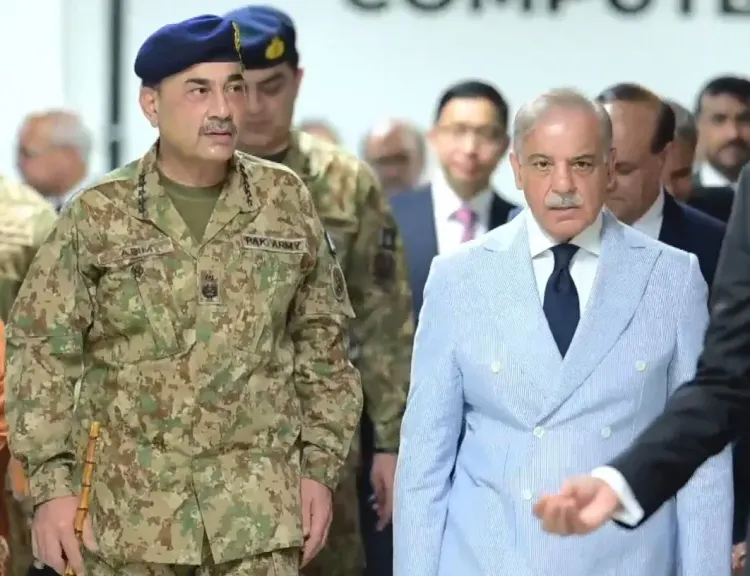
The report identified Pakistani Army Chief General Asim Munir as a central figure in the growing trend of religious rhetoric within the country's military establishment. According to the report, Munir has repeatedly drawn on Islamic references, scriptural themes, and religious framing in public statements addressing national security, the Kashmir issue, and Pakistan's ideological identity. 'When Pakistan's military leadership issues such sermons and proclamations, they act as if they are the thekedars (sole contractors) of Islam in South Asia and beyond, claiming a fabricated moral authority to lecture others,' the report noted.
Rising Internal Violence: The Data
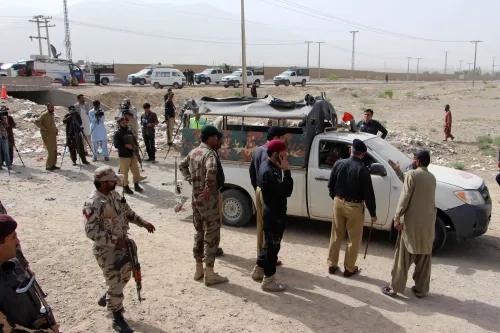
Citing independent data from the Pakistan Institute for Conflict and Security Studies (PICSS), the report flagged a sharp escalation in domestic violence. A total of 2,786 terrorism-related fatalities were recorded across Pakistan during the first seven months of 2026. July 2026 emerged as the deadliest single month, with 606 people killed amid intensifying clashes — a figure that, critics argue, sits in stark contrast to the military's posture as a guardian of Islamic values.
International Community Called to Act
The report concluded with a direct appeal: the international community must recognise and actively challenge the political instrumentalisation of religion by state actors. It argued that allowing such behaviour to go unchecked not only emboldens extremist networks but also corrodes the prospects for regional stability across South Asia. With 2,786 terrorism-related deaths recorded in Pakistan in under eight months of 2026, the report's authors contend that the cost of inaction is measurable in lives.
Point of View
And the report makes that case with uncomfortable precision. The DG ISPR's remarks about Afghanistan and India are not an aberration; they follow a pattern in which religious framing is deployed whenever conventional diplomatic or military arguments run thin. What the report does not fully interrogate is why the international community — despite years of documented evidence — has been so reluctant to name this pattern publicly. Part of the answer lies in the structural dependence of key Western and Gulf actors on Pakistani cooperation on counter-terrorism and regional transit. Until those dependencies shift, the instrumentalisation of religion by Rawalpindi is likely to continue, with 2,786 domestic fatalities in seven months serving as a grim measure of the blowback that statecraft of this kind ultimately generates at home.
NationPress
30 Sept 2026
Frequently Asked Questions
What is the report's central accusation against Pakistan?
The report, published by Strat News Global, accuses Pakistan of systematically using religion as a political instrument — invoking Islamic authority selectively to serve strategic goals while conducting military operations that contradict those same religious principles. It argues this pattern fuels extremism and undermines regional stability.
What did Pakistan's DG ISPR say about India and Afghanistan?
Lieutenant General Ahmed Sharif Chaudhry reportedly stated that Afghanistan should not engage with India because it is a Hindu country. He also questioned whether Afghans could be considered Muslims if they claimed shared ancestry with Indians, remarks that followed Afghan Agriculture Minister Mawlawi Ataullah Omari's statement that India and Afghanistan 'share the same DNA'.
What is the Kabul rehabilitation centre incident referred to in the report?
The report references a Pakistani strike on the Omid Drug Rehabilitation Centre in Kabul that reportedly killed and injured civilians. Amnesty International has called for the incident to be investigated as a possible war crime. The report cites it as evidence of Pakistan's double standard in applying religious justifications to its own military actions.
How severe is terrorism-related violence inside Pakistan in 2026?
According to data from the Pakistan Institute for Conflict and Security Studies (PICSS), 2,786 terrorism-related fatalities were recorded across Pakistan in the first seven months of 2026. July 2026 was the deadliest month, with 606 people killed amid intensifying internal clashes.
Why does the report single out Army Chief Asim Munir?
The report identifies General Asim Munir as central to the trend of religious rhetoric within Pakistan's military, noting that he has repeatedly used Islamic references and scriptural themes in public statements on national security, the Kashmir issue, and Pakistan's ideological identity. The report argues this positions the military as self-appointed religious arbiters for South Asia.