India at UN exposes Pak military's mineral exploitation, cites Asim Munir's Trump meeting
Synopsis
India used a UN Security Council meeting on natural resources and conflict to deliver one of its sharpest public rebukes of Pakistan's military — accusing it of looting mineral wealth, linking it to the KP government's dismissal, and pointing directly to Field Marshal Asim Munir's display of minerals to foreign leaders including Donald Trump. It is a deliberate pivot in India's diplomatic playbook: from terrorism framing to governance accountability.
Key Takeaways
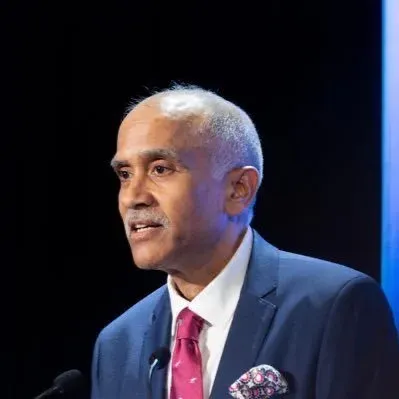
India's Permanent Representative P.
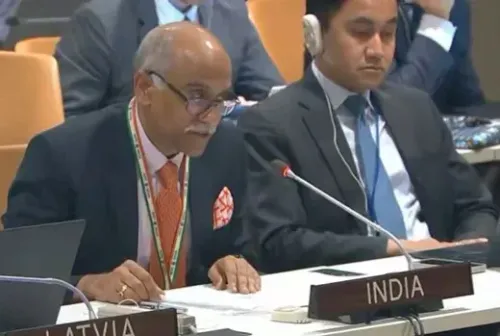
Harish spoke at the UN Security Council on 19 November 2026 , accusing Pakistan's military of exploiting national mineral resources for self-enrichment.
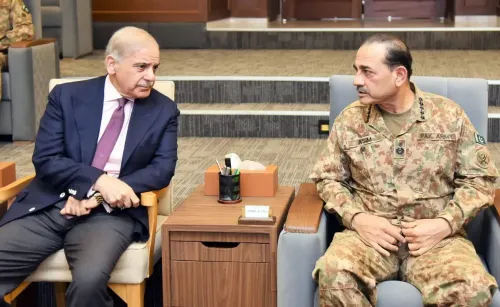
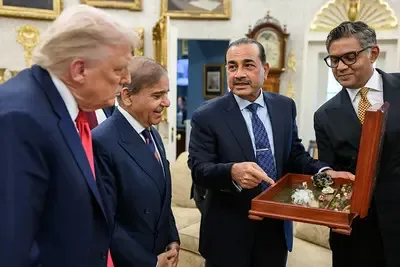
Field Marshal Asim Munir was cited for displaying 'a wooden box filled with mineral stones' to foreign leaders, understood to include US President Donald Trump , last September.
India linked the Army's resource exploitation to the dismissal of the Khyber Pakhtunkhwa provincial government led by Imran Khan's PTI and the imposition of a state of emergency.
India rebuffed Pakistan's attempt to raise the Indus Waters Treaty , calling it an effort to 'peddle propaganda' at a multilateral forum.
India suspended the 1960 Indus Waters Treaty after 24 people were killed in a terror attack in Pahalgam in April 2025 .
India on Wednesday, 19 November 2026, raised a pointed challenge at the United Nations Security Council, accusing Pakistan's military leadership of exploiting the country's natural resources for personal enrichment rather than for the welfare of its own citizens — and citing Field Marshal Asim Munir's presentation of minerals to foreign leaders as evidence.
What India Said at the Security Council
India's Permanent Representative P. Harish made the remarks at an informal Security Council meeting on 'Natural Resources and Conflict: Strengthening Cooperation for Prevention and Peace', convened by Liberia, which assumes the Council's presidency next month. Without naming US President Donald Trump directly, Harish said: 'Their Army Chief was seen last September, displaying a wooden box filled with mineral stones to foreign leaders, a clear indication of their Army's role in this exploitation.' The reference was widely understood to point to Field Marshal Munir's widely reported meeting with Trump.
Military's Resource Grip Linked to KP Government Dismissal
Harish went further, alleging that the Pakistani Army's relentless pursuit of natural resources was directly connected to the dismissal of the Khyber Pakhtunkhwa (KP) provincial government led by the Pakistan Tehreek-e-Insaf (PTI) — the party of imprisoned former Prime Minister Imran Khan. The Army's role in exploiting natural resources is 'believed to be behind the recent dismissal of a provincial government in Pakistan and imposition of a state of emergency there,' he said. Critics have long argued that Pakistan's military establishment has used constitutional and administrative levers to consolidate control over economically significant provinces.
India's Blunt Message to Islamabad
'Pakistanis would be served well if its real rulers, its military, use the country's natural resources for the benefit of their population rather than self-aggrandisement,' Harish said, in one of New Delhi's most direct public rebukes of Rawalpindi's economic role at a multilateral forum. The remark lands at a time of heightened India-Pakistan tensions and reflects a deliberate Indian strategy of internationalising its critique of the Pakistani establishment — moving beyond the terrorism frame to include governance and resource extraction.
India Rebuffs Pakistan on Indus Waters Treaty
When Pakistan's Deputy Permanent Representative Usman Jadoon raised the Indus Waters Treaty during the discussion, Harish accused Islamabad of misusing the platform 'to peddle its propaganda.' He reiterated that India's position on the treaty 'remains clear and consistent and has been articulated at multiple fora.' India suspended the landmark 1960 Indus Waters Treaty after Pakistan-based terrorists killed 24 people in the tourist resort of Pahalgam in a religiously motivated attack in April 2025. Harish has previously stated that the treaty will remain in abeyance for as long as Pakistan uses terrorism as 'an instrument of state policy.'
Broader Implications
India's remarks at the Security Council represent a calibrated escalation in its diplomatic messaging. By framing Pakistan's military behaviour within an international discussion on natural resources and conflict prevention, New Delhi is signalling that it intends to hold Rawalpindi accountable not only on counter-terrorism but also on governance and economic accountability. How member states — particularly those with deep ties to both countries — respond will shape the diplomatic fallout in the weeks ahead.
Point of View
New Delhi is building a public record that frames Pakistan's army as a predatory institution, not a sovereign military. This reframing matters because it shifts the international conversation from the bilateral terrorism narrative — where Pakistan has defensive talking points — to governance and resource looting, where it has none. The Indus Waters Treaty rebuff reinforces that India is in no mood for diplomatic courtesies while Islamabad uses multilateral forums as megaphones. The question is whether Washington, now having received those mineral samples itself, will apply any pressure — or whether the optics of that meeting will quietly embarrass the Pakistani establishment into retreat.
NationPress
19 Nov 2026
Frequently Asked Questions
What did India allege about Pakistan's military at the UN Security Council?
India accused Pakistan's military leadership of exploiting the country's natural resources for personal enrichment rather than national benefit. Permanent Representative P. Harish specifically cited Field Marshal Asim Munir's display of a wooden box of mineral stones to foreign leaders — understood to include US President Donald Trump — as evidence of the Army's role in this exploitation.
What is the connection between Pakistan's military and the Khyber Pakhtunkhwa government dismissal?
India alleged that the Army's drive to control natural resources was behind the dismissal of the Khyber Pakhtunkhwa provincial government led by Imran Khan's PTI and the subsequent imposition of a state of emergency there. The claim adds an economic dimension to what is widely seen as a politically motivated crackdown on Khan's support base.
Why has India suspended the Indus Waters Treaty?
India suspended the 1960 Indus Waters Treaty following a terrorist attack in Pahalgam in April 2025 that killed 24 people . New Delhi has stated the treaty will remain in abeyance as long as Pakistan uses terrorism as an instrument of state policy.
Where did India make these remarks and in what context?
The remarks were made at an informal UN Security Council meeting on 'Natural Resources and Conflict: Strengthening Cooperation for Prevention and Peace' , convened by Liberia ahead of its Council presidency in December. The forum gave India a multilateral platform to frame its critique of Pakistan's military in a governance and resource-conflict context.
How did India respond to Pakistan raising the Indus Waters Treaty at the meeting?
India's representative P. Harish accused Islamabad of misusing the discussion 'to peddle its propaganda' and said India's position on the treaty 'remains clear and consistent and has been articulated at multiple fora,' declining to engage further on the substance.