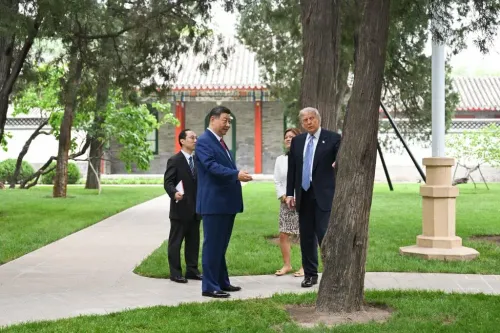
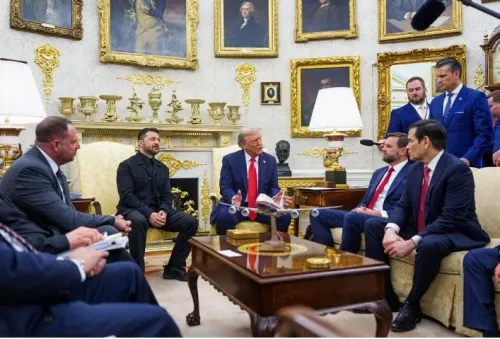
Trump and Putin Meet in China for High-Stakes Talks
Synopsis
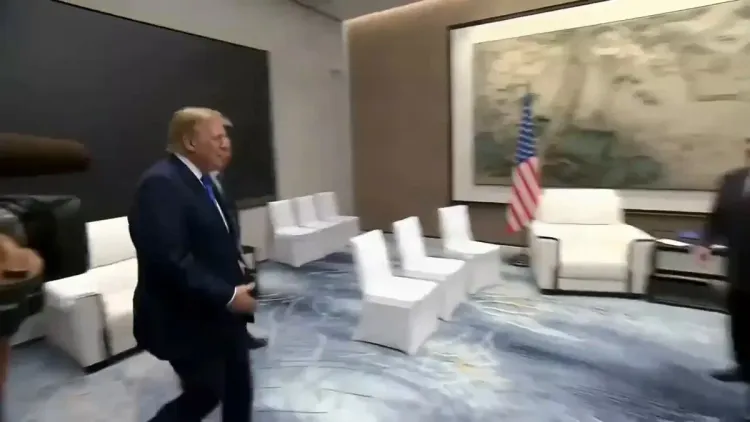
US President Donald J. Trump and Russian President Vladimir Putin met in China on November 19, 2026, their first confirmed face-to-face encounter in years. Trump called it a potential start of 'wonderful things,' signalling a resumption of direct leader-level US-Russia engagement.
Key Takeaways
Trump and Putin met in China on November 19, 2026 , confirmed by an official White House post on X.
Trump quoted directly: 'We've known each other for a long time, and I think a lot of wonderful things can come out of this — or at least start.' The last confirmed Trump-Putin bilateral summit was in Helsinki, Finland, in July 2018 , focused on election interference, Syria, and arms control.
Holding the meeting on Chinese soil places it at the intersection of the world's three major power centres — Washington, Moscow, and Beijing.
No joint statement or follow-on framework has yet been confirmed; diplomats and national security officials are watching closely for any communiqué.
Two of the world's most consequential leaders sat down face-to-face on Thursday, November 19, 2026 — US President Donald J. Trump and Russian President Vladimir Putin meeting on Chinese soil in a moment that immediately commanded global attention. The White House confirmed the encounter in a live post, quoting Trump directly: 'We've known each other for a long time, and I think a lot of wonderful things can come out of this — or at least start.'
A Meeting Decades in the Making — and What Trump Said
The quote is characteristically Trump: personal, forward-leaning, and deliberately light on specifics. But the weight behind it is real. Trump and Putin have a documented history of direct engagement stretching back years, and Trump has long argued that personal rapport — a leader-to-leader channel distinct from formal diplomatic machinery — is itself a foreign-policy instrument. The fact that he reached for that frame immediately signals how he intends to define this encounter.
The venue — China — is itself significant. Hosting a US-Russia summit in Beijing's orbit places the meeting squarely at the intersection of the world's three most consequential power centres, lending the encounter a triangular dimension that no bilateral readout can fully contain.
The Helsinki Precedent and What Has Changed Since
The last time Trump and Putin held a formal bilateral summit, it was Helsinki, Finland, in July 2018 — a meeting that generated enormous controversy over Trump's public statements on Russian election interference, but also demonstrated that the two leaders were capable of extended private dialogue on Syria, arms control, and strategic competition. That Helsinki framework has been a reference point for US-Russia diplomacy ever since.
What has changed is the geopolitical landscape. The years between Helsinki and this China meeting saw a dramatic deterioration in US-Russia relations, the collapse of multiple arms-control treaties, and a grinding conflict that reshaped European security. A resumption of direct presidential contact — in any venue, on any terms — marks a threshold moment.
Diplomats Watch for a Joint Statement or Follow-On Signal
For national security officials and diplomats on both sides, the immediate question is whether this meeting produces any joint communiqué, a framework for follow-on talks, or even a shared statement on a single issue. Trump's phrasing — 'at least start' — suggests the two sides are managing expectations deliberately, framing the encounter as an opening rather than a resolution.
The world will be parsing every syllable that emerges from China today — because when Washington and Moscow decide to talk, every other capital listens.
Point of View
A style that produced both breakthroughs and controversies during his first term. For India, which has historically maintained strategic partnerships with both Washington and Moscow, any shift in the US-Russia equilibrium carries direct implications for defence procurement, energy diplomacy, and the broader architecture of the Global South. The China venue adds a layer of complexity: Beijing benefits from being seen as the arena where rival superpowers come to talk, burnishing its own claim to centrality in the emerging multipolar order. The key variable now is whether Trump's 'at least start' framing translates into a durable diplomatic process — or remains a one-off optic.
NationPress
19 Nov 2026
Frequently Asked Questions
Where did Trump and Putin meet in 2026?
Trump and Putin met in China on November 19, 2026, as confirmed by an official White House post on X.
What did Trump say about his meeting with Putin?
Trump said, 'We've known each other for a long time, and I think a lot of wonderful things can come out of this — or at least start,' signalling optimism about the encounter.
When was the last Trump-Putin summit before 2026?
The last confirmed bilateral Trump-Putin summit was in Helsinki, Finland, in July 2018, where the two leaders discussed election interference, Syria, and arms control.
Why is the Trump-Putin meeting being held in China?
The White House post confirmed the meeting is taking place in China, though no specific rationale was given; the venue places the encounter at the intersection of US, Russian, and Chinese geopolitical interests.
Will there be a joint statement from the Trump-Putin China meeting?
No joint statement has been confirmed yet. Trump's phrasing — 'or at least start' — suggests both sides are framing this as an opening move rather than a conclusive agreement.