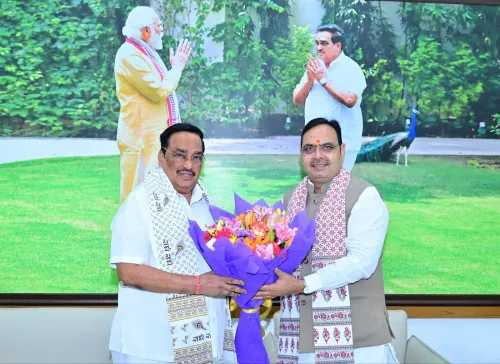
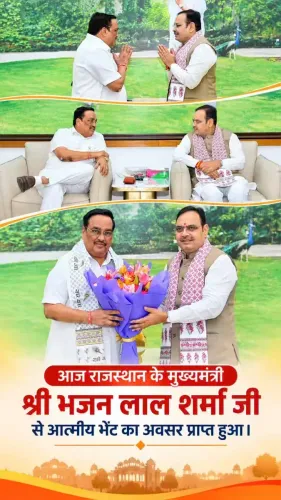
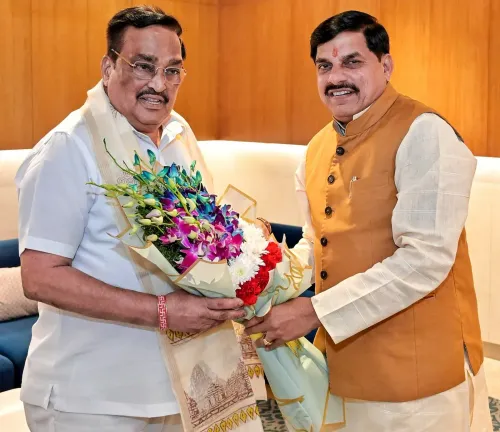
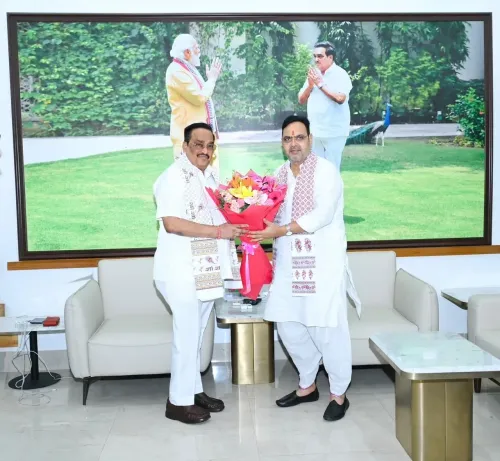
CM Bhajanlal Meets Jal Shakti Minister on Rajasthan Water Projects
Synopsis
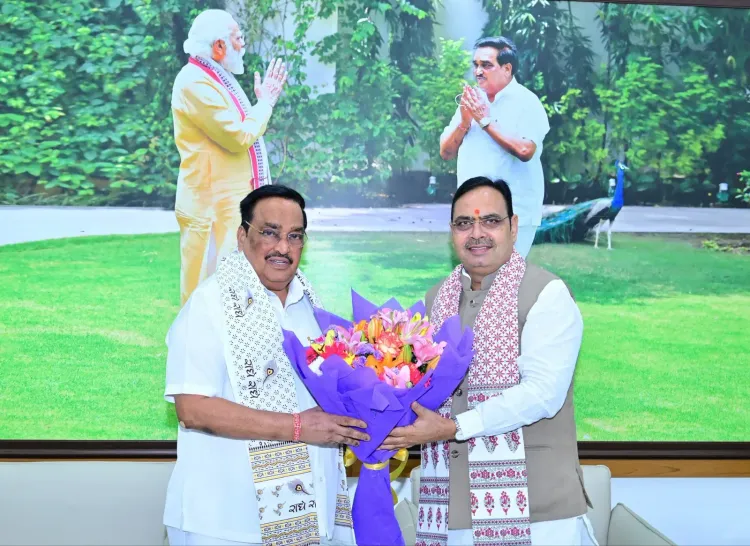
Chief Minister Bhajanlal Sharma met Union Jal Shakti Minister C. R. Patil on 19 November 2026, discussing ongoing water projects, drinking water access, and irrigation expansion in Rajasthan, framing the engagement as central to the state's water self-reliance agenda under PM Modi's guidance.
Key Takeaways
CM Bhajanlal Sharma met Union Jal Shakti Minister C.
Patil on 19 November 2026 in New Delhi.
Discussions covered ongoing water projects, drinking water availability, and irrigation facility expansion across Rajasthan.
Sharma cited PM Narendra Modi's guidance and central government cooperation as central to Rajasthan's water self-reliance push.
The Jal Jeevan Mission , launched in 2019 , is the flagship central scheme covering tap water connections for rural Rajasthan.
Rajasthan faces structural water stress due to its arid climate, groundwater depletion, and dependence on canal systems.
Farmers and rural households are the primary beneficiaries of expanded irrigation and safe drinking water projects.
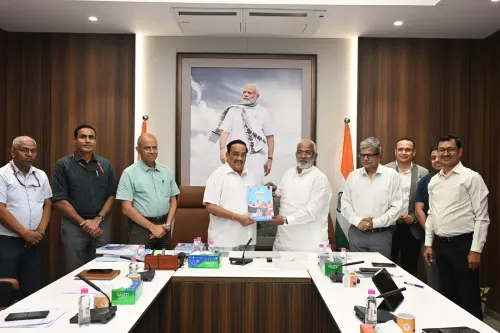
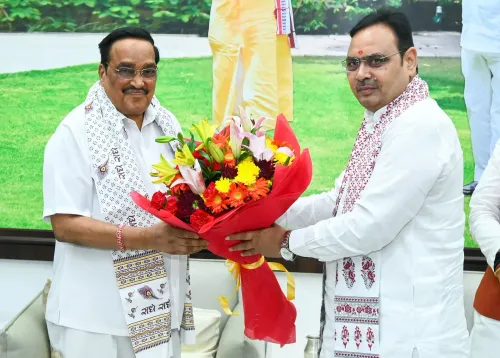
Rajasthan's driest districts may be a step closer to relief. Chief Minister Bhajanlal Sharma met Union Jal Shakti Minister C. R. Patil on Thursday, 19 November 2026, holding wide-ranging discussions on the state's ongoing water infrastructure projects, drinking water availability, and the expansion of irrigation facilities — with the shared goal of making Rajasthan water self-reliant.
The Chief Minister's Office of Rajasthan, posting on X in Hindi, said the meeting was marked by 'skaratmak samvad' — positive dialogue — across multiple fronts: progress on water projects currently underway, the reach of safe drinking water, and the widening of irrigation networks across the state.
Sharma underlined that the state government is working continuously to achieve water self-sufficiency under the guidance of Prime Minister Narendra Modi and with the cooperation of the Central government. The hashtag #आपणो_अग्रणी_राजस्थान ('Our Leading Rajasthan') framed the meeting as part of a larger developmental vision for the state.
Why Rajasthan's Water Problem Is Structurally Stubborn
The stakes of any such meeting are high for a state that sits on some of India's most water-stressed land. Rajasthan spans the Thar Desert and relies heavily on the Indira Gandhi Canal and groundwater sources that have been depleting for decades. Successive state governments — regardless of party — have consistently knocked on New Delhi's door for water funds and inter-basin transfer agreements.
The Jal Jeevan Mission, launched by the Modi government in 2019, is the central scheme most directly relevant here — aiming to provide functional household tap connections to every rural home in India, including thousands of villages in Rajasthan's arid belts. Progress under the mission in the state has been a live agenda item between Jaipur and Delhi since the scheme's inception.
What the Bhajanlal Government Is Pushing For
The BJP state government, which took office in December 2023, has consistently positioned water security as a flagship infrastructure priority. Regular ministerial-level meetings with the Union Jal Shakti Ministry are part of that strategy — seeking both the release of central funds for pending projects and policy clearances for new irrigation and lift-irrigation schemes.
Farmers and rural households stand to gain most directly. Irrigation expansion determines crop cycles and livelihoods across Rajasthan's agrarian districts, while drinking water availability shapes the daily reality of millions in villages where women still walk kilometres to fetch water.
The question now is whether this round of engagement translates into released funds, signed agreements, or accelerated timelines for projects already in the pipeline — the metrics that will ultimately determine whether 'aatmanirbharta' in water moves from slogan to ground reality for Rajasthan's most parched communities.
Point of View
Clearances, and scheme implementation bandwidth. For the Bhajanlal government, which made development its core pitch in the December 2023 assembly election, visible progress on water infrastructure is both a policy imperative and a political one ahead of future electoral cycles. The invocation of PM Modi's guidance is also consistent with BJP's coordinated Centre-state messaging — positioning Jaipur's agenda as an extension of Delhi's national water security vision rather than a competing demand. Whether the dialogue at this meeting yields concrete project timelines will be the real test.
NationPress
19 Nov 2026
Frequently Asked Questions
Why did CM Bhajanlal Sharma meet the Jal Shakti Minister?
CM Bhajanlal Sharma met Union Jal Shakti Minister C. R. Patil on 19 November 2026 to discuss Rajasthan's ongoing water projects, drinking water availability, and irrigation expansion as part of the state's goal of achieving water self-reliance.
What is the Jal Jeevan Mission and how does it apply to Rajasthan?
The Jal Jeevan Mission is a central government scheme launched in 2019 to provide functional household tap water connections in rural India, including Rajasthan's arid and semi-arid districts where safe drinking water access remains limited.
Why does Rajasthan face such severe water scarcity?
Rajasthan's water crisis stems from its largely arid and desert geography, dependence on the Indira Gandhi Canal and depleting groundwater sources, and low rainfall — making it one of India's most chronically water-stressed states.
When did Bhajanlal Sharma become Chief Minister of Rajasthan?
Bhajanlal Sharma became Chief Minister of Rajasthan in December 2023, leading the BJP state government after the party's victory in the assembly elections.
What could come out of the Bhajanlal–C. R. Patil water meeting?
The meeting could result in the release of central funds for pending Rajasthan water projects, new agreements on inter-basin water transfers, or accelerated timelines for lift-irrigation schemes — though no formal announcements have been confirmed.