CM Bhajan Lal Meets Jal Shakti Minister on Rajasthan Water Projects
Synopsis
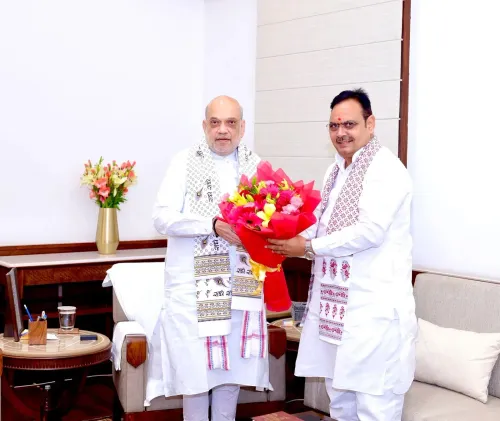
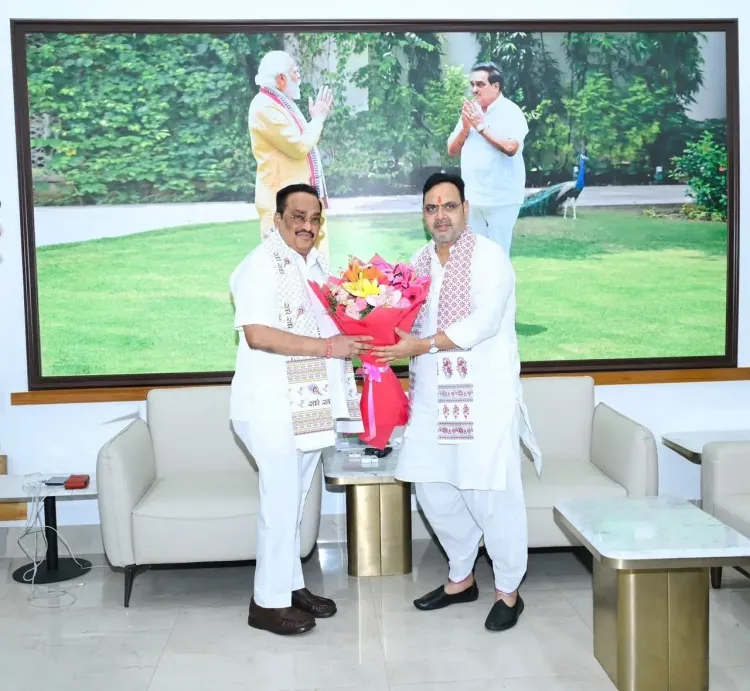
Rajasthan CM Bhajan Lal Sharma met Union Jal Shakti Minister C. R. Patil in New Delhi on October 15, 2026, to advance cooperation on four major river-link projects — Yamuna, Kishau, Narmada, and Ram Jalsetu — and discuss expanding irrigation and drinking-water infrastructure across the state.
Key Takeaways
CM Bhajan Lal Sharma met Union Jal Shakti Minister C.
Patil in New Delhi on October 15, 2026 .
Discussions covered agreements related to the Yamuna , Kishau , Narmada , and Ram Jalsetu link projects for Rajasthan.
The CM thanked the minister for central cooperation on these inter-basin water transfer proposals.
The meeting also addressed water management , drinking-water availability , and irrigation expansion in Rajasthan.
The projects build on India's National Perspective Plan for river interlinking, conceived in the 1980s .
The Jal Jeevan Mission (2019) runs alongside these long-term projects as the near-term tool for rural piped water coverage.
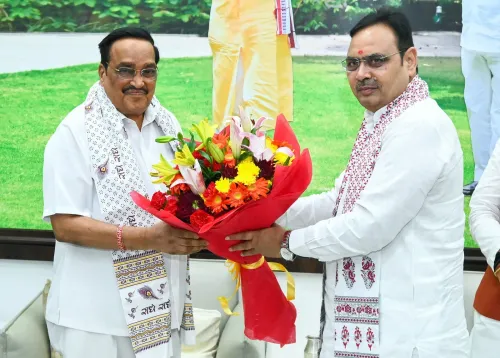
Water-scarce Rajasthan is pushing hard for its share of river-linking lifelines — and on Thursday, October 15, 2026, Rajasthan Chief Minister Bhajan Lal Sharma took that case directly to the top, meeting Union Jal Shakti Minister C. R. Patil in New Delhi to advance agreements on four major inter-basin water projects that could reshape irrigation and drinking-water access across the state.
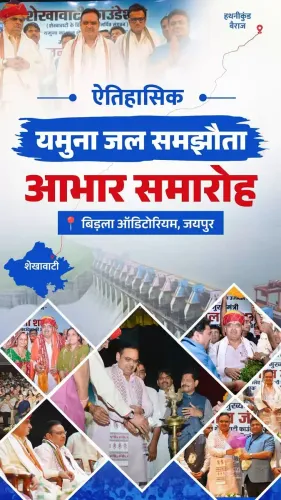
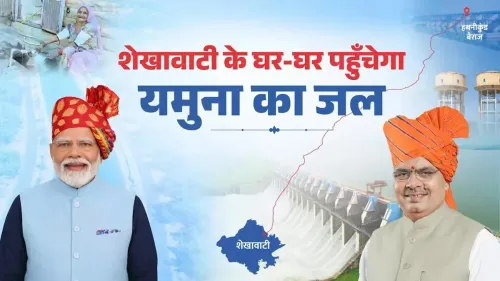
Posting on X in Hindi, CM Sharma said he expressed gratitude to the minister for cooperation on agreements linked to the Yamuna, Kishau, Narmada, and Ram Jalsetu link projects — a formidable quartet of proposals that, if executed, would channel Himalayan and peninsular river water into one of India's most arid states. He added that the meeting yielded 'sarthak charcha' (meaningful discussion) on water management, drinking-water availability, and expansion of irrigation infrastructure in Rajasthan.
Four River-Link Projects and Why Rajasthan Needs Them
Rajasthan covers over 10 percent of India's land area but receives a disproportionately small share of the country's freshwater. The Yamuna-Kishau link targets Himalayan surplus water for transfer to the state's northern belt, while the Narmada link aims to redirect flows from the Narmada basin — already a partial lifeline via the Indira Gandhi Canal system — to meet growing agricultural and household demand. The Ram Jalsetu link is a newer addition to Rajasthan's river-connectivity planning map.
These projects trace their conceptual roots to India's National Perspective Plan of the 1980s, which envisaged a national grid of inter-basin water transfers to smooth out the country's extreme hydrological inequalities. Progress has been slow over four decades, but recent years have seen renewed political momentum at both the central and state levels.
Jal Jeevan Mission as the Ground-Level Complement
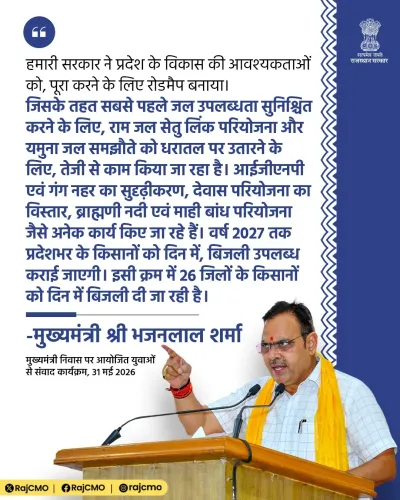
While river-linking operates on a decades-long horizon, the Jal Jeevan Mission — launched by the Modi government in 2019 — has been the near-term vehicle for extending piped drinking water to rural Rajasthan. CM Sharma invoked Prime Minister Narendra Modi's guidance in his post, framing the state government's water agenda as part of a broader, centrally-anchored commitment to strengthen Rajasthan's water security and irrigation network.
The meeting signals active centre-state coordination on a file that directly affects Rajasthan's farmers and millions of households in arid districts where groundwater tables are falling and rainfall remains erratic. Formal agreements, funding release timelines, and state budget allocations for these projects are the concrete next steps that will determine whether the diplomatic energy of Thursday's meeting converts into water on the ground.
Point of View
And by tying river-linking progress to PM Modi's 'guidance,' CM Sharma is positioning the BJP government as the party that finally moved four-decade-old blueprints off the shelf. The broader significance lies in whether these meetings translate into binding agreements: river-linking projects have historically stalled at the inter-state negotiation stage, and Rajasthan's ability to secure upstream cooperation from states like Himachal Pradesh and Madhya Pradesh will be the real test of this diplomatic momentum.
NationPress
15 Oct 2026
Frequently Asked Questions
Which water projects did CM Bhajan Lal Sharma discuss with the Jal Shakti Minister?
CM Sharma discussed cooperation agreements related to the Yamuna, Kishau, Narmada, and Ram Jalsetu river-link projects aimed at improving water supply and irrigation in Rajasthan.
What is the Ram Jalsetu link project?
The Ram Jalsetu link is a proposed inter-basin river-linking project referenced in Rajasthan's water planning discussions, intended to augment the state's water availability alongside the Yamuna-Kishau and Narmada link proposals.
What is the Jal Jeevan Mission and how does it relate to Rajasthan?
The Jal Jeevan Mission, launched by the central government in 2019, aims to provide piped drinking water to every rural household in India, including in water-scarce districts of Rajasthan.
Why is water security such a major issue for Rajasthan?
Rajasthan covers over 10 percent of India's land area but receives a disproportionately small share of national freshwater, making it heavily dependent on inter-basin water transfers, monsoon rains, and fast-depleting groundwater reserves.
Who is C. R. Patil and what is his role in these projects?
C. R. Patil is the Union Minister of Jal Shakti, responsible for national water resources and river development policy, making him the key central government counterpart for Rajasthan's river-linking and irrigation agreements.