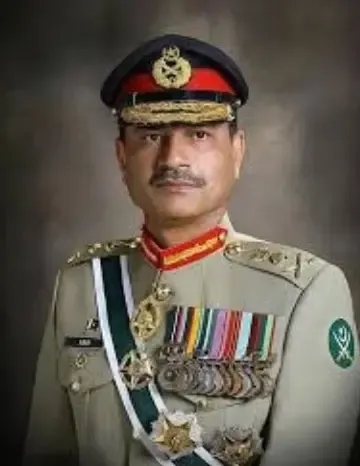
Pakistan Army targets mineral-rich provinces with emergency rule plans

Synopsis
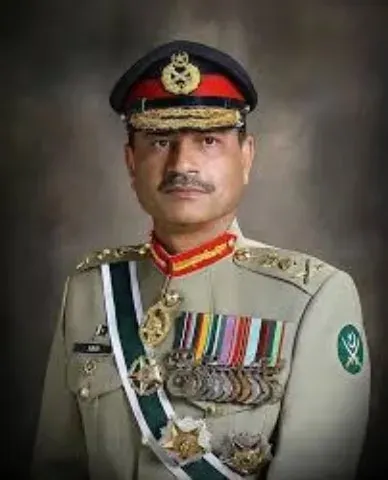
Pakistan Army chief Field Marshal Asim Munir is reportedly using the KP emergency as a test run for a far larger play — seizing control over mineral wealth across Balochistan, PoK, Sindh and Punjab by combining emergency rule with a strategy to carve smaller, politically weaker provinces. If the blueprint holds, it could redraw Pakistan's political and economic map in the army's favour.
Key Takeaways
Pakistan Army chief Field Marshal Asim Munir reportedly views the KP emergency as a template for controlling mineral-rich provinces nationwide.
Balochistan , PoK , and Sindh are said to be next in line for emergency rule; Punjab faces a different but parallel strategy.
Pakistan's provinces hold vast untapped reserves — from Balochistan's copper and gold to PoK's rubies, sapphires, and rare minerals.
Plans are reportedly underway to carve smaller provinces out of Punjab and Sindh , weakening dominant parties like PPP and PML-N .
The PPP has governed Sindh continuously since 2008 ; fragmenting provinces would dilute such entrenched political dominance.
Officials say only emergency powers would give the army sufficient coercive authority to suppress resistance in Balochistan and PoK .
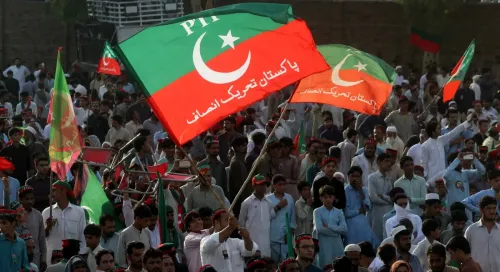
Pakistan Army chief Field Marshal Asim Munir is reportedly using the imposition of emergency and Governor's rule in Khyber Pakhtunkhwa (KP) as a blueprint to seize control over mineral-rich regions across Pakistan, according to officials and analysts who track the country's civil-military dynamics. The move has triggered widespread protests in KP and raised alarm among political observers about a broader strategy to sideline elected governments in resource-wealthy provinces.
KP Emergency: The Test Case
The Pakistan federal government justified the emergency in KP on grounds of deteriorating law and order. However, analysts describe this as a pretext. According to Pakistan watchers, Field Marshal Munir wanted the Pakistan Tehreek-e-Insaf (PTI) government removed from KP, and emergency rule was the most direct instrument available. Beyond politics, the move hands the army unobstructed control over the province's significant mineral wealth — including gemstones, marble, granite, gypsum, soapstone, high-grade limestone, and rare minerals from the Zagi Mountain range.
Notably, KP is being treated as a test run, according to officials cited in reports. The army's next moves reportedly hinge on how smoothly the KP takeover unfolds.
The Mineral Map Driving the Strategy
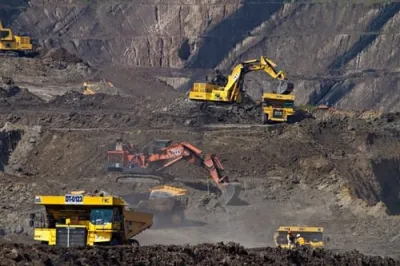
The strategic calculus, according to these accounts, is rooted in Pakistan's vast and largely untapped mineral reserves distributed across its provinces. Balochistan holds copper, gold, chromite, coal, and iron. Sindh is rich in coal, Fuller's Earth, silica sand, and limestone. Gilgit-Baltistan contains precious and semi-precious stones along with quartz. Punjab holds rock salt, iron ore, limestone, and fire clay. Pakistan-occupied Kashmir (PoK) is reportedly home to world-class rubies, rare blue sapphire, green tourmaline, aquamarine, garnet, zircon, bauxite, white marble, gypsum, granite, quartz, and bentonite.
An official said that barring KP, no other province is currently under emergency rule. However, resistance from both local governments and communities to mineral extraction remains significant across several regions.
Emergency as a Tool of Resource Extraction
According to officials, emergency powers would make the Governor the supreme authority in a province. With a compliant figure installed at the helm, the establishment could, critics argue, extract minerals at will and suppress dissent through force. The most likely candidates for the next phase of this strategy are reportedly Balochistan, followed by PoK and Sindh. Punjab, which faces the least resistance, is said to be earmarked for a different approach altogether.
Smaller Provinces: Fragmenting Political Opposition
In a parallel strategy, another official said Field Marshal Munir is also discussing plans to carve out smaller provinces from existing ones — starting with Punjab and Sindh. The creation of a separate South Punjab province has long been a regional demand, justified by arguments about inadequate political representation and underfunding. The army is reportedly preparing to champion this cause.
On the surface, subdividing provinces may appear to promise better governance. In practice, however, analysts warn it would fragment the electoral base of dominant parties. The Pakistan Peoples Party (PPP) has governed Sindh continuously since 2008, while Punjab has historically been the stronghold of the Pakistan Muslim League-Nawaz (PML-N). Smaller provinces would dilute this dominance, leaving these parties with reduced territory and reduced influence — while the army gains greater leverage to make unilateral decisions over regional resources.
Balochistan and PoK: A Different Scale of Resistance
For Balochistan and PoK, the emergency model is expected to be extended directly. Officials say that in these regions, resistance to state-led extraction goes well beyond electoral politics and is deeply embedded in local communities. Only emergency powers, according to these accounts, would give the army the coercive authority it needs to proceed. This comes amid an already volatile situation in Balochistan, where separatist sentiment and protests against resource exploitation have persisted for years.
How Pakistan's civil society, judiciary, and international partners respond to the unfolding KP emergency will likely shape the pace and scale of the army's reported broader ambitions.
Point of View
But a systematic province-by-province resource consolidation strategy, if confirmed, would mark a qualitative escalation. The smaller-provinces gambit is particularly sharp: it offers a democratic-sounding rationale while surgically dismantling the only civilian formations strong enough to resist the army's economic agenda. International observers and Pakistan's own judiciary will need to decide quickly whether they are watching a law-and-order intervention or the beginning of a fundamental restructuring of the Pakistani state.
NationPress
13 Oct 2026
Frequently Asked Questions
Why did Pakistan impose emergency rule in Khyber Pakhtunkhwa?
The federal government cited deteriorating law and order as the reason for imposing emergency and Governor's rule in KP. However, analysts and officials say the real aim was to remove the PTI-led provincial government and give the Pakistan Army unobstructed control over KP's mineral wealth, including gemstones, marble, and rare industrial minerals.
Which provinces are reportedly next for emergency rule?
According to officials, Balochistan is the most likely next target, followed by PoK and Sindh. Punjab, which reportedly faces the least resistance, is said to be under consideration for a separate strategy involving the creation of smaller provinces rather than outright emergency rule.
What minerals does Pakistan's army reportedly want to control?
The targeted regions collectively hold copper, gold, chromite, coal, iron, gemstones, marble, granite, rare earth minerals, rubies, sapphires, tourmaline, aquamarine, bauxite, and rock salt, among others. Balochistan and PoK are considered the most resource-rich and strategically significant.
What is the plan to create smaller provinces and why does it matter?
Plans are reportedly afloat to carve new provinces from Punjab and Sindh — starting with a long-demanded South Punjab province. While framed as a governance improvement, analysts say the real effect would be to weaken dominant parties like the PPP and PML-N by shrinking their electoral territory, giving the army greater room to make unilateral decisions over regional resources.
Why is resistance especially strong in Balochistan and PoK?
In Balochistan and PoK, opposition to state-led resource extraction runs far deeper than electoral politics, rooted in long-standing grievances over sovereignty and local rights. Officials cited in reports say only emergency powers would give the army the authority needed to override this resistance and proceed with large-scale mineral extraction.