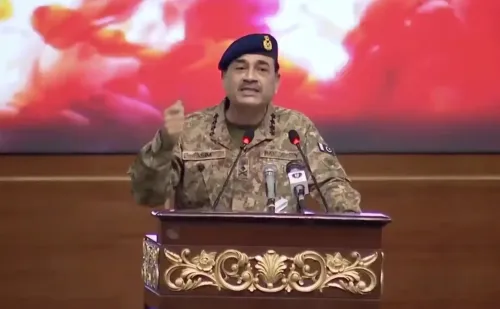
Pakistan crisis deepens in Balochistan, KP as Munir issues 'perform or pack-up' order
Synopsis
Pakistan's Army Chief Field Marshal Asim Munir reportedly issued a 72-hour ultimatum to his own commanders to control Balochistan or resign — an extraordinary admission of failure. With Baloch attacks up 30% in 2025, an unresolved KP conflict, and India holding the Indus Waters Treaty in abeyance, Pakistan's military is simultaneously losing on multiple fronts.
Key Takeaways
Field Marshal Asim Munir reportedly issued a 72-hour ultimatum to senior military and intelligence officials to control Balochistan or resign.
The Pakistan Institute of Peace Studies (PIPS) recorded a 30% rise in Baloch armed attacks and a 26% increase in fatalities in its Pakistan Security Report 2025 .
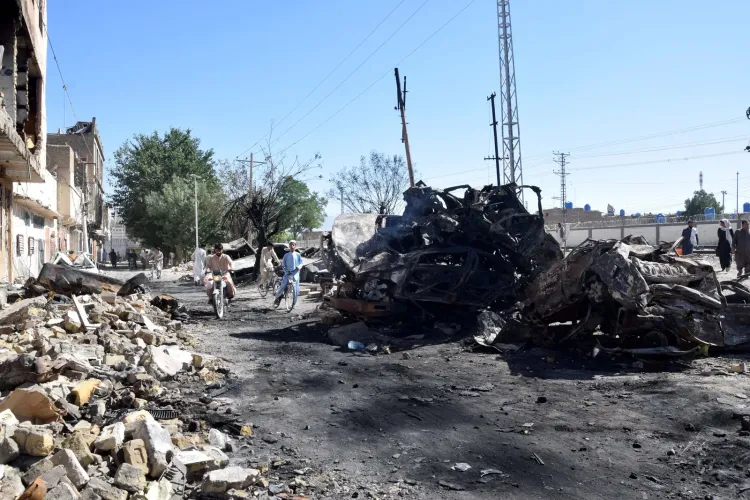
The Baloch Liberation Army (BLA) claimed responsibility for an attack on a Pakistani military convoy in Mastung district , stating over 45 security personnel were killed.
Pakistan is simultaneously facing an unresolved conflict in Khyber Pakhtunkhwa and a tense standoff with Afghanistan .
The Indus Waters Treaty remains in abeyance as India maintains pressure despite Munir's public warnings.
The Balochistan conflict has roots stretching back to 1948 , with successive Pakistani military chiefs failing to suppress the movement.
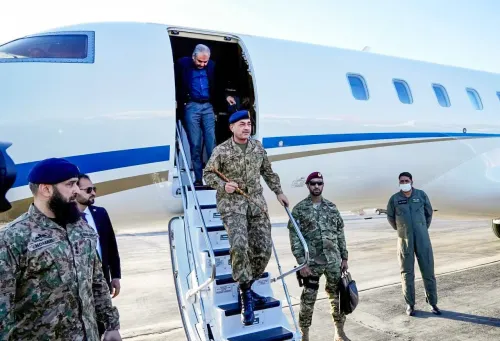
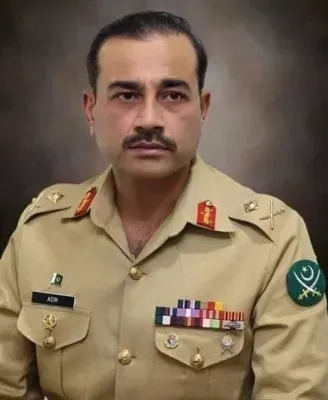
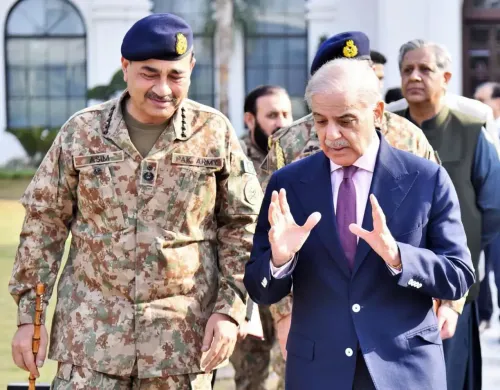
Pakistan is confronting a deepening security crisis across Balochistan and Khyber Pakhtunkhwa (KP), with Army Chief Field Marshal Asim Munir reportedly issuing a 72-hour ultimatum to senior military commanders and intelligence officials to either bring the situation under control or resign, according to an analysis published in Eurasia Review by retired Indian Army officer Nilesh Kunwar. The report paints a picture of a military establishment under severe strain on multiple fronts simultaneously.
Munir's Ultimatum and What It Reveals
According to Kunwar's analysis, Munir had publicly vowed — more than a year ago — to decisively defeat Baloch armed groups. That deadline has passed with the situation measurably worse, not better. The reported 72-hour 'perform or pack-up' ultimatum to his own commanders, the analysis argues, is an admission of institutional failure — a rare and deeply embarrassing step in any military chain of command.
The Pakistan Institute of Peace Studies (PIPS), an Islamabad-based research organisation, documented the deterioration in its Pakistan Security Report 2025: Balochistan recorded a 30 per cent increase in attacks by Baloch armed groups in the reference period compared to 2024, along with a 26 per cent rise in fatalities. Critics argue these figures represent a damning performance assessment for the military leadership.
Balochistan: A Long-Running Conflict
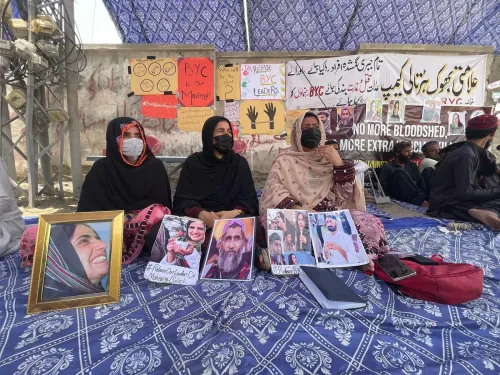
The freedom struggle in Balochistan, according to the report, dates back to 1948. Baloch armed groups have reportedly sustained their campaign despite facing heavy artillery, armed drones, and helicopter gunship attacks — a resilience that analysts say reflects deep-rooted grievances over what the groups describe as illegal occupation.
Notably, Pakistan's intelligence agencies have also come under scrutiny for failing to generate actionable intelligence, as evidenced by large-scale operations such as Operation Herof 2 and the Jaffar Express hijacking, both of which caught security forces off-guard, according to the analysis.
Kunwar draws a pointed historical parallel: former Pakistan Army Chief Pervez Musharraf issued similar threats to Baloch groups more than two decades ago, to no lasting effect. The analysis argues that Munir repeated the same strategic error — relying on military force, enforced disappearances, extrajudicial killings, and judicial suppression of peaceful rights campaigners — without addressing root causes.
BLA Attack on Military Convoy in Mastung
The report comes against the backdrop of a significant attack claimed by the Baloch Liberation Army (BLA) in Mastung district, Balochistan. BLA spokesperson Jeeyand Baloch stated that the group's Fatah Squad targeted a convoy of buses transporting Pakistani army personnel, their security details, and military reinforcements in the Khadkucha area.
According to the BLA's statement, 'more than 45 personnel of the occupying army have been eliminated and dozens of others injured in this operation.' The spokesperson added that casualty figures could rise further. These claims have not been independently verified.
KP and the Afghanistan Dimension
Balochistan is not Pakistan's only active front. The analysis notes that the Pakistan Army has yet to establish the upper hand in Khyber Pakhtunkhwa, where it is reportedly in a state of conflict with Afghanistan. Compounding the military's difficulties, New Delhi continues to hold the Indus Waters Treaty in abeyance, a significant diplomatic and strategic pressure point that Munir's earlier public warnings and threats have so far failed to reverse.
What Comes Next
The convergence of crises — an unresolved insurgency in Balochistan, an active conflict zone in KP, a tense border with Afghanistan, and diplomatic pressure from India — leaves Pakistan's military establishment navigating an unusually crowded threat landscape. Whether Munir's internal ultimatum produces results on the ground, or merely accelerates blame-shifting within the institution, will likely define the trajectory of Pakistan's security situation in the months ahead.
Point of View
The institution's credibility takes the larger hit. The PIPS data is particularly damaging: a 30% rise in attacks and a 26% rise in fatalities are not metrics that can be spun as progress. Pakistan's deeper problem is structural — Balochistan's grievances predate Munir, Musharraf, and every general who promised a quick fix. Military pressure without political resolution has a documented failure rate spanning seven decades. The simultaneous pressure from KP, Afghanistan, and India's suspension of the Indus Waters Treaty suggests Pakistan's strategic bandwidth is stretched dangerously thin — and Munir's internal ultimatums will not change that arithmetic.
NationPress
18 Oct 2026
Frequently Asked Questions
What is the 72-hour ultimatum issued by Pakistan's Army Chief Asim Munir?
According to an analysis in Eurasia Review, Field Marshal Asim Munir issued a 72-hour ultimatum to his top military commanders and intelligence officials to either bring the Balochistan situation under control or resign. The ultimatum reportedly followed a year of deteriorating security conditions despite Munir's earlier public pledge to decisively defeat Baloch armed groups.
How bad is the security situation in Balochistan in 2025?
The Pakistan Institute of Peace Studies (PIPS), in its Pakistan Security Report 2025, documented a 30% increase in attacks by Baloch armed groups and a 26% rise in fatalities compared to 2024. Large-scale operations such as Operation Herof 2 and the Jaffar Express hijacking have also exposed significant intelligence failures.
What was the BLA attack in Mastung district?
The Baloch Liberation Army (BLA) claimed responsibility for an attack on a Pakistani military convoy in the Khadkucha area of Mastung district, Balochistan. BLA spokesperson Jeeyand Baloch stated that the group's Fatah Squad targeted buses transporting army personnel and reinforcements, claiming over 45 security personnel were killed and dozens injured. These figures have not been independently verified.
How long has the Balochistan conflict been ongoing?
The freedom struggle in Balochistan dates back to 1948, according to the analysis. Former Army Chief Pervez Musharraf made similar threats to Baloch groups more than two decades ago without lasting effect, and analysts argue that Munir has repeated the same strategic approach with similar results.
What other pressures is Pakistan's military facing beyond Balochistan?
Pakistan's military is simultaneously dealing with an unresolved conflict in Khyber Pakhtunkhwa and a reported state of war with Afghanistan. Additionally, India continues to hold the Indus Waters Treaty in abeyance, a significant diplomatic pressure point that Munir's public warnings have so far failed to reverse.