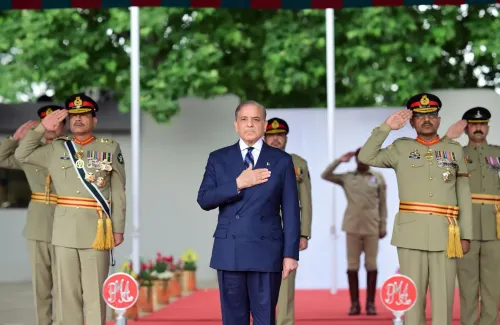
Pakistan's military under Asim Munir faces mounting geopolitical and internal crises
Synopsis
Pakistan's military establishment under General Asim Munir is simultaneously battling a Balochistan insurgency threatening CPEC investments, a resurgent TTP in Khyber Pakhtunkhwa, and a domestic crackdown that has put human rights lawyers behind bars for 17 years — all while forcibly deporting over 146,000 Afghans in 2026 alone. The regime's grip is real, but its foundations are looking increasingly brittle.
Key Takeaways
General Asim Munir's authority is tied to both security performance and Pakistan's economic survival , according to the analysis.
The 'hard state' approach has led to a dramatic rise in political prisoners; lawyers Imaan Mazari and Hadi Ali Chatha were sentenced to 17 years under PECA .
The Baloch Liberation Army (BLA) attacked a high-security prison and police station in January 2026 , following the Jaffer Express assault in March 2025 .
More than 146,000 Afghan refugees have been forcibly deported in 2026 alone, according to Human Rights Watch .
2025 was Pakistan's deadliest year in a decade, with the TTP exploiting cross-border Taliban support to recruit in Khyber Pakhtunkhwa .
CPEC projects in Balochistan have faced repeated attacks, with a multinational mining site targeted in April 2026 .
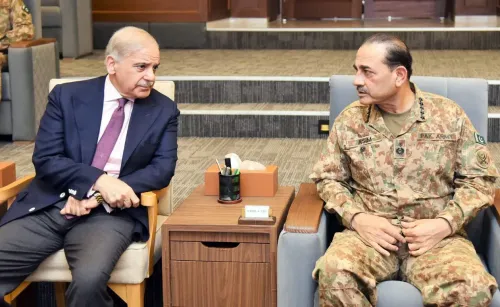
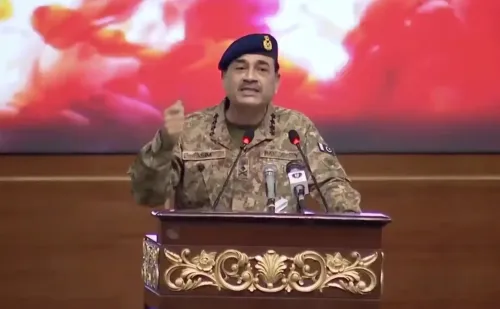
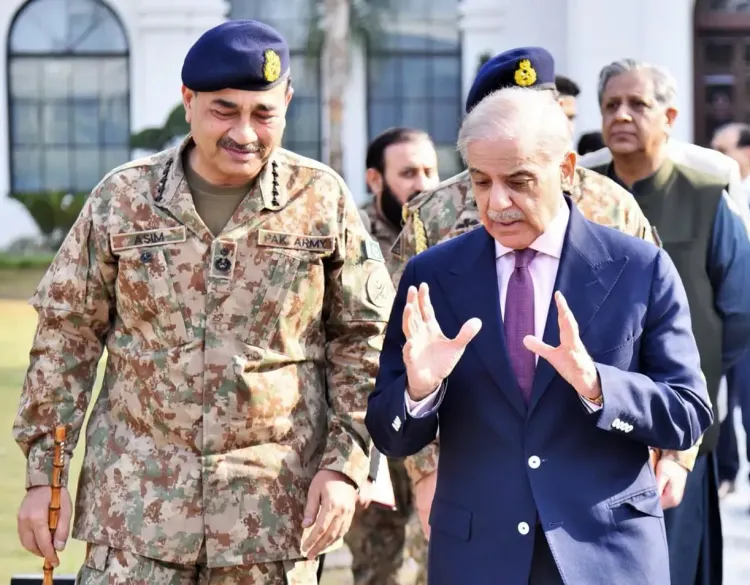
Pakistan's military, under the de-facto authority of Chief of Army Staff General Asim Munir, is confronting an unprecedented convergence of domestic instability and rapidly shifting geopolitical pressures, according to a detailed analysis published by Sri Lanka-based NewsWire. The report warns that if the regime falters internationally or fails to convert diplomatic goodwill into tangible economic and political gains at home, existing fault lines within Pakistan's establishment could deepen and embolden challengers from within and outside the system.
Consolidation of Power and the 'Hard State' Approach
Over the past three years, the military under Munir's command has entrenched its dominance through a weak and compliant civilian government. The regime has adopted what analysts describe as a 'hard state' approach — an uncompromising, militarised framework for internal security and political management. This strategy relies on political repression and constitutional modification to tighten the command structure and shrink the space for dissent.
The number of political prisoners has risen dramatically under this approach. Notably, courts invoked the Pakistan Electronic Crimes Act (PECA) to sentence human rights lawyers Imaan Mazari and Hadi Ali Chatha to 17 years in prison for sharing social media posts condemning the state's reliance on enforced disappearances in Balochistan. Internet firewalls and PECA enforcement have been deployed to suppress online criticism of government and army officials, though dissent has reportedly continued despite these measures.
Balochistan: The Regime's Weakest Link
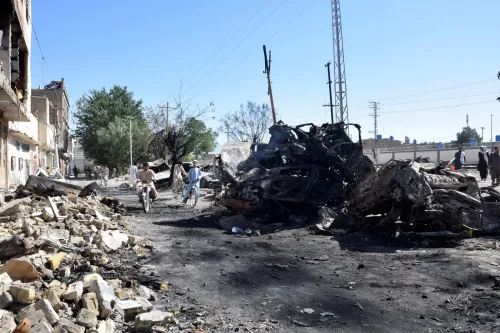
The report identifies Balochistan as the most volatile pressure point for the Munir-led establishment. The Baloch Liberation Army (BLA) carried out attacks on hardened targets in January 2026, including a high-security prison and a police station. This followed the assault on the Jaffer Express passenger train in March 2025, which caused significant casualties and heightened security tensions across the province.
Foreign investments are now at risk. Chinese projects under the China–Pakistan Economic Corridor (CPEC) — a flagship component of Beijing's Belt and Road Initiative — have already faced repeated attacks. In April 2026, as Iran ceasefire negotiations were underway in Islamabad, authorities remained tight-lipped about an armed attack on a multinational mining exploration site in Balochistan in which employees were abducted and killed. The report notes that the attack raises serious questions about regional volatility and the potential spillover of the Iran conflict across the border, given Balochistan's proximity to Iran.
Khyber Pakhtunkhwa and the TTP Threat
Beyond Balochistan, Pakistani security forces continue to face stiff resistance in Khyber Pakhtunkhwa (KP), where the military reportedly lacks public legitimacy. The year 2025 was described as Pakistan's deadliest in a decade, with both the army and police suffering significant losses. Years of armed violence have eroded community trust in the state, enabling the Tehrik-i-Taliban Pakistan (TTP) to recruit locally.
Pakistan's troubled relationship with Afghanistan has further complicated the security picture. The Taliban government in Kabul has reportedly allowed TTP members to move freely across the border, undermining Islamabad's ability to effectively target the organisation. This cross-border dynamic has become one of the most intractable security challenges for the Munir regime.
Afghan Deportations and the Humanitarian Dimension
In parallel, Pakistani authorities have sharply escalated the mass deportation of Afghan refugees. Human Rights Watch has stated that more than 146,000 Afghans have been forcibly deported in 2026 alone, adding a significant humanitarian dimension to the country's already fraught regional relationships. Critics argue that such measures risk further destabilising the border region and deepening hostility with Kabul.
The Broader Strategic Risk
The report concludes that General Munir's authority is contingent not just on security performance but also on Pakistan's economic survival and governance record. Should the regime fail to leverage international goodwill — particularly from ongoing diplomatic engagements — to widen political support or revive economic fortunes, internal institutional and political fault lines could intensify. The coming months are likely to test whether the establishment's grip holds under simultaneous pressures from insurgencies, economic fragility, and a geopolitical environment that is shifting faster than Islamabad's strategic calculus can adapt.
Point of View
But the fact that CPEC, Beijing's flagship regional investment, is now a repeated target. That changes the strategic calculus: China's patience with Islamabad's inability to secure Belt and Road assets is finite, and a cooling of Chinese economic support would hit the Munir establishment at its most vulnerable point — economic legitimacy. Meanwhile, the 17-year PECA sentences for human rights lawyers signal that the 'hard state' has moved well beyond political opponents into civil society. That is rarely a sign of confidence; it is more often a sign of a regime that has run out of softer tools. The TTP's cross-border freedom of movement, enabled by Taliban goodwill, also exposes the limits of Islamabad's Afghanistan policy — a policy that backed the Taliban's return and is now reaping a bitter harvest.
NationPress
24 Sept 2026
Frequently Asked Questions
What challenges is Pakistan's military facing in 2026?
Pakistan's military under General Asim Munir is facing a convergence of crises including a Balochistan separatist insurgency threatening CPEC investments, a resurgent TTP in Khyber Pakhtunkhwa, domestic political repression, and the mass deportation of over 146,000 Afghan refugees. The regime's authority depends on both security performance and economic governance, making it vulnerable on multiple fronts simultaneously.
Who is General Asim Munir and what is his role in Pakistan?
General Asim Munir is Pakistan's Chief of Army Staff and is described in the report as the country's de-facto ruler. He draws authority from Pakistan's security performance, economic survival, and the civilian government's governance record, which his establishment effectively controls through a compliant political setup.
What is the 'hard state' approach adopted by Pakistan's military?
The 'hard state' approach refers to an uncompromising, militarised framework for internal security and political management, involving political repression, constitutional modifications, internet censorship, and the use of laws like PECA to criminalise dissent. It has led to a dramatic increase in political prisoners and the sentencing of human rights lawyers to 17 years in prison.
How is the Balochistan insurgency threatening foreign investments in Pakistan?
The Baloch Liberation Army has repeatedly attacked Chinese projects under CPEC and, in April 2026, an armed attack on a multinational mining exploration site resulted in employees being abducted and killed. The continued violence risks undermining investor confidence in both Chinese and American mineral and energy projects in the region.
Why is the TTP able to operate freely in Pakistan despite military operations?
The TTP has been able to exploit Pakistan's troubled relationship with Afghanistan, where the Taliban government has reportedly allowed TTP members to move freely across the border. Years of instability have also eroded community trust in the state in Khyber Pakhtunkhwa, enabling local recruitment and making it difficult for security forces to dismantle the organisation.