Asim Munir's bid for absolute power risks plunging Pakistan into deeper crisis

Synopsis
Pakistan's Army chief Field Marshal Asim Munir is reportedly moving to place all civilian police forces under military command — a consolidation that would give him control over provincial governments, the federal budget process, and every major security institution. Analysts say the move, framed as a counter-militancy measure, is driven by a string of strategic failures and could trigger a dangerous escalation in Balochistan, KP, and Sindh.
Key Takeaways
Field Marshal Asim Munir is reportedly seeking to bring all provincial police forces under Pakistan Army command, alongside existing control of the ISI .
Munir is demanding a 25 per cent increase in defence spending, a demand the Shehbaz Sharif government has resisted, reportedly delaying the federal budget.
Officials cite Munir's failures — unchecked TTP and BLA militancy, collapsed ties with the Afghan Taliban , and the fallout from Operation Sindoor — as drivers of the power consolidation bid.
Analysts warn the move could destabilise Balochistan , Khyber Pakhtunkhwa , and Sindh , where public resentment over resource extraction is already fuelling large-scale violence.
BLA attacks on CPEC infrastructure have drawn sharp frustration from Beijing , adding an international dimension to the crisis.
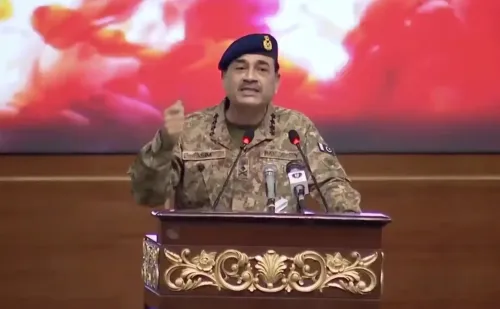
Field Marshal Asim Munir, chief of the Pakistan Army, is reportedly pushing to consolidate all of Pakistan's security and law enforcement institutions under a single military command — a move that analysts and officials warn could destabilise an already fractured nation. The proposal, if implemented, would place civilian police forces across all four provinces under direct Army control, effectively erasing the constitutional distinction between domestic law enforcement and external defence.
The Centralisation Drive
According to officials familiar with the matter, the proposal envisions a unified command structure in which every major security institution — from the Inter-Services Intelligence (ISI) to provincial police forces — answers to the Pakistan Army. Munir has reportedly framed this consolidation as an operational necessity, citing the ongoing threat from the Balochistan Liberation Army (BLA) and the Tehreek-e-Taliban Pakistan (TTP), arguing that a single chain of command would improve coordination and intelligence-sharing.
Critics, however, argue that the militancy rationale is a pretext. 'He wants absolute control of the country,' one official said, noting that placing provincial police under Army command would also give Munir effective leverage over all four provincial governments — a dramatic centralisation of power with no democratic mandate.
Budget Standoff With the Sharif Government
Munir's reach has extended well beyond the barracks. According to reports, he has been exerting pressure on the Prime Minister Shehbaz Sharif government over the federal budget, demanding a 25 per cent increase in defence spending. The Sharif government has resisted, arguing that with Pakistan's economy in severe distress, fiscal priority must shift toward public welfare rather than military outlays.
The standoff has reportedly delayed the budget process — a damaging development for a country grappling with a collapsed economy, soaring inflation, and an International Monetary Fund (IMF)-mandated austerity path. Officials say the two sides remain deeply at odds, with Munir showing little regard for the elected government's position.
Failures That Fuel the Power Grab
An official from the Intelligence Bureau offered a sharper assessment: Munir's push for expanded control is, in part, a response to a string of strategic failures on his watch. The TTP and BLA have not been contained; Pakistan's ties with the Afghan Taliban have deteriorated significantly; and India's Operation Sindoor reportedly exposed critical vulnerabilities in Pakistan's security posture. 'He has failed the people by taking over the political class,' the official said.
Rather than addressing these failures through institutional reform, Munir appears to be responding with a further concentration of authority — a pattern that Pakistan watchers say has historically deepened, not resolved, the country's security challenges.
Blowback Risk in Balochistan, KP and Sindh
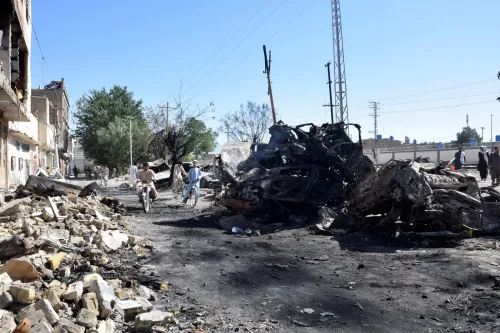
Officials and analysts warn that imposing Army command over civilian policing in Balochistan, Khyber Pakhtunkhwa (KP), and Sindh could be catastrophic. These regions are already witnessing large-scale violence and deep public resentment over perceived resource extraction — with local populations alleging that revenues from rich natural resources are being funnelled to Islamabad, Karachi, and Rawalpindi rather than reinvested locally.
The China-Pakistan Economic Corridor (CPEC), a flagship infrastructure project, has itself become a flashpoint in Balochistan, where the BLA has repeatedly targeted project sites, leaving Beijing visibly frustrated. Analysts say that militarising law enforcement in these regions — rather than addressing developmental grievances — would almost certainly accelerate the cycle of violence.
'The anger of the already distressed people will take over,' one expert said. 'The regions which are already witnessing large-scale violence will only see an increase in attacks.' Pakistan watchers add that Munir's bid for total control is a high-risk gamble that, in their assessment, will eventually backfire badly.
Point of View
Not before them. The framing of a unified command as a counter-militancy tool is undermined by the Army's own record: the TTP and BLA have grown more lethal, not less, under military-dominant governance. The deeper contradiction is that the regions Munir wants to control more tightly — Balochistan and KP — are precisely those where Army presence has historically fuelled insurgency rather than quelled it. A 25 per cent defence budget hike in an IMF-constrained economy, extracted from a civilian government with no real mandate to resist, is also a stress test for Pakistan's already threadbare democratic institutions.
NationPress
21 Oct 2026
Frequently Asked Questions
What is Asim Munir proposing regarding Pakistan's police forces?
Field Marshal Asim Munir is reportedly seeking to place all provincial police forces under a single military command headed by the Pakistan Army, alongside existing control over the ISI and other security agencies. If implemented, this would effectively give the Army control over provincial governments as well.
Why is there a standoff between Munir and PM Shehbaz Sharif over the budget?
Munir has reportedly demanded a 25 per cent increase in Pakistan's defence spending, which the Sharif government considers unreasonable given the country's severe economic distress and IMF-mandated austerity commitments. The disagreement has reportedly delayed the federal budget process.
What failures are officials attributing to Munir?
Officials, including one from the Intelligence Bureau, say Munir has failed to contain the TTP and BLA, allowed Pakistan's ties with the Afghan Taliban to collapse, and was exposed by India's Operation Sindoor. Critics argue his push for more control is a response to these failures rather than a genuine security reform.
Why are Balochistan, KP, and Sindh particularly at risk?
These regions already face large-scale violence and deep public grievances over perceived resource extraction. Analysts warn that placing civilian policing under Army command there would intensify resentment rather than restore order, likely accelerating BLA and TTP attacks.
How does this affect the China-Pakistan Economic Corridor (CPEC)?
The BLA has repeatedly attacked CPEC infrastructure in Balochistan, frustrating Beijing. Analysts say that militarising law enforcement in the region without addressing developmental grievances is unlikely to secure the corridor and may worsen the security environment around CPEC projects.