Pakistan Army's population drive risks repeating civil-military failures: Report

Synopsis
A report by Greek outlet News Bomb argues that Pakistan's decision to anchor its population management drive around Army Chief Asim Munir repeats a familiar institutional failure — military command delivering short-term compliance but undermining the civilian health systems, community trust, and rights-based frameworks that demographic change actually requires. The warning is pointed: symbolic authority is not a substitute for governance.
Key Takeaways
A report by News Bomb warns that Pakistan's military-led population initiative risks repeating past civil-military governance failures on a wider societal scale.
Army Chief Asim Munir's Field Marshal-anchored committee can enforce bureaucratic compliance but cannot build community trust or shift reproductive health norms, the report argues.
The initiative risks 'institutional crowding out' — signalling that civilian ministries are inadequate and entrenching dependence on military authority for non-military challenges.
Pakistan's civilian governance reportedly failed to manage population growth for three years before the military was brought in.
Demographic pressures are intertwined with economic strain, climate vulnerability, and rapid urbanisation — challenges the report says cannot be resolved through command channels alone.
The report concludes the approach is likely to produce 'more symbolic reassurance than substantive change.'
Pakistan's persistent reliance on its military apparatus to manage domestic challenges has systematically 'crowded out' civilian institutional capacity, creating a dangerous precedent that uniformed leadership can resolve every national problem — from foreign policy and economic governance to demographic pressures, according to a report published by Greek media outlet News Bomb.
The report, released on 1 August, argues that Islamabad's decades-long pattern of deploying military-led structures to address social and governance crises has delivered only temporary control, consistently falling short of durable reform — whether in counterterrorism, counterinsurgency, or crisis management.
The Population Initiative Under Scrutiny
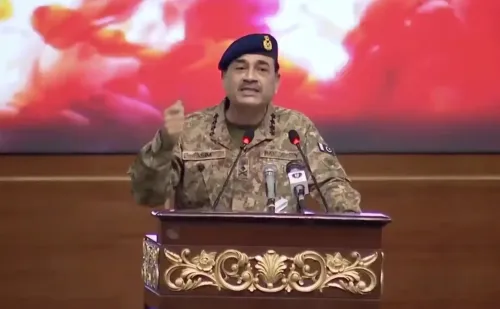
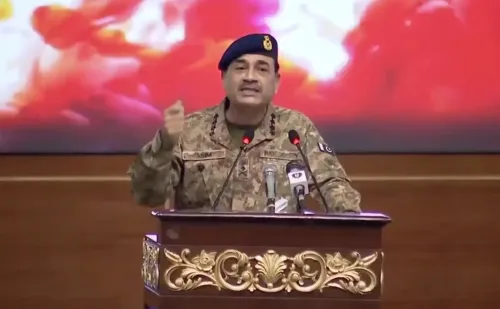
At the centre of the critique is a current population management initiative anchored around Pakistani Army Chief Asim Munir, who holds the rank of Field Marshal. The report warns that this approach risks replicating past institutional failures, now on a far wider societal scale.
'A committee anchored around a Field Marshal may be able to push bureaucracies into compliance, compile metrics and enforce targets, yet it cannot manufacture community trust or shift deeply embedded norms about family size and reproductive health,' the report states. It adds that the model 'centralises authority at the federal and military level and depends on hierarchy instead of participation,' bypassing local governments, health workers, educators, and women's organisations.
Social Buy-In at Risk
The report raises a pointed concern about public legitimacy. The more the military is perceived as owning demographic policy, the easier it becomes for sceptical communities to frame population control as an elite security project rather than a development imperative.
'In a context where civil-military relations are already contested and where many citizens view the security establishment as overbearing, this association may erode the social buy-in critical for any large-scale behavioural change,' it notes. Demographic challenges, the report argues, are fundamentally different from border crises — they require persuasion, rights-based policies, incentive structures, and reliable public service delivery, none of which can be commanded from above.
Institutional Crowding Out
A particularly sharp observation in the report concerns what it terms 'institutional crowding out.' When the government publicly acknowledges that civilian ministries have failed to manage population growth for three years and then turns to a Field Marshal, it implicitly signals that civilian governance is inadequate.
'This discourages investment in health governance planning capacity and local administration while reinforcing a dependence on military tutelage for non-military issues,' the report details. Over time, these trends erode the very institutions essential for sustainable social policy, including long-term demographic management.
Structural Pressures Behind the Crisis
The report situates Pakistan's demographic challenge within a broader web of compounding pressures — economic strain, climate vulnerability, and rapid urbanisation — none of which are amenable to command-and-control solutions.
'Given Pakistan's record of securitising social issues and the complex drivers of fertility trends, the present approach is likely to generate more symbolic reassurance than substantive change,' it concludes. It allows political leadership to claim decisive action by invoking the highest military authority, yet offers no credible pathway to reshaping family incentives, improving women's access to education and employment, or building a robust primary healthcare system.
Whether Islamabad recalibrates toward civilian-led, rights-based demographic governance — or doubles down on the military-command model — will likely determine the long-term effectiveness of its population strategy.
Point of View
Islamabad's default is to securitise the problem, which then further weakens the civilian capacity needed to solve it next time. The deeper issue this report surfaces is structural: a state that repeatedly signals its own ministries are inadequate will eventually make that signal self-fulfilling. Population policy is particularly ill-suited to military command because its success depends entirely on voluntary behavioural change at the household level — something no enforcement hierarchy can produce. The real accountability question is not whether Munir's committee will hit its targets on paper, but whether those numbers will reflect genuine fertility transitions or bureaucratic compliance theatre.
NationPress
16 Sept 2026
Frequently Asked Questions
What is Pakistan's military-led population initiative?
It is a population management programme anchored around Pakistani Army Chief Asim Munir , who holds the rank of Field Marshal. The initiative was launched after civilian ministries reportedly failed to manage population growth for three years, and tasks military-led structures with driving demographic targets.
Why does the report criticise the military-led approach?
The report argues that military command can enforce bureaucratic compliance and compile metrics but cannot build community trust or shift deeply embedded norms around family size and reproductive health. It warns the approach centralises authority rather than empowering local governments, health workers, and women's organisations.
What is 'institutional crowding out' in this context?
The report uses the term to describe how publicly delegating demographic governance to a Field Marshal signals that civilian ministries are inadequate. This discourages long-term investment in health planning and local administration, deepening Pakistan's dependence on military authority for non-military challenges.
Who is affected by this policy approach?
The report indicates that ordinary Pakistani citizens, particularly women and families in communities targeted by population management efforts, are most affected. It argues that without rights-based policies, education access, and reliable public health services, the initiative will fail to produce lasting behavioural change.
What does the report say Pakistan should do instead?
The report argues demographic challenges require persuasion, incentives, rights-based policies, and reliable public service delivery — not command-and-control structures. It calls for empowering local governments, health workers, educators, and women's organisations rather than centralising authority at the federal and military level.