AUSTRAHIND 2026: India-Australia 5th joint military exercise concludes in Thiruvananthapuram
Synopsis
India and Australia have wrapped up the most operationally ambitious edition yet of AUSTRAHIND — a 14-day joint military exercise in Thiruvananthapuram featuring tri-service coordination, a 36-hour UN Chapter VII validation drill and live HADR training. With the Australian High Commissioner personally witnessing the drills, the 5th edition signals that India-Australia defence ties are moving well beyond ceremonial exercises toward genuine combined operational readiness.
Key Takeaways
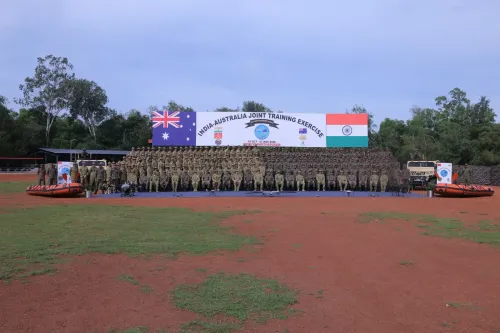
The 5th edition of AUSTRAHIND concluded on Sunday, 2 November 2026 at the Foreign Training Node, Thiruvananthapuram, Kerala .
The 14-day exercise covered jungle, island and coastal environments , ending with a 36-hour Joint Validation Exercise in a UN Chapter VII scenario.
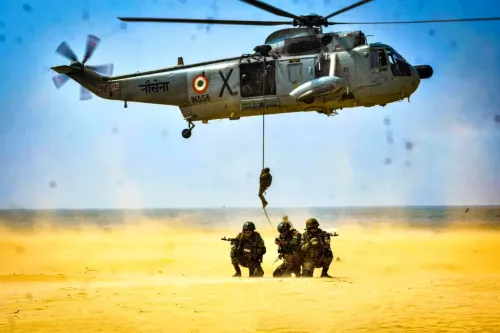
INS Sharda and a Sea King helicopter executed a ship-to-shore troop insertion as part of joint HADR training, demonstrating tri-service integration.
Coordination extended to civilian agencies including Vizhinjam Port Authority , SDRF and Kerala Police , reflecting a 'Whole-of-Nation' approach.
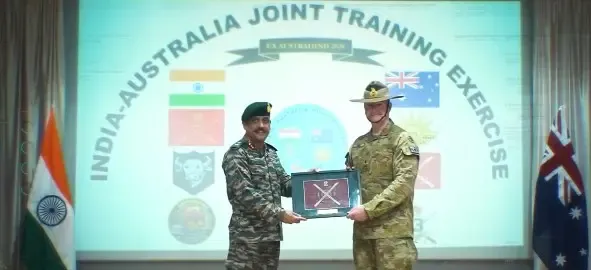
Australian High Commissioner Philip Green attended and described the exercise as deepening the bilateral defence partnership.
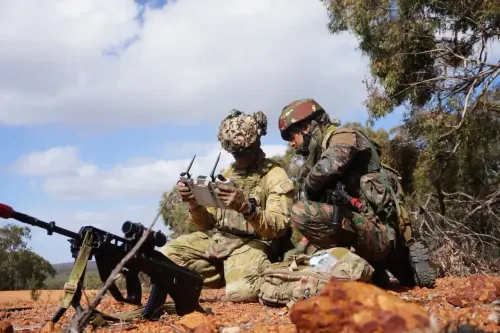
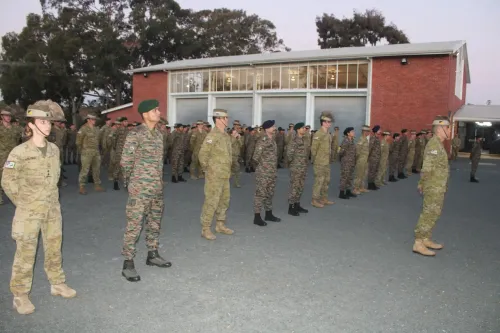
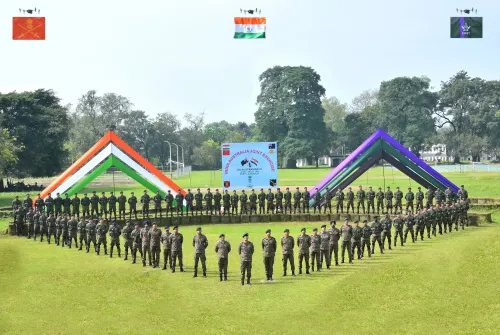
India and Australia have successfully wrapped up the 5th edition of their bilateral joint military exercise, AUSTRAHIND 2026, with a closing ceremony held at the Foreign Training Node in Thiruvananthapuram, Kerala, the Indian Army confirmed on Monday, 3 November 2026. The 14-day exercise, which concluded on Sunday, brought the armies of both nations together for intensive combined training designed to sharpen interoperability and reinforce their shared commitment to regional stability.
What the Exercise Involved
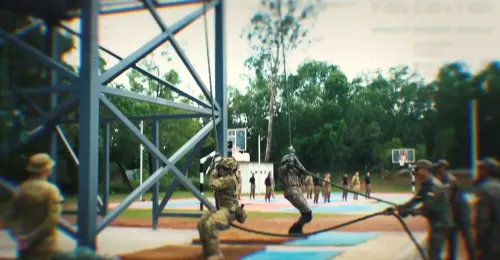
The joint drills spanned jungle, island and coastal environments, culminating in a demanding 36-hour Joint Validation Exercise. According to the Indian Army, the validation phase demonstrated 'enhanced interoperability, tactical synergy and combat readiness in a UN Chapter VII scenario.' The exercise also featured a Humanitarian Assistance and Disaster Relief (HADR) component conducted across coastal terrain in Thiruvananthapuram.
Notably, the drills showcased what officials described as a 'Whole-of-Nation approach,' with seamless coordination extending beyond the two armies to include the Indian Navy, Vizhinjam Port Authority, State Disaster Response Force (SDRF), Kerala Police, and other civil and government agencies.
Navy Demonstrates Multi-Domain Reach
In one of the exercise's most operationally significant segments, the Indian Navy's INS Sharda and a Sea King helicopter executed a swift ship-to-shore troop insertion in close coordination with both armies as part of the joint HADR training. The Indian Navy's Southern Naval Command described the operation as showcasing 'seamless integration of land, sea and air capabilities, reinforcing jointmanship, interoperability and operational readiness.'
This tri-service dimension — involving land, maritime and aerial assets alongside civilian agencies — marks a broader scope for AUSTRAHIND compared with earlier editions, reflecting the growing ambition of India-Australia defence cooperation.
What the Two Sides Said
The Indian Army posted on X that the exercise 'reinforced India-Australia defence ties, mutual trust and a shared commitment to enhanced military cooperation and regional security,' adding the phrase: 'United in Purpose. Stronger in Partnership.'
Australian High Commissioner to India, Philip Green, who attended the exercise, also posted on X: 'I had the privilege of seeing Australia-India troops training side by side at Ex AUSTRAHIND 2026. Bilateral exercises like these strengthen mutual understanding and interoperability, build trust, and deepen our defence partnership.'
Strategic Significance
AUSTRAHIND sits within a larger framework of deepening India-Australia ties, which have expanded significantly under the Comprehensive Strategic Partnership signed in 2020. This comes amid heightened attention to Indo-Pacific security dynamics, with both nations holding membership in the Quad alongside the United States and Japan. The exercise's emphasis on HADR and UN Chapter VII scenarios signals that the partnership is being calibrated not just for bilateral deterrence, but also for multilateral contingency response.
The 5th edition's expanded inter-service and civil-agency coordination suggests that future iterations of AUSTRAHIND could grow further in scope, potentially incorporating more complex joint operational planning.
Point of View
UN Chapter VII scenarios and civilian agency coordination signals that both sides are preparing for the full spectrum of contingencies in the Indo-Pacific, from humanitarian crises to multilateral enforcement operations. What mainstream coverage tends to underplay is the Vizhinjam Port Authority's role in the exercise: Vizhinjam is India's first deep-water transshipment port, and its integration into a joint military drill hints at its potential future relevance as a logistics node for allied naval operations. If AUSTRAHIND scales further, it could become a template for India's emerging approach to combined expeditionary readiness — something that goes well beyond the bilateral relationship.
NationPress
2 Nov 2026
Frequently Asked Questions
What is AUSTRAHIND 2026?
AUSTRAHIND 2026 is the 5th edition of the annual joint military exercise between the Indian Army and the Australian Army. The 14-day exercise concluded on 2 November 2026 at the Foreign Training Node in Thiruvananthapuram, Kerala, focusing on interoperability, HADR training and combat readiness in a UN Chapter VII scenario.
Where was AUSTRAHIND 2026 held?
The exercise was held at the Foreign Training Node in Thiruvananthapuram, Kerala. Training spanned jungle, island and coastal environments, with naval components involving INS Sharda operating along the coast.
What was the Joint Validation Exercise in AUSTRAHIND 2026?
The Joint Validation Exercise was a 36-hour culminating event that tested the combined forces under a UN Chapter VII scenario, assessing tactical synergy, interoperability and combat readiness. It was the centrepiece of the 14-day exercise.
How did the Indian Navy participate in AUSTRAHIND 2026?
The Indian Navy's Southern Naval Command contributed INS Sharda and a Sea King helicopter, which executed a ship-to-shore troop insertion as part of joint HADR training in coastal terrain. This demonstrated integrated land, sea and air operational capability across the Indian and Australian armies and the Indian Navy.
Why does AUSTRAHIND matter for India-Australia relations?
AUSTRAHIND reinforces the Comprehensive Strategic Partnership and Quad alignment between India and Australia. The 2026 edition's expanded tri-service and civilian-agency coordination signals a shift toward genuine combined operational readiness, rather than purely ceremonial engagement, in the strategically significant Indo-Pacific region.